



















































Eric E. Harrison, a seasoned technology correspondent, reported on a recent development in artificial intelligence technology that could reshape the landscape of digital communication. The announcement came from OpenAI on October 3, 2023, revealing a significant upgrade to their chatbot, ChatGPT, which now features a voice capability that allows users to engage in real-time conversations.
This enhancement allows users to not only type but also speak to ChatGPT, creating a more interactive and dynamic user experience. The integration of voice recognition technology aims to facilitate smoother and more natural dialogues, reflecting a growing trend in AI applications moving toward more human-like interactions. OpenAI’s engineers have designed the new feature to recognize various accents and speech patterns, making the tool accessible to a broader audience.
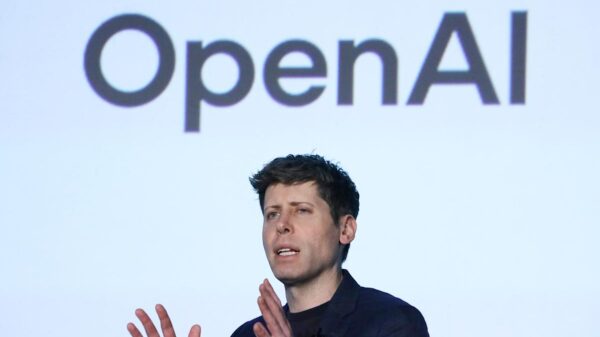
The company emphasized that this development is part of an ongoing commitment to make AI tools more user-friendly and integrated into everyday life. “We believe that conversational capabilities will unlock new possibilities for users, making technology more accessible and intuitive,” said Sam Altman, CEO of OpenAI. This initiative is timely, given the increasing demand for integrated communication tools in both personal and professional settings.
In a competitive market, this upgrade positions OpenAI ahead of rivals, such as Google and Microsoft, who are also investing heavily in enhancing their AI systems. Google’s own chatbot, Bard, is undergoing updates to improve its conversational abilities, while Microsoft has integrated AI features into its suite of products, including Microsoft Teams and Word.
The voice feature in ChatGPT also comes equipped with a range of new functionalities, including translation services and the ability to summarize spoken content. This could be particularly beneficial in educational contexts, where students can engage in dialogues with the AI to reinforce learning. Additionally, customers in the corporate sector may find the new features useful for training simulations and customer service applications, enhancing overall operational efficiency.
Furthermore, privacy concerns remain paramount as voice recognition technologies continue to evolve. OpenAI has stated that user data will be protected and that transparency in data handling will be a priority. “We want our users to feel confident that their information is safe with us,” Altman added, addressing potential apprehensions regarding data usage.
This upgrade is not merely an enhancement of a single product but represents a broader shift in technology towards more interactive and personalized user experiences. As AI becomes increasingly embedded in daily workflows and communications, the responses and capabilities of these technologies will likely shape user expectations and industry standards.
Looking ahead, OpenAI plans to roll out further updates and features for ChatGPT, suggesting a continual evolution of AI tools to meet user needs. As these tools become more sophisticated, they are likely to transform not only personal interactions but also how businesses operate, ultimately redefining the concept of communication in the digital age.
As the landscape evolves, industry observers will be watching closely to see how these advancements will impact competition and innovation across the tech sector. The growing capabilities of AI in voice recognition and conversational abilities herald a new era where machines are not just tools but active participants in our daily interactions.
For more information on OpenAI’s offerings, visit their official site at OpenAI.
See also DeepSeek Launches Sparse AI Models, Redefining Efficiency with $6M Training Costs
 AI’s Employment Impact: Key Insights on Worker Displacement and Adaptation Strategies
 Global AI Regulation Enforced in 2026: EU’s AI Act Transforms Tech Landscape, Stricter Compliance Required
 Google Launches Gemini’s Personal Intelligence, Enhancing AI with User Data Integration
 Notre Dame Secures $50.8M Grant to Shape Christian Ethics for AI Development