
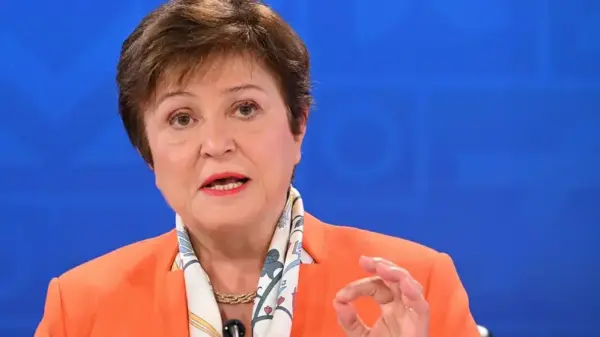

















































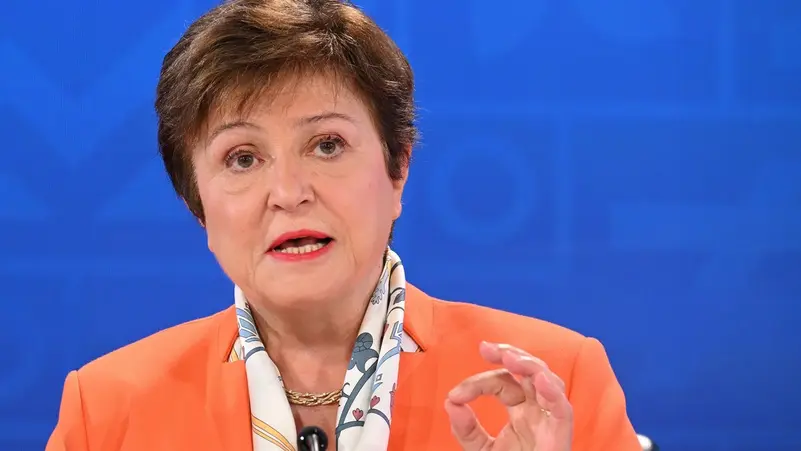
Washington, April 13 (SANA) — The International Monetary Fund (IMF) issued a warning on Monday regarding the global monetary system’s vulnerability to emerging risks associated with artificial intelligence, particularly in the realm of cybersecurity. IMF Managing Director Kristalina Georgieva expressed concern that the world “currently lacks the capacity to protect the international monetary system from large-scale cyber threats,” emphasizing the necessity for enhanced regulatory safeguards to ensure financial stability.
Georgieva’s remarks come ahead of the IMF and World Bank Spring Meetings in Washington, where discussions on these pressing issues are expected to take center stage. She stressed that the challenges posed by artificial intelligence, particularly those recently addressed in the United States, could manifest in other regions, underscoring the imperative for broad international cooperation.
The IMF’s warning arrives in the wake of an emergency meeting convened by U.S. regulators with top banking executives to evaluate the implications of a new artificial intelligence model developed by the AI company Anthropic. The model, known as “Mythos,” was announced to be limited in its release on April 7 due to concerns over its potential to identify and exploit vulnerabilities in operating systems and major web browsers. This has raised alarms among financial and regulatory authorities, who are increasingly aware of the intersection between AI technology and cybersecurity threats.
As financial systems become more integrated with digital platforms, the likelihood of cyberattacks targeting financial institutions grows. The IMF’s call for stronger regulatory measures is a reminder of the ongoing evolution in the threat landscape, where traditional security protocols may no longer suffice. Georgieva’s comments highlight a growing recognition among global financial leaders that proactive measures are essential to safeguard against the risks introduced by rapid technological advancements.
The discussions at the upcoming Spring Meetings are expected to delve deeper into these matters, with a focus on fostering collaboration among nations to develop comprehensive strategies for mitigating cyber risks. As AI continues to advance, the implications for financial stability will be a key topic for regulators and industry leaders alike.
In a world increasingly reliant on digital solutions, the potential for large-scale cyber incidents poses a significant threat not only to individual institutions but to the financial system as a whole. The IMF’s emphasis on the need for international cooperation serves as a crucial reminder that cybersecurity issues transcend borders and require coordinated responses from nations worldwide. As financial institutions begin to navigate these uncharted waters, the importance of robust regulatory frameworks has never been more apparent.
As the financial community anticipates the discussions at the IMF and World Bank meetings, the urgency surrounding the intersection of artificial intelligence and cybersecurity will likely remain at the forefront of deliberations. The implications for global financial stability are profound, and addressing these challenges will require innovative thinking and collaborative efforts across borders.
See also Pollo AI Launches Versatile Video Generator with Multi-Model Integration for 2026
 Germany”s National Team Prepares for World Cup Qualifiers with Disco Atmosphere
 95% of AI Projects Fail in Companies According to MIT
 AI in Food & Beverages Market to Surge from $11.08B to $263.80B by 2032
 Satya Nadella Supports OpenAI’s $100B Revenue Goal, Highlights AI Funding Needs