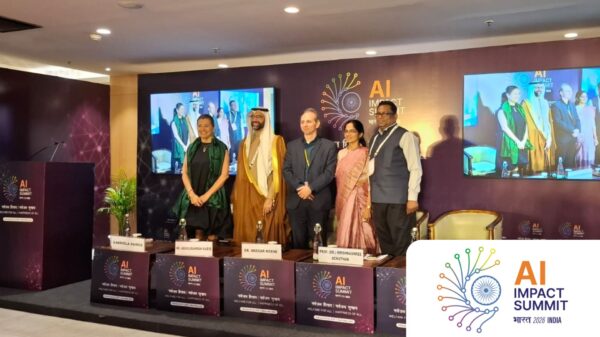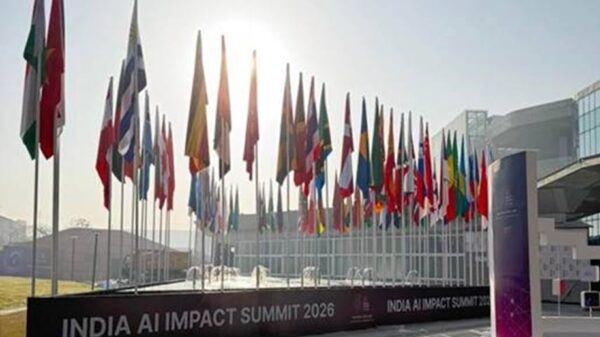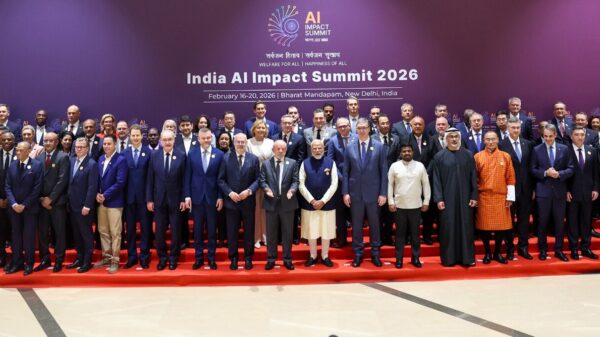


















































Apar Gupta, an advocate and founding director of the Internet Freedom Foundation, is actively engaged in India’s complex legal landscape, traveling to the High Court and Supreme Court almost daily via Mathura Road. His ongoing efforts reflect the pressing need for a robust dialogue on technology policy, particularly as India prepares to host the AI Summit from February 16, 2025 at the Bharat Mandapam complex. This summit marks a significant milestone as the first in a series of convenings focused on artificial intelligence in the Global South.
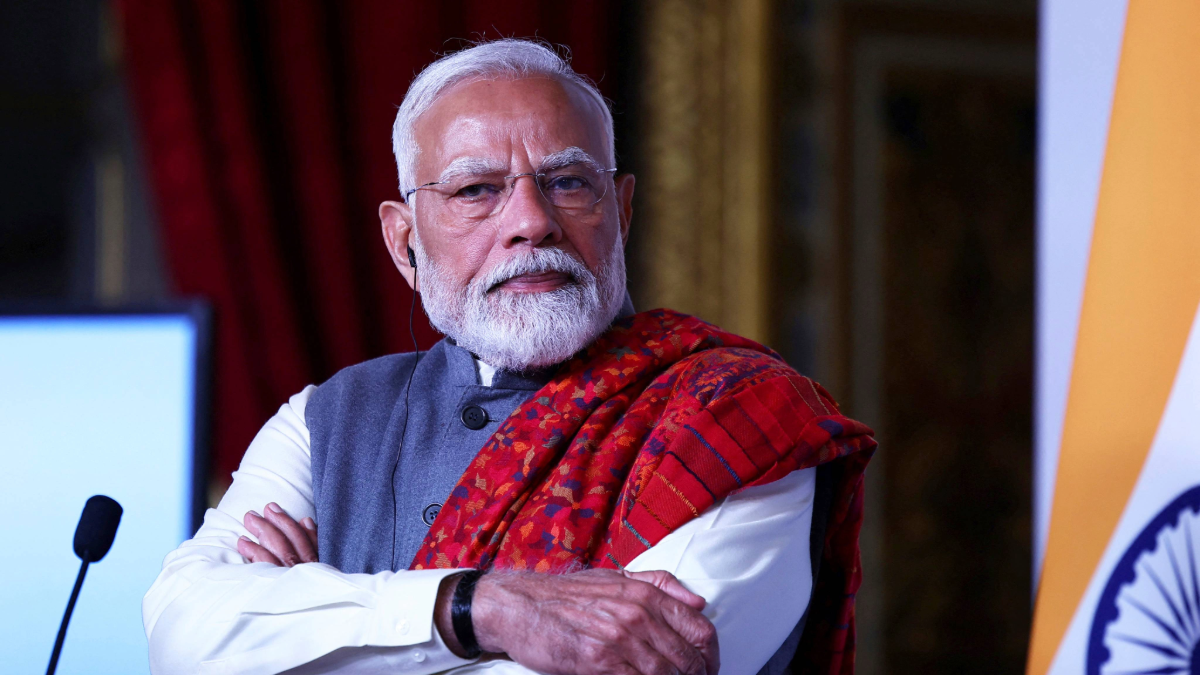
In the week leading up to the summit, Mathura Road underwent last-minute repairs to enhance its appearance, coinciding with the forced eviction of homeless individuals from the area. This clean-up underscores the government’s desire to create a favorable impression as Prime Minister Narendra Modi seeks to position himself as a global leader while also appealing to domestic nationalist sentiments.
The summit’s agenda, structured around three themes or “sutras” and seven tracks, diverges from established global frameworks for AI policy. This use of Sanskrit terminology is a calculated choice intended to align cultural nationalism with contemporary technological discourse. The BJP-led NDA government has consistently integrated such linguistic strategies into technology policy, often prioritizing religious invocations over empirical evidence. A recent report by the Center for the Study of Organized Hate and the Internet Freedom Foundation indicates that this approach contributes to a broader pattern of digital authoritarianism, which includes coercion and censorship that disproportionately affects vulnerable groups.
Unlike its predecessors in Bletchley Park, Seoul, and Paris, this summit aims to resemble a festival, comprising 793 public events. However, an analysis reveals that the government and large technology firms dominate the programming, with government bodies such as the Ministry of Electronics and Information Technology (MeitY) and various state IT departments organizing around 40% of the sessions. Multinational corporations and industry associations contribute an additional 35%, emphasizing the corporate influence at play. The line-up includes significant players in the tech industry, raising concerns about the uneven representation of voices from civil society.
The disparity is particularly evident in the absence of platforms for labor leaders, human rights defenders, and marginalized communities. There is no equivalent to a “Civil Society Plenary,” highlighting a structural imbalance that favors multinational corporations over grassroots advocacy. This trend is echoed in the language of the summit agenda, which prioritizes terms like “Innovation,” “Growth,” and “Efficiency,” while neglecting essential human rights concepts such as “Accountability,” “Surveillance,” and “Discrimination.”
Despite the ambitious framing of the summit as an effort to “democratize AI,” the anticipated outcomes offer little optimism. Historical precedents, such as the previous G20 Summit, reveal a pattern where high-level declarations fail to translate into actionable policies. Notably, India’s recent data protection law has raised concerns about public sector exemptions that undermine transparency and the right to information. Critics argue that these developments reflect a broader trend of deregulation that poses risks in sensitive areas like policing and welfare.
The inherent contradictions in the summit’s design raise questions about whose interests are truly represented. The gathering is likely to prioritize the agendas of powerful stakeholders while overshadowing the contributions of those advocating for rights-respecting frameworks. As the event unfolds, it may become more of a communications spectacle aimed at fostering favorable narratives about AI’s potential than a genuine platform for advancing meaningful discussions on technology and its societal implications.
While the summit’s lofty rhetoric of providing “welfare for all” resonates on a grand scale, the reality on the ground tells a different story. As preparations for the arrival of tech leaders unfold, young boys are seen painting railings by hand on Mathura Road amidst peak morning traffic, a stark reminder of the socioeconomic disparities that persist. The summit may ultimately serve as a backdrop for showcasing India’s ambitions in the tech world, yet the substantive issues surrounding AI governance and human rights risks remain critically unaddressed.
See also FTC Expands Antitrust Probe into Microsoft’s $401B Cloud AI Bundling Practices
 Wesfarmers Partners with Google Cloud to Revolutionize Retail with Agentic AI Deployment
 US, Canada, UK, and 7 Nations Unite at India AI Impact Summit 2026 to Drive AI Solutions in Travel and Sustainability
 AppLovin Stabilizes as Financial Publisher Retracts Wrongdoing Claims, Eases Shareholder Concerns
 India’s IT Secretary Urges Human-Centric AI at Global Summit to Drive Inclusive Growth