


































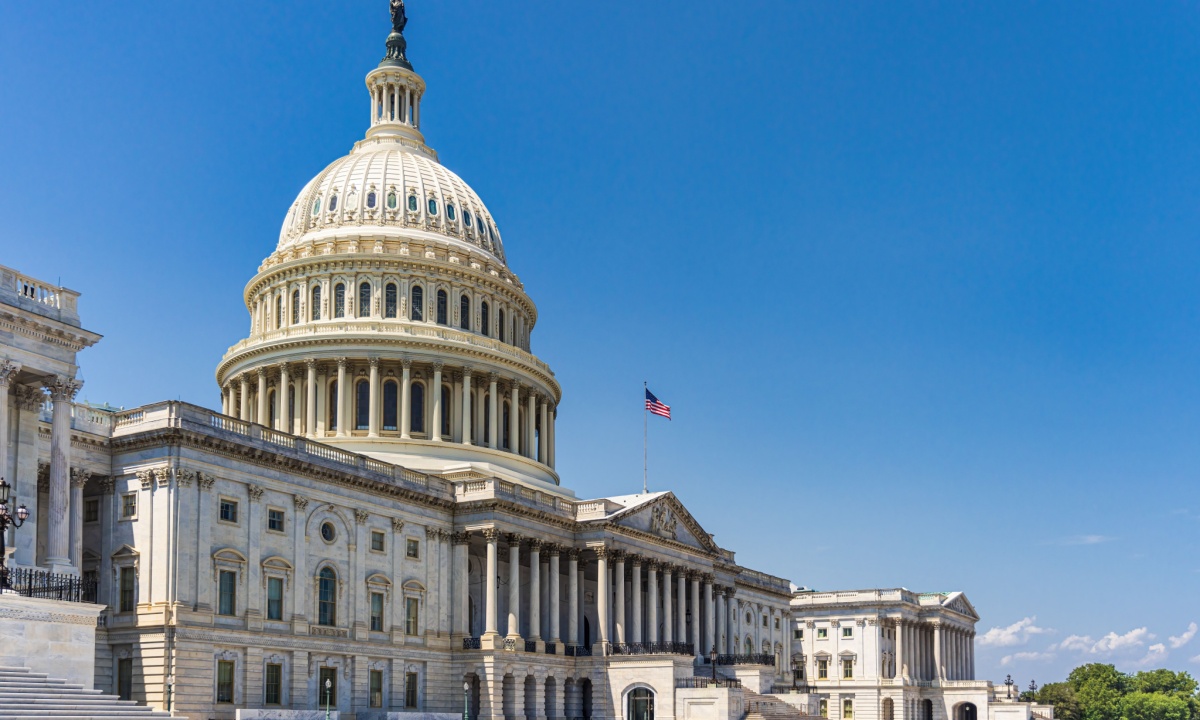
In a significant move targeting the needs of small businesses, lawmakers have introduced two bipartisan bills aimed at enhancing artificial intelligence (AI) support for these enterprises. This legislative effort marks one of the most focused initiatives from Congress this year to assist Main Street firms in understanding and responsibly adopting AI technologies, especially at a time when many are eager to explore AI but lack the necessary resources for effective implementation.
The first bill, titled the AI for Workforce Innovation, Skills and Entrepreneurship Act, or AI-WISE, was introduced by U.S. Representatives Hillary Scholten (D-Mich.) and Troy Downing (R-Mont.). The sponsors highlighted the bill’s objective to equip small business owners with clear, practical insights into AI systems and their operational benefits. While the press release outlines broad intentions, the actual measure concentrates on augmenting the educational mandate of the Small Business Administration (SBA) for AI.
According to the text of the AI-WISE bill, the SBA would be tasked with developing and maintaining publicly accessible educational resources and online modules. These materials would assist small businesses in grasping the fundamentals of AI systems, covering areas such as how AI models function, criteria for evaluating AI tools, identifying business functions that could benefit from AI, and assessing associated benefits, risks, and costs. These resources are intended to be available on established SBA learning platforms.
Scholten emphasized the importance of accessibility, stating that small businesses should “have access to the same innovative tools that larger corporations do.” She further noted that providing accessible and responsible guidance is essential for firms considering AI integration. Notably, the bill does not impose new regulatory requirements but rather seeks to instill greater confidence and clarity in small businesses as they venture into AI adoption.
The second proposal, introduced by Rep. Mark Alford (R-Mo.) with Scholten, focuses on the potential expansion of the Small Business Development Center (SBDC) network to enhance support for small firms navigating AI. This bill, referred to as the Small Business AI Center, aims to empower existing SBDC infrastructure to provide AI-related support, training, and outreach, rather than establishing a new national center.
The Small Business AI Center bill outlines specific roles for SBDCs, which include offering training workshops, conducting community outreach, and providing guidance that helps firms comprehend both the opportunities and challenges associated with AI tools. Alford stated that the goal is to assist small firms in “increasing efficiency, improving operations, and elevating their competitiveness in the global market.”
Addressing Challenges for Small Businesses
These legislative efforts resonate with findings from recent reports indicating that small businesses are increasingly aware of AI’s potential yet frequently encounter significant barriers in their adoption journeys. For instance, challenges such as limited technical staff, constrained budgets, and uncertainty about vendor evaluation criteria emerge as key friction points for many business owners. Reports indicate that numerous owners express a lack of resources to compare AI offerings, assess reliability, or identify use cases relevant to their operations.
According to findings from PYMNTS, small businesses tend to implement AI in focused, practical ways, typically starting with functions that streamline customer inquiries, scheduling, or inventory management. Owners often report better outcomes when guidance connects AI tools to specific operational needs rather than abstract concepts. Both the AI-WISE and Small Business AI Center bills aim to bridge the gap by enhancing training and support, thereby enabling small firms to evaluate and utilize AI more effectively.
As both bills undergo review by the U.S. House Small Business Committee, their successful passage could mark a pivotal shift in how small businesses approach AI, leveling the playing field and fostering innovation in sectors traditionally overshadowed by larger corporations.
See also Anthropic’s Valuation Hits $350B Amid Nvidia, Microsoft Investment Concerns
 AI Detective Work: The Growing Challenge of Spotting AI-Generated Content
 Intuit Partners with OpenAI to Integrate ChatGPT into TurboTax, QuickBooks, and More
 AI-Generated Campaign Ad Sparks Ethical Debate in U.S. Senate Race
 IBM Integrates AI Platform into Microsoft 365, Saving Consultants 250,000 Hours Annually