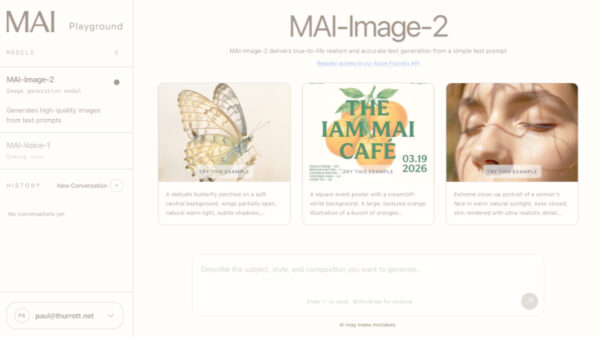






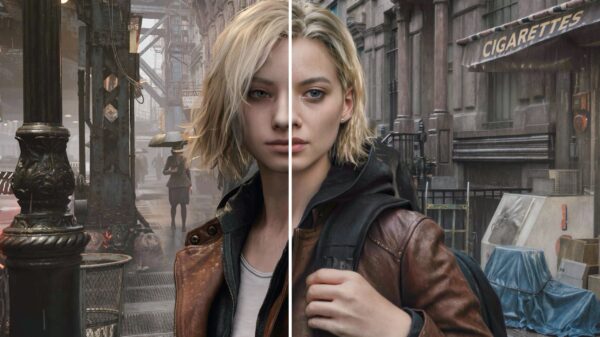



























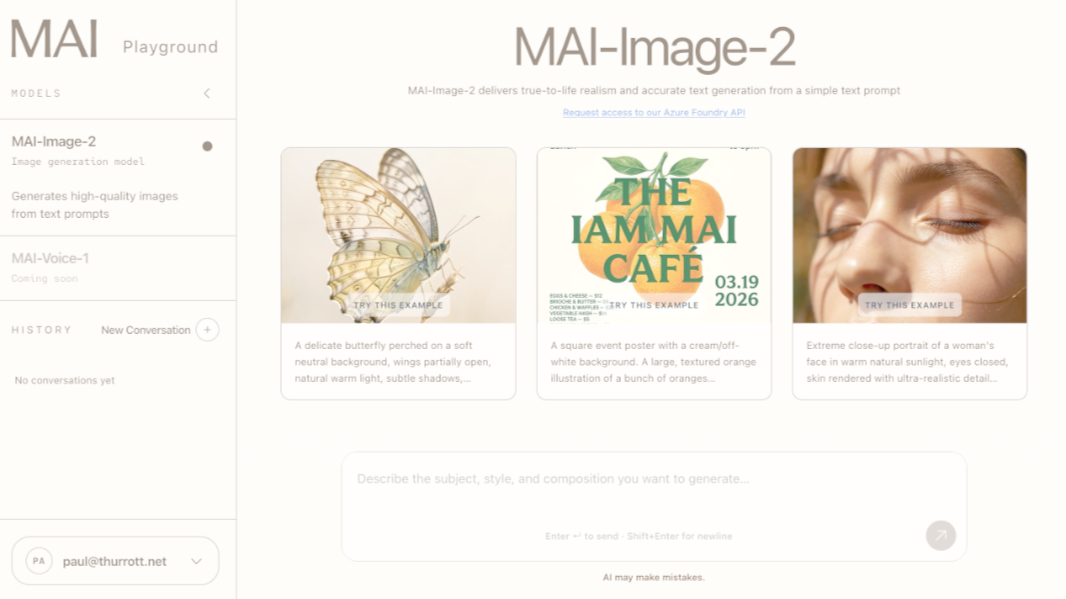
Microsoft AI has unveiled its latest AI model, MAI-Image-2, designed for the creation of photorealistic images, marking a significant advancement in image generation technology. Announced today, the new model aims to cater specifically to creatives seeking images that replicate real-world conditions, featuring natural light and accurate skin tones, thus reducing the need for extensive post-production editing.
According to Microsoft AI, “MAI-Image-2 is built for creatives who want images that feel like they exist in the world, with natural light, accurate skin tones, [and] environments that feel lived-in.” This focus on fidelity allows users to dedicate more time to the creative process rather than fixing images in post-production.
Since its introduction, MAI-Image-2 has gained substantial recognition, achieving a top-three ranking on the prestigious Arena-AI text-to-image leaderboard, trailing only behind Google Gemini 3.1 Flash and OpenAI GPT-Image 1.5. The model’s development benefited from extensive feedback gathered from a diverse group of photographers, designers, and visual storytellers, underscoring its potential for consistent outputs across various formats, including infographics, slides, and diagrams.
The capabilities of MAI-Image-2 are evidenced by the impressive sample images it provides, demonstrating a high level of realism that is increasingly rare in AI-generated content. Creatives can experiment with the model directly on the Microsoft AI Playground, enabling them to assess its capabilities firsthand.
This release comes at a time when the demand for advanced image generation tools is growing, as professionals in various fields seek innovative ways to enhance their visual content. The competitive landscape of AI-driven image generation is intensifying, with several major players vying for dominance. Microsoft aims to solidify its position with MAI-Image-2, which it believes will significantly improve user workflows.
As the technology evolves, the implications for industries that rely heavily on visual content, such as advertising, film, and digital media, could be profound. By streamlining the creation process and enhancing the quality of generated images, MAI-Image-2 may change the way creatives approach visual storytelling.
In summary, the launch of MAI-Image-2 not only reflects Microsoft’s commitment to advancing AI technology but also highlights the growing intersection between creativity and artificial intelligence. As the model gains traction among users, it is likely to set new standards for image generation in the years to come.
See also Germany”s National Team Prepares for World Cup Qualifiers with Disco Atmosphere
 95% of AI Projects Fail in Companies According to MIT
 AI in Food & Beverages Market to Surge from $11.08B to $263.80B by 2032
 Satya Nadella Supports OpenAI’s $100B Revenue Goal, Highlights AI Funding Needs
 Wall Street Recovers from Early Loss as Nvidia Surges 1.8% Amid Market Volatility