



















































Microsoft reported robust financial results for its second fiscal quarter of 2026, which ended on December 31, 2025, revealing a 17 percent year-over-year revenue increase to $81.3 billion. Despite this growth, the tech giant faces pressure on its profit margins due to significant investments in artificial intelligence (AI) infrastructure. The company also sought to reassure investors regarding its ongoing partnership with OpenAI in light of Amazon’s recent investment in the AI research lab, which raised $110 billion, making headlines across the industry.
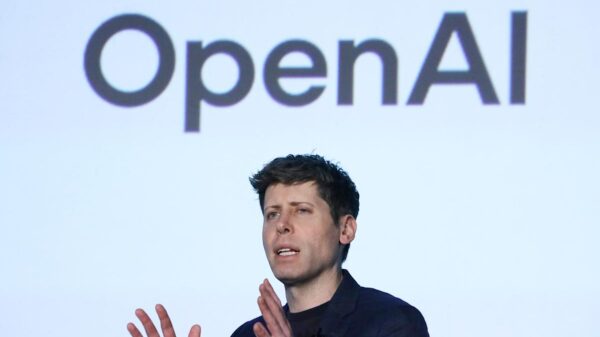
In the aftermath of Amazon’s substantial funding round, which values OpenAI at $730 billion, concerns arose about Microsoft’s exclusive access to its AI partner. A joint statement from Microsoft and OpenAI aimed to clarify that their essential collaboration remains intact. Microsoft continues to be the exclusive cloud provider for “stateless APIs,” which are crucial for the vast majority of commercial API traffic generated by OpenAI.
Microsoft’s financial results underscore its operational strength, particularly in the Intelligent Cloud segment, which includes Azure. This segment generated $32.91 billion in revenue, reflecting a 29 percent increase, with Azure and other cloud services recording a notable 39 percent gain. The broader Microsoft Cloud portfolio accounted for $51.5 billion in sales, a 26 percent rise. However, the company reported a contraction in gross margin, which fell to just below 68 percent, marking its lowest level in three years. This decrease is largely attributed to Microsoft’s aggressive spending on AI, with capital expenditures soaring to $37.5 billion—up 66 percent from the previous year and exceeding analyst expectations by $3.2 billion.
The dynamics of the OpenAI partnership highlight the specific roles of the companies involved. Amazon’s $50 billion investment is structured in phases, starting with an initial $15 billion, followed by a contingent $35 billion based on performance metrics. This move has positioned Amazon as an exclusive third-party cloud provider for OpenAI Frontier, a platform focused on developing complex AI agents that require a “stateful” environment for context retention. Although this partnership does not undermine Microsoft’s position, it emphasizes the growing competitive landscape in AI infrastructure among major cloud providers.
Importantly, even as OpenAI collaborates with other entities like Amazon, all stateless API calls will still be routed through Azure. Microsoft retains its exclusive license to OpenAI’s intellectual property and continues to benefit from a revenue-sharing agreement, ensuring that it receives a portion of the proceeds derived from OpenAI’s partnerships with Amazon Web Services (AWS).
In addition to its AI advancements, Microsoft announced a strategic partnership with Starlink aimed at expanding global internet access and bringing Azure services to underserved regions. Initially targeting Kenya, the collaboration plans to connect 450 community hubs, including agricultural cooperatives and digital centers. The initiative is part of Microsoft’s broader commitment to bridging the digital divide, as approximately 2.2 billion individuals worldwide still lack internet access—a gap that could widen with the increasing reliance on AI technologies.
Looking ahead, Microsoft is poised to navigate a challenging landscape characterized by strong growth in cloud and AI alongside record capital expenditures. While recent announcements have bolstered Azure’s role and secured its position as the exclusive provider for stateless APIs, Amazon’s entry into the AI space underscores the intensifying competitive dynamic. The critical challenge lies in balancing substantial infrastructure investments with the need for revenue acceleration. As Microsoft continues to invest heavily in AI, observers will be keenly watching the upcoming third fiscal quarter results, due on April 28, for indications that these investments are translating into heightened revenue growth.
See also Amazon Launches New Alexa+ Personalities: Brief, Chill, and Sweet Styles Now Available
 Germany”s National Team Prepares for World Cup Qualifiers with Disco Atmosphere
 95% of AI Projects Fail in Companies According to MIT
 AI in Food & Beverages Market to Surge from $11.08B to $263.80B by 2032
 Satya Nadella Supports OpenAI’s $100B Revenue Goal, Highlights AI Funding Needs