



















































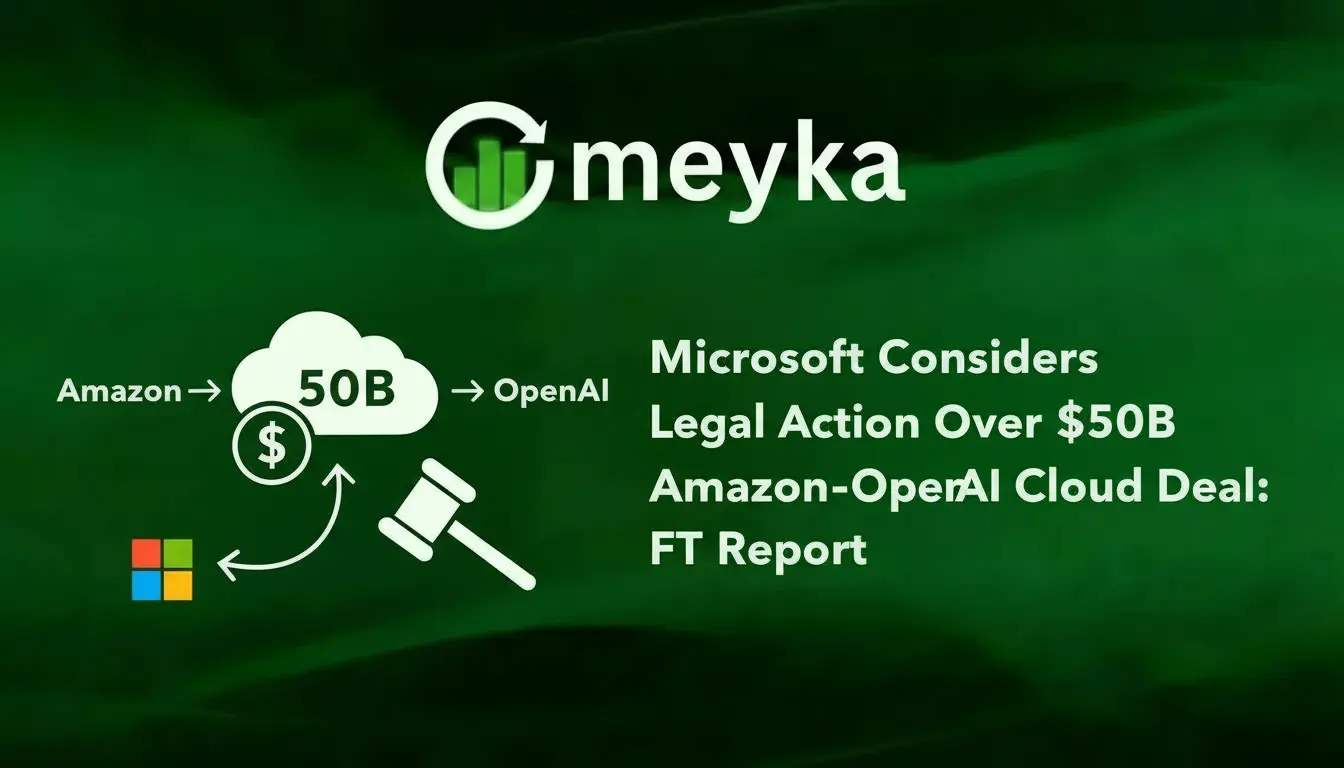
The global technology market is facing a significant upheaval as reports indicate that Microsoft is contemplating legal action over a controversial $50 billion cloud computing agreement between Amazon and OpenAI. This potential conflict underscores the intensifying competition within the artificial intelligence sector and may signal a shift in alliances among key players in the field.
Investors have taken notice, closely monitoring the implications for AI stocks and the broader tech landscape. A legal dispute could have far-reaching consequences for how advanced AI services are deployed across the globe, affecting not just Microsoft, but the entire industry.
According to reports from the Financial Times and confirmed by various news outlets, Amazon and OpenAI have formed a partnership that could designate Amazon Web Services (AWS) as the exclusive third-party cloud provider for OpenAI’s new enterprise platform, known as Frontier. This agreement, valued at approximately $50 billion, is one of the largest collaborations in the realm of AI infrastructure, involving several critical elements.
AWS is set to host components of OpenAI’s enterprise AI systems, develop advanced AI agent platforms, and enhance cloud-based AI deployment options for business customers. The arrangement has raised alarms at Microsoft, which previously established an exclusive partnership with OpenAI centered around its Azure platform.
The crux of Microsoft’s concern lies in the exclusivity clauses of its long-standing agreement with OpenAI, which stipulate that access to OpenAI models should primarily occur through the Azure cloud infrastructure. Microsoft contends that allowing AWS to host parts of OpenAI’s new platform may breach these terms. Sources close to the situation revealed that Azure has served as the exclusive cloud provider for OpenAI models, and the new Frontier platform could potentially circumvent Azure in certain scenarios.
Despite the growing tension between the companies, discussions are reportedly ongoing to resolve the issue amicably before the Frontier platform’s launch. The stakes are high, given Microsoft’s substantial investments in OpenAI, which include a $1 billion investment in 2019 and an additional $10 billion in 2023 to accelerate AI product development.
This financial commitment has positioned Azure as one of the fastest-growing cloud platforms globally, and losing exclusivity in this arrangement could significantly impact Microsoft’s competitive advantage in the enterprise AI market.
Central to the disagreement is a technical debate regarding how AI interactions should be categorized. Microsoft argues that even sophisticated “stateful” AI systems—those that retain memory and context across sessions—should remain under Azure’s exclusivity agreement. Conversely, Amazon and OpenAI appear to interpret the contract differently, suggesting that certain architectures can operate outside of Azure without violating existing terms.
The ramifications of this dispute extend beyond corporate relationships; they highlight a growing rivalry among major cloud providers, including Microsoft Azure, AWS, and Google Cloud Platform. Cloud computing has become a critical backbone for AI deployment, with enterprise workloads requiring immense computational power. If AWS gains a more significant role in OpenAI deployments, it could reshape spending patterns in enterprise AI across various industries.
Market analysts note that competition among hyperscale cloud platforms is increasingly intertwined with leadership in AI stocks, shifting the focus from traditional software markets. Investors are evaluating how this dispute could affect technology valuations, considering factors such as Azure’s contribution to Microsoft’s revenue growth and OpenAI’s influence in driving enterprise AI adoption.
Despite the potential challenges, many observers view the ongoing situation as indicative of the expanding demand for AI technology. Increased partnerships—like that between Amazon and OpenAI—suggest robust growth in the sector, rather than contraction.
This development signals a broader transformation in artificial intelligence partnerships. As AI companies diversify their cloud providers to mitigate risks, the competition for AI workloads has intensified, with enterprise customers increasingly demanding flexible deployment options. The collaboration between OpenAI and Amazon reflects a strategic shift towards broader infrastructure access, while Microsoft aims to safeguard the ecosystem it helped cultivate.
For investors, the evolving dynamics between these technology giants represent both risks and opportunities in the rapidly changing landscape of AI infrastructure. As spending on AI-driven cloud solutions is projected to reach hundreds of billions of dollars annually by the end of the decade, the stakes have never been higher.
Microsoft maintains a deeply integrated role in OpenAI’s technology roadmap, with Azure still hosting many major AI services and ongoing joint development initiatives. The broader takeaway is clear: artificial intelligence has emerged as a central battleground in the quest for cloud computing dominance. As enterprises increasingly adopt generative AI tools, the partnerships forged between cloud providers and AI developers will play a crucial role in shaping the next decade of digital transformation.
The consideration of legal action by Microsoft over the $50 billion Amazon-OpenAI cloud deal marks a pivotal moment in the evolution of artificial intelligence infrastructure. This dispute not only emphasizes the financial stakes tied to cloud exclusivity and enterprise technology leadership but also illustrates the growing competition among technology giants seeking control over the burgeoning AI economy.
See also Germany”s National Team Prepares for World Cup Qualifiers with Disco Atmosphere
 95% of AI Projects Fail in Companies According to MIT
 AI in Food & Beverages Market to Surge from $11.08B to $263.80B by 2032
 Satya Nadella Supports OpenAI’s $100B Revenue Goal, Highlights AI Funding Needs
 Wall Street Recovers from Early Loss as Nvidia Surges 1.8% Amid Market Volatility