



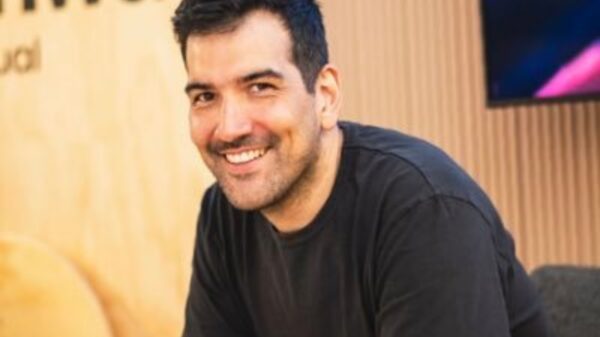

















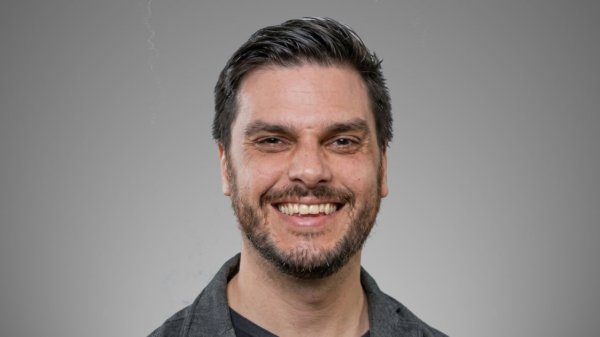













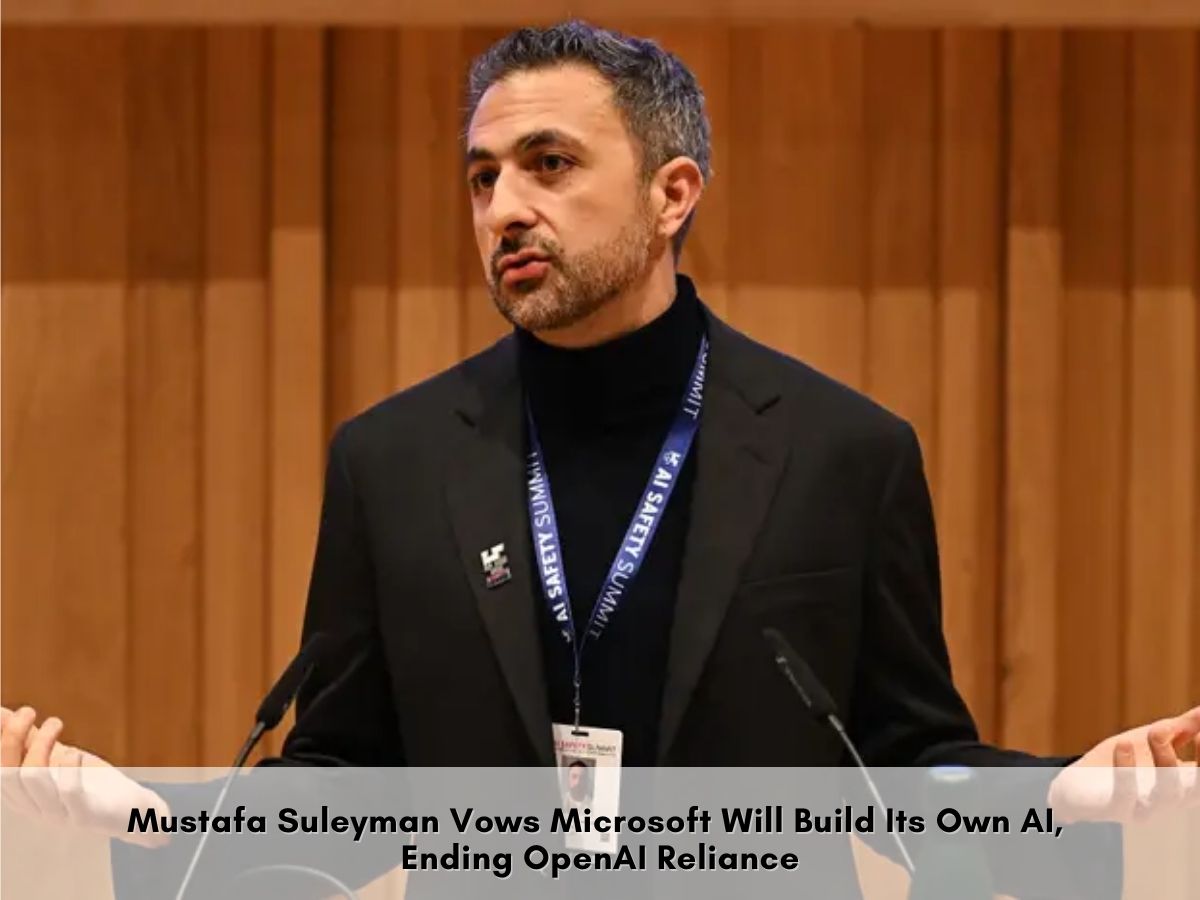
Microsoft’s AI chief Mustafa Suleyman has ignited discussions in the tech sector by stating the company aims for “true AI self-sufficiency.” This marks a significant shift toward developing its own advanced models and reducing reliance on long-time collaborator OpenAI. Suleyman, who co-founded Google DeepMind and joined Microsoft in March 2024, conveyed his personal mission to create in-house superintelligence in an interview with the Financial Times.
At just 41 years old, Suleyman now leads the Microsoft AI division, which oversees consumer tools such as Copilot, Bing, and Edge. His assertion that Microsoft must innovate its own “frontier foundation models using gigawatt-scale computing” suggests a stark departure from the company’s historical dependence on OpenAI for sophisticated AI systems.
Suleyman’s pedigree lends considerable weight to his statements. He co-founded DeepMind Technologies in 2010, which Google acquired for approximately £400 million in 2014. After leaving Google in 2022, Suleyman co-founded Inflection AI with Reid Hoffman, a venture that Microsoft later acquired for $650 million.
“My personal mission at Microsoft is to build superintelligence,” Suleyman remarked, noting that the company possesses “some of the very best AI training teams in the world” to achieve this ambition.
These comments come just months after Microsoft and OpenAI renegotiated their major partnership in October 2025. This restructuring transformed Microsoft’s profit-sharing rights into a 27% stake in the newly formed OpenAI Group PBC, valued at around $135 billion, while extending IP rights over OpenAI models until 2032. This agreement has provided both entities with the autonomy to operate independently, allowing Microsoft to pursue artificial general intelligence (AGI) either alone or in collaboration with third-party partners.
Suleyman confirmed that Microsoft’s in-house AI models are expected to debut “sometime this year,” building on the MAI-1-preview model, which was trained using around 15,000 Nvidia H100 GPUs and showcased in August 2025. The urgency for independence has been heightened by investor concerns; during a recent earnings call, Jefferies analyst Brent Thill indicated that OpenAI accounts for 45% of Microsoft’s backlog of future sales, raising “durability” and “exposure” issues.
The day following these revelations, Microsoft saw its stock plummet, resulting in a historic single-day decline of $357 billion in market value, partly attributed to these dependency anxieties. In response, Microsoft has been diversifying its AI supplier base, now incorporating models from xAI, Meta, Mistral, and Black Forest Labs in its data centers.
Suleyman’s journey to leading Microsoft’s AI initiatives is notable. Born in London to a Syrian father and an English mother, he experienced a challenging upbringing, including living in subsidized housing after his parents separated when he was 16. At 19, he dropped out of Oxford University, where he studied philosophy and theology, to co-found the Muslim Youth Helpline, one of the UK’s largest mental health support services for young Muslims.
Despite these challenges, Suleyman has ascended to a position of influence in the tech industry, advocating for “humanist superintelligence”—AI that operates under human guidance. His 2023 book, “The Coming Wave,” which has garnered praise from figures like Bill Gates, delves into the risks and potential of emerging technologies.
While Suleyman maintains a private personal life, there are no public records indicating he is married. His estimated net worth ranges between ₹3,600 crore and ₹4,500 crore, approximately $400 million to $500 million, derived from his successful ventures, including the acquisition of DeepMind and his stake in Inflection AI, which raised $1.3 billion prior to Microsoft’s acquisition.
Suleyman identifies as a “strong atheist,” despite being raised in a devout Muslim household. He has attributed his shift away from religion to his experiences during university. His educational background includes attendance at Queen Elizabeth’s School and an attempt to study at Mansfield College, Oxford, before he transitioned into the non-profit sector.
Through the establishment of a dedicated Microsoft AI Superintelligence Team, Suleyman is focusing on developing systems poised to surpass human capabilities across various tasks, all while adhering to stringent safety protocols. He emphasizes the importance of creating systems that can be controlled confidently, ensuring that AI remains subordinate to human oversight. “We must only bring into the world systems that we are confident we can control and that serve us in a subordinate way,” Suleyman stated.
Despite investor skepticism regarding a potential AI “bubble,” Microsoft is projecting $140 billion in capital expenditures for its AI infrastructure in the current fiscal year. As the tech landscape evolves, Suleyman’s vision for Microsoft may redefine both its strategic direction and its relationship with AI technology.
See also Salesforce Restructures with 1,000 Job Cuts, Elevates AI Strategy Amidst Investment Risks
 Ginkgo Bioworks Soars 5.69% as AI Boosts Protein Synthesis Efficiency by 40%
 Disney Sends Cease-and-Desist to ByteDance Over Alleged Copyright Violations in Seedance 2.0
 Morgan Stanley Reports Record Revenues; Announces Dividend Dates and AI Strategy Implementation
 Johnson Controls Boosts Q1 Earnings and AI Data Center Strategy Amidst Competitive Risks