LANSING, Mich. — As the global demand for artificial intelligence technology surges, the need for data centers—massive facilities that support the energy-intensive AI systems—has similarly escalated. Although data centers are not a novel concept, industry insiders note that the current growth in this sector is unprecedented in both scale and speed.
Major tech companies are investing billions of dollars to construct new facilities, racing to harness AI’s potential. In particular, the Midwest, including Michigan, has seen a surge in development proposals. Lawmakers have drawn parallels between this push for AI dominance and the historic space race, emphasizing the urgency of outpacing China in technological advancements.
Former Google CEO Eric Schmidt has articulated the importance of American leadership in AI, stating, “It is crucial that America get there first.” He explained to lawmakers earlier this year that the evolution of AI could lead to “human-level intelligence” within the next three to four years, paving the way to “super intelligence” in potentially just under a decade.
Schmidt pointed out that data centers, often situated in the U.S. heartland, can have a substantial economic impact on regions that are typically less prosperous. While proponents argue that these facilities are essential for modern technology and bring investment to local communities, critics raise concerns about health and environmental risks.
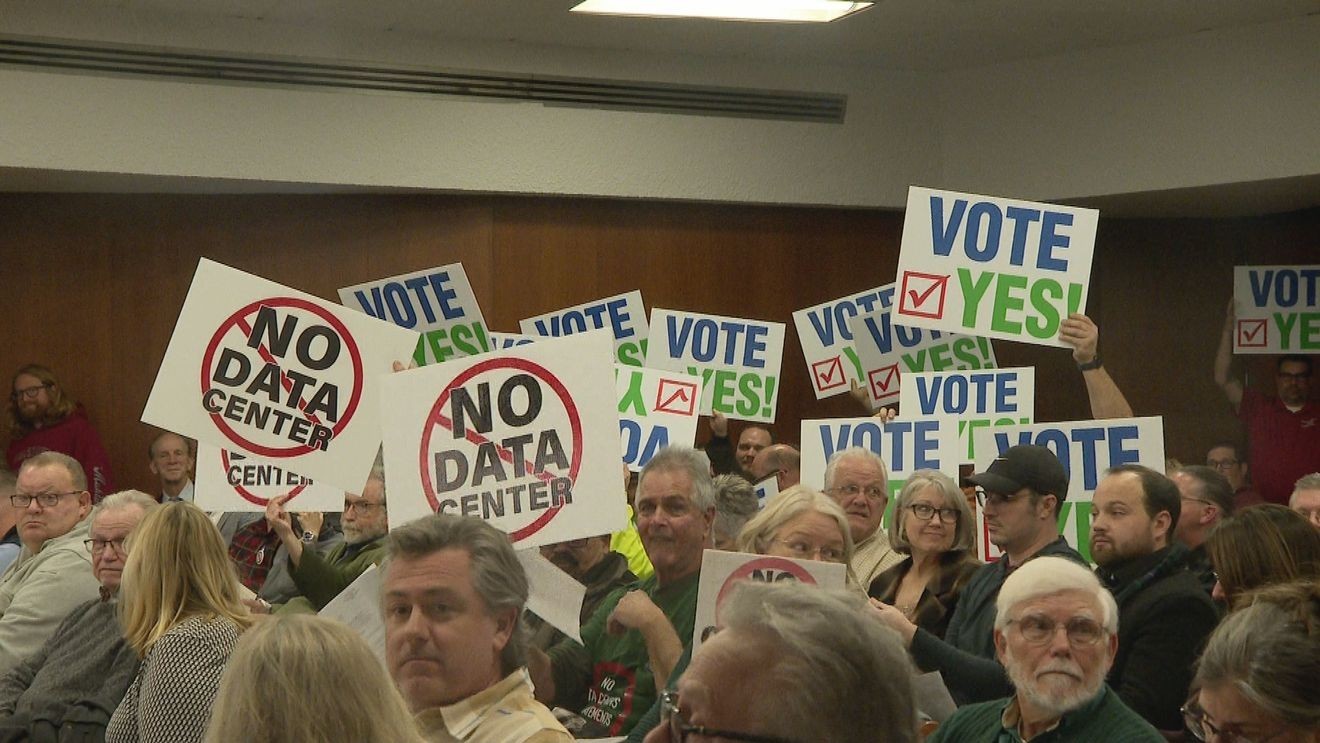
In Michigan, communities are currently facing zoning inquiries for data centers slated for 2025, with organized opposition from residents who fear the implications of such developments. Full-house meetings have been held in locations like Marshall and Lowell townships, as well as protests at the State Capitol, reflecting a growing unease among citizens.
Concerns raised by opponents primarily revolve around environmental issues, including the impact on water supplies, pollutants, and the electric grid capacity. The Environmental Law and Policy Center (ELPC) has reported receiving numerous inquiries from Michiganders about the ramifications of new data centers. Katie Duckworth, a senior associate attorney at the ELPC, stated, “People are asking fundamental questions about who ultimately benefits from the development of data centers, and demanding real transparency on those issues.”
Duckworth emphasized the need for a balanced approach, advocating for incentives and planning that demand companies to contribute fairly to electric costs while adopting environmentally sound technologies. Data centers typically rely on two cooling methods—open-loop and closed-loop systems. Chris Schrock, a senior energy engineer with Development Solutions Midwest, elaborated on each system’s pros and cons.
Open-loop cooling systems draw water from municipal sources, efficiently dissipating heat but consuming significant volumes of water, leading to evaporation losses. In contrast, closed-loop systems recirculate water, significantly lowering overall consumption but increasing energy demands due to the reliance on pumps and chillers. Most upcoming data centers in Michigan are adopting closed-loop systems, according to Schrock. “Closed-loop systems conserve water, but they require a lot more electricity to run pumps, fans and chillers,” he added.
As some of the largest electricity consumers on the grid, data centers pose challenges but could also foster investments into local communities and enhance grid infrastructure. Brandon Hoffmeister, senior vice president for strategy at Consumers Energy, has stated that data center developments would not lead to increased electric rates for customers, but could finance much-needed infrastructure improvements in Michigan.
Schrock noted, “A data center is a centralized, very large electric customer paying very large electric bills. The investment that goes into serving a customer like that often results in a more reliable electric network for that immediate neighborhood.” He reiterated that careful planning and management by communities and regulators are essential as new data centers are proposed.
As discussions continue across West Michigan, residents are vocal about their desire for choice, transparency, and community safeguards. With more data center proposals expected to be submitted to the Michigan Public Service Commission by 2026, the future landscape of these facilities may dramatically evolve. Some tech leaders have even suggested the possibility of future data centers in space.
In a notable initiative, the Lansing Board of Water and Light has proposed a project that would convert waste heat from servers to heat water for the city’s district heating system, aiming to reduce natural gas consumption. Schrock described it as “a really innovative way to improve efficiency,” utilizing the byproduct of data processing for community benefit.
As Michigan navigates the rapid rise of AI-driven infrastructure, local residents express their determination to remain actively engaged in the development process, signaling a significant chapter in the relationship between technology and community.
See also Mistral AI Deploys Voxtral Models on Amazon SageMaker with Advanced Multimodal Capabilities
 DXC Technology’s AdvisoryX Group: A Strategic Shift to Enhance AI Execution and Revenue Growth
 Shelley from Character.AI Shares Insights on Creative Writing and Prompt Engineering
 Alphabet Invests $15B in Energy and Cybersecurity to Propel AI Dominance
 AI Bubble Set to Burst: Major Firms Invest $1.5T Amid Looming Economic Risks