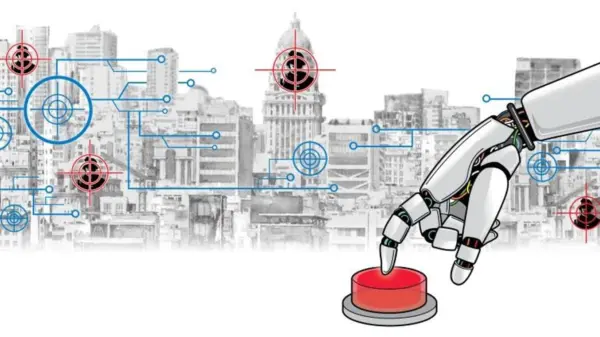



















































The University of Notre Dame has received a landmark grant of $50.8 million, the largest private funding in its history, to develop a faith-based ethical framework for artificial intelligence (AI). Awarded by Lilly Endowment Inc., the grant will support the university’s DELTA Network, an initiative launched earlier this fall aimed at examining how religious and moral traditions can inform the development and use of AI technologies.
University President Rev. Robert A. Dowd emphasized the project’s collaborative nature, stating that Notre Dame is uniquely positioned to unite religious leaders, educators, and technologists to explore the moral and ethical dilemmas associated with AI. “This project serves as a bridge-building effort,” he remarked, highlighting the significance of integrating diverse perspectives in discussions surrounding the technology.
The urgency of this initiative is underscored by the current regulatory landscape in the United States, where AI remains largely unregulated. Earlier this month, former President Donald Trump signed an executive order aimed at preventing state-level AI regulations, even as Congress has deliberated on the need for oversight regarding emerging technologies such as deepfakes. In this context, universities and civil society organizations are increasingly stepping into the void left by policymakers.
The DELTA Network, which stands for Dignity, Embodiment, Love, Transcendence, and Agency, aims to create tangible resources for educators, religious leaders, and technology experts. Unlike abstract theorizing, the initiative aspires to produce actionable insights that can be applied across various sectors. Plans include developing programs for young adults, establishing regional hubs in tech-centric areas like Silicon Valley and the northeastern United States, and hosting retreats and meetings where engineers, executives, and ethicists can deliberate on the complex questions that algorithms alone cannot resolve.
The ethical implications of AI have also captured the attention of the Vatican. During a December conference on AI, Pope Leo XIV expressed concerns that the technology poses challenges extending beyond mere efficiency and profit, advocating for “coordinated and concerted action” that involves politics, institutions, businesses, finance, education, communication, and religious communities.
At Notre Dame, the initiative draws on rich theological traditions but aims to remain inclusive. Meghan Sullivan, the founding director of the university’s Institute for Ethics and the Common Good, noted that while the work is deeply rooted in Catholic and Christian traditions, it is designed to be relevant and accessible to adherents of all faiths and those who do not practice any religion.
As technological advancements continue to outpace societal consensus on ethical standards, Notre Dame’s investment in the DELTA Network reflects a commitment to placing issues of dignity, agency, and transcendence at the forefront of public discourse. This initiative may serve as a pioneering model for integrating ethical considerations into the rapidly evolving field of AI, thereby influencing not just academic and religious communities, but also the broader public much needed clarity in this complex arena.
In a world where the implications of AI are becoming increasingly significant, initiatives like the DELTA Network signal a growing recognition of the necessity for ethical frameworks that can effectively guide technological innovation. As stakeholders from various sectors come together to engage in these critical conversations, the importance of balancing technological progress with moral considerations will remain a central concern.
For more details on the University of Notre Dame’s initiatives, visit their official website: nd.edu. To explore the work of Lilly Endowment Inc., please see their site: lef.org.
See also AI Transforms Global Banking: DBS Sees $573M Impact; Akbank and Citi Lead Innovations
 Microsoft and NASA Launch Hydrology Copilot to Enhance Access to Water Risk Data
 Physics AI Revolutionizes Aerospace Engineering: Accelerates Design for Space’s Future
 Retail AI Surge: 2025 Sees 758% E-Commerce Growth Amid Industry Adoption Struggles
 Demis Hassabis and Yann LeCun Debate AGI’s Definition Amid AI’s Human-Level Capabilities