




















































Nvidia Corp. is poised to reap considerable benefits after U.S. lawmakers opted not to include a proposal restricting the company’s ability to export advanced AI chips to China and other U.S. adversaries from a pivotal defense policy package. This decision comes amid ongoing discussions regarding the proposed Guaranteeing Access and Innovation for National Artificial Intelligence (GAIN AI) Act, which would have mandated semiconductor manufacturers, including Nvidia and Advanced Micro Devices Inc. (AMD), to prioritize American buyers for high-performance AI chips before offering them to nations subject to U.S. arms embargoes.
The act was under serious consideration for inclusion in this year’s annual defense bill, which is set for release this Friday. However, a source familiar with the situation indicated that the contentious provision does not appear in the current draft of the bill, although the legislative landscape could still change as discussions progress.
Nvidia’s apparent victory follows an intense lobbying campaign where the company and other stakeholders pushed back against AI safety advocates and lawmakers advocating for stricter controls on technology exports to China. Nvidia has argued that the proposed legislation could disadvantage U.S. producers in the competitive global marketplace, asserting that American customers would not face shortages of its leading-edge chip technologies.
The urgency surrounding this debate has intensified as the Trump Administration reviews export controls for the H200, a cutting-edge Nvidia AI chip that is reportedly significantly more advanced than any of its Chinese competitors and is currently subject to licensing requirements. The H200’s capabilities underline the stakes involved in regulating advanced semiconductors amid rising geopolitical tensions.
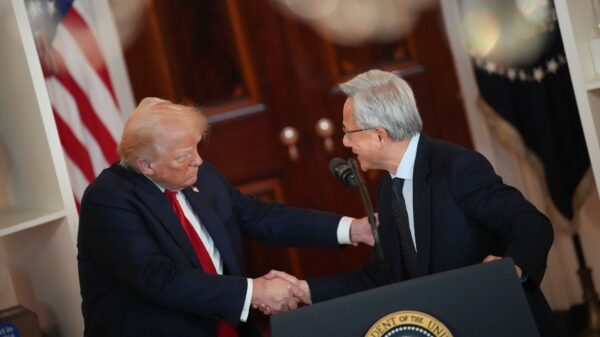
Moreover, President Donald Trump had previously shown some willingness to permit exports of a downgraded version of Nvidia’s Blackwell chip. However, he is currently facing pushback from key officials within his administration regarding such a decision, adding another layer of complexity to the discussions surrounding semiconductor exports.
The GAIN AI Act, if enacted, would have mandated that U.S. companies focus on domestic sales first, a move seen by critics as potentially stifling innovation and competitiveness. This would have directly impacted Nvidia, which has positioned itself as a leader in AI technology development. The company’s chips are integral to various sectors, including artificial intelligence research, data centers, and advanced computing solutions.
In the face of these challenges, Nvidia’s ability to maintain its export capabilities to critical markets like China has been a focal point for the company. The absence of the proposed restrictions in the defense bill could allow Nvidia to sustain its market share and technological edge, particularly as demand for AI infrastructure continues to grow globally.
The broader implications of this legislative decision may also resonate throughout the tech industry, as other firms monitor the developments closely. The competition in the semiconductor market, especially concerning AI capabilities, remains fierce, with companies racing to innovate and capture market share. Additionally, the decision reflects an ongoing balancing act for U.S. lawmakers, who must weigh national security concerns against the realities of a globalized tech economy.
As the political landscape remains fluid, industry players will continue to advocate for favorable conditions that enable growth while navigating the complexities of international relations and technology transfers. Nvidia’s recent lobbying success underscores the significant influence that major tech firms wield as they navigate these turbulent waters.
Moving forward, the situation regarding AI chip exports will likely remain a hot-button issue in U.S. policy discussions. The evolving dynamics of technology, security, and international relations suggest that companies like Nvidia will have to remain vigilant and adaptable to thrive in an increasingly competitive and scrutinized environment.
See also CEOs Warn of AI Bubble Risks as $100M+ Startups Surge Amid Industry Shakeout
 AI Bubble Predicted to Burst by 2026: Key Risks for Nvidia and Broadcom’s Valuations
 Google Launches AI Mode with Gemini 3 in India, Expanding Multimodal Search Capabilities
 Hamid Ismailov and Shelley Fairweather-Vega Explore AI’s Transformative Role in Literary Futures
 Elon Musk Launches Grokipedia with 800,000 AI-Generated Entries to Challenge Wikipedia