

















































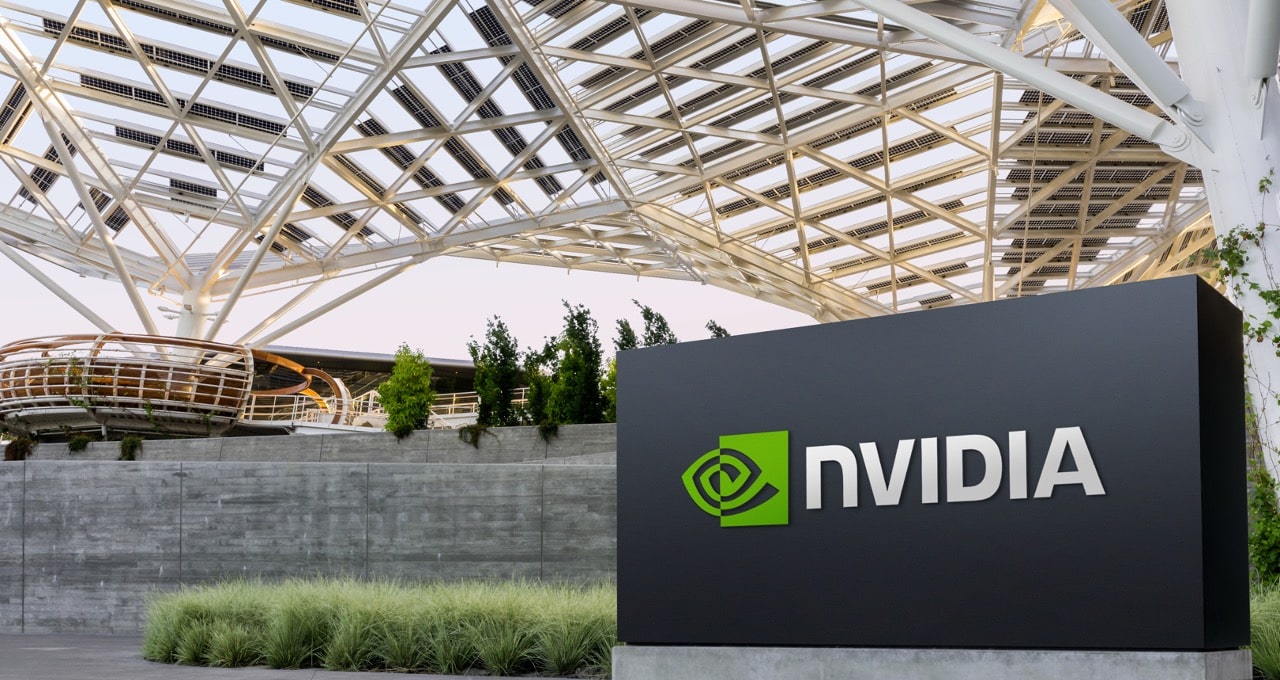
NVIDIA will partner with the U.S. Department of Energy’s (DOE) Genesis Mission as part of an initiative to maintain American leadership in artificial intelligence (AI) technology globally. The Genesis Mission, announced under an executive order recently signed by President Trump, aims to redefine U.S. leadership in AI across critical sectors including energy, scientific research, and national security. Through this collaboration, NVIDIA plans to integrate a discovery platform that connects the U.S. government, industry, and academic institutions.
DOE officials anticipate that the Genesis Mission will double the productivity and impact of American science and engineering, leading to significant breakthroughs that will enhance energy dominance, expedite scientific discovery, and fortify national security.
The collaboration between NVIDIA and the DOE has already yielded promising results in several areas. Notable projects include the development of open AI science models, exemplified by the NVIDIA Apollo family, aimed at improving weather forecasting, computational fluid dynamics, and structural mechanics. Other initiatives focus on optimizing manufacturing and supply chain processes through AI, advancing robotics, and employing high-fidelity simulation and AI-enabled digital twins.
Further focal points of the partnership involve research in nuclear energy, including both fission and fusion technologies, as well as innovations in quantum computing that leverage supercomputers and AI for algorithm development. In the fields of biology, materials science, and synthetic design for healthcare, the collaboration is positioned to drive critical breakthroughs in materials.
In a formal announcement, NVIDIA confirmed it has signed a memorandum of understanding (MOU) with the DOE to outline their collaborative priorities aimed at accelerating scientific discovery. This MOU encompasses a range of initiatives, from AI applications in manufacturing and supply chain logistics to advanced research in fission energy, robotics, and quantum computing. Collectively, these efforts are designed to utilize cutting-edge AI, robotics, and high-performance computing to transform energy production, manufacturing processes, and scientific research throughout the DOE’s mission landscape.
The MOU emphasizes the design, operation, and management of complex systems such as nuclear reactors and autonomous laboratories. It also encompasses potential opportunities for collaboration in quantum computing, materials science, synthetic design, geothermal resources, environmental cleanup, and the use of AI as “co-scientists” to expedite algorithm development and code generation for demanding scientific applications.
NVIDIA’s involvement with the Genesis Mission follows recent collaborations highlighted during the NVIDIA GTC conference in Washington, D.C. Among these is a partnership with Oracle to construct the DOE’s largest supercomputer for scientific research at Argonne National Laboratory. Additionally, NVIDIA will assist in launching seven new systems across Argonne and Los Alamos National Laboratories, reinforcing the DOE’s goal of technological leadership.
NVIDIA’s innovative accelerated computing architecture has made modern AI advancements feasible, enabling researchers to train expansive models, simulate complex physical systems, and propel scientific inquiry at unprecedented scales and speeds. As AI continues to foster a new industrial revolution in the U.S. and worldwide, the Genesis Mission is poised to amplify and expedite these transformative changes.
See also AMD Stock Rebounds 3.4% Amid AI Funding Concerns; Piper Sandler Maintains $280 Target
 Interconnects Doubles Audience to 40K in 2025 Amid Surge in Open Model Discussions
 BTIG Boosts Amplitude (AMPL) Rating, Spotlights AI Potential Amid Investment Risks
 Kakao Unveils Kanana-2 Language Model on Hugging Face with Enhanced Tool Calling Features
 AI and Global Regulation Challenge Anonymization: Key Strategies for Compliance and Risk Management