



















































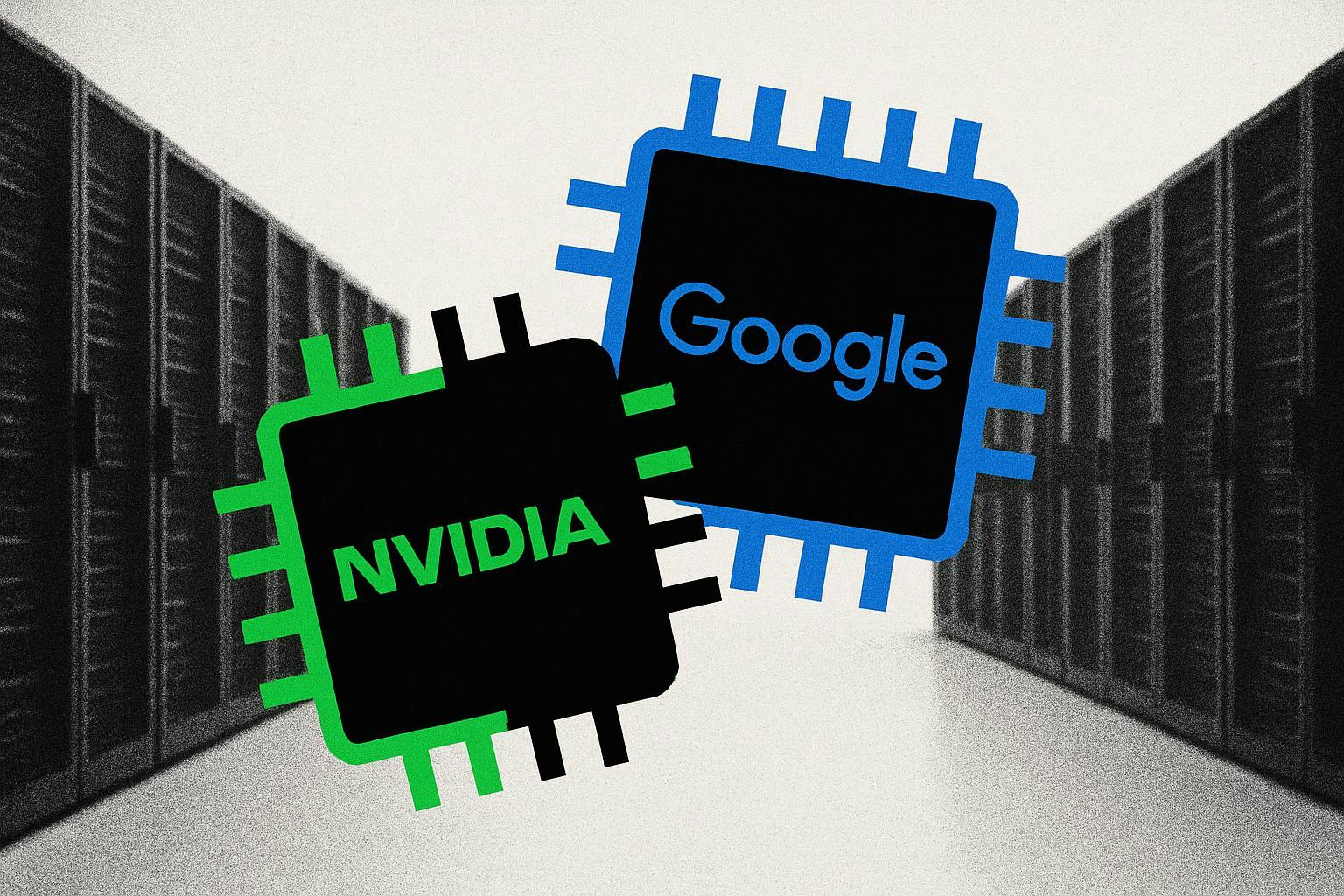
Nvidia shares experienced a decline in early trading following reports that Meta Platforms is contemplating a switch to Google‘s custom AI hardware, specifically its tensor processing units (TPUs). This news led to a rise in Alphabet‘s stock before markets opened.
Meta Platforms, the parent company of Facebook and Instagram, may begin utilizing Google’s TPUs within its data centers as early as 2027. There are also indications that the company could start renting Google Cloud’s AI hardware in 2026. For years, Nvidia’s graphics processing units (GPUs) have dominated the AI chip landscape, facilitating significant advancements in the field. However, as major tech firms explore alternative options, Google’s TPUs are gaining traction, promising enhanced cost efficiency and speed. A spokesperson for Google noted that interest is growing for both in-house chips and Nvidia’s offerings, reflecting the strong demand for AI solutions. Meta has not commented on its future plans regarding AI hardware.
The implications of this shift are substantial for the tech market. As the competition for AI chip dominance intensifies, major players are diversifying their strategies. Nvidia’s long-standing supremacy in the AI chip sector has come under pressure as discussions around potential partnerships with competitors evolve. In contrast, Alphabet’s stock surge indicates investor optimism regarding the potential for Google’s TPUs to carve out a significant role in the AI sector. Meanwhile, a subtle uptick in Meta’s shares suggests investors are betting on companies capable of integrating various chip designs to advance their AI initiatives.
This evolving landscape underscores a broader industry trend. The shift away from reliance on single-source suppliers reflects the increasing complexity and diversity of AI applications. Google’s investment in its own chips highlights a significant industry pivot toward customized solutions, granting firms greater control over critical technologies. Such competition is likely to fuel innovation, reduce costs, and expand the array of options available to businesses, positioning the global AI hardware sector as more competitive than ever.
As firms continue to adapt to this rapidly changing environment, the focus will likely remain on flexibility and innovation in AI chip development. The landscape is shifting, and companies that can navigate this transformation are poised to thrive in the competitive sphere of artificial intelligence.
See also Amazon Unveils $50B AI Infrastructure Push for US Government, Boosting National Tech Edge
 Michigan Launches Massive AI Data Center Projects Amid Environmental and Economic Concerns
 CrowdStrike Discovers Killswitch in DeepSeek-R1, Reveals 50% Code Vulnerability Increase
 Tsinghua University Unveils Optical Processor Achieving 12.5 GHz AI Computation Speed
 Nvidia Stock Plummets Over 3% as Meta Considers $100B Google AI Chip Deal