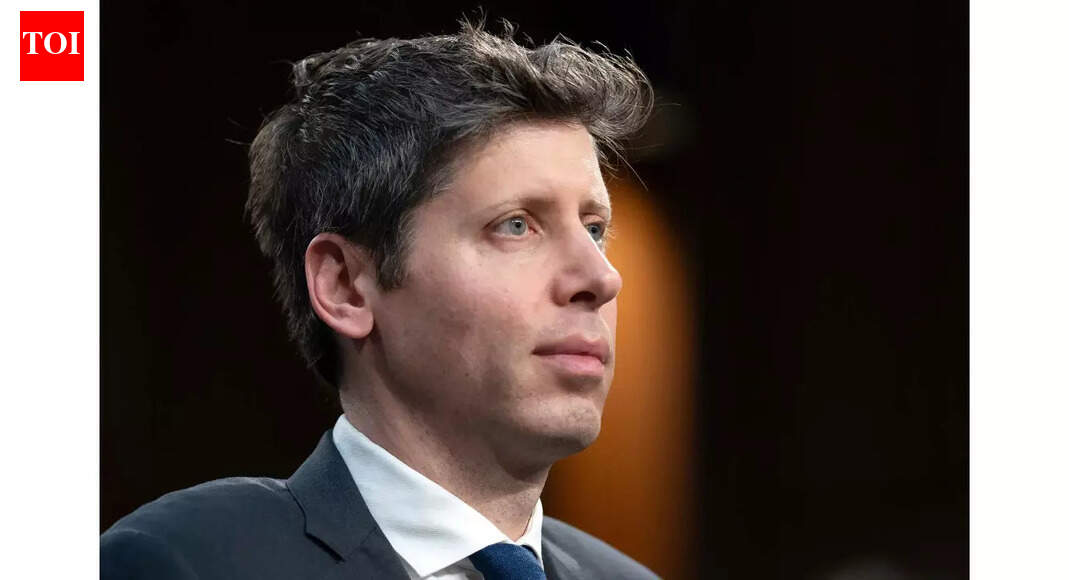
OpenAI CEO Sam Altman has expressed little enthusiasm for the prospect of leading a publicly traded company, despite acknowledging the necessity of an initial public offering (IPO) to fuel the organization’s growth. Speaking on the “Big Technology Podcast,” Altman stated, “Am I excited to be a public company CEO? 0%.” He emphasized the mixed emotions surrounding the potential IPO for the ChatGPT maker, noting, “Am I excited for OpenAI to be a public company? In some ways, I am, and in some ways I think it’d be really annoying.”
Altman cited the practical needs pushing toward an IPO, admitting OpenAI will eventually require substantial capital as it crosses various shareholder limits. “I do think it’s cool that public markets get to participate in value creation. And in some sense, we will be very late to go public if you look at any previous company,” he remarked. The CEO highlighted the benefits of being a private company, while clearly recognizing the forthcoming demands of expansion.
Established in 2015 by Altman and eleven co-founders, OpenAI has experienced significant growth, particularly following the launch of ChatGPT in 2022, which now boasts around 800 million weekly users. The company has entered into partnerships worth approximately $1 trillion with major tech firms such as Oracle, Nvidia, and AMD. These alliances underscore the increasing value of OpenAI in the competitive landscape of artificial intelligence.
Recent reports suggest OpenAI may be taking steps toward an IPO, with discussions underway and a valuation estimated at approximately $830 billion. A report from Reuters in October indicated the company could be valued as high as $1 trillion, citing three sources familiar with the matter. OpenAI’s chief financial officer, Sarah Friar, is targeting a stock market listing for 2027, with a potential filing as early as late 2026.
The transition to a public company is partly driven by the need for capital to sustain OpenAI’s competitive edge in the rapidly evolving AI sector. Although initially founded as a nonprofit, the organization underwent a significant restructuring in October, transforming into a for-profit entity. This reorganization granted the nonprofit overseeing OpenAI a stake valued at $130 billion, while reducing Microsoft’s share to 27% and enhancing its research access, thereby allowing OpenAI to form partnerships with additional cloud-computing companies.
OpenAI’s responsiveness to competitive pressures has been evident in recent months. Earlier in October, Altman issued a “code red” memo internally after Google rapidly launched its Gemini 3 model, signaling a heightened urgency to accelerate OpenAI’s core initiatives. The memo directed teams to prioritize critical projects for eight weeks, pausing less urgent initiatives like advertising and e-commerce ventures. This strategic shift appears to be effective, with OpenAI recently unveiling its new GPT-5.2 model, alongside an image-generation model designed to compete directly with Google’s Nano Banana. Although OpenAI’s apps CEO, Fidji Simo, stated that the release was not a direct response to Gemini 3, the additional resources allocated from the “code red” initiative undoubtedly facilitated the expedited launch.
As OpenAI navigates the challenges of growth and competition, the path toward an IPO remains a critical milestone in its journey. The company’s ability to secure necessary funding while maintaining its innovative edge will be closely monitored as it prepares to transition into a new phase of its corporate existence, potentially reshaping the AI landscape in the years to come.
See also Invest in AI Giants: Top 3 Stocks—Alphabet, Amazon, TSMC—Set for 2026 Gains
 AMD Stock Soars 6.15% as Analysts Hike Price Targets Amid AI Market Surge
 Amazon Pulls AI-Generated Fallout Recaps After Major Errors in Key Plot Points
 AI Investment Bubble Bursts: Oracle’s $10B Deal Collapse Triggers Stock Slide
 Salesforce Bolsters AI with $25M Acquisition of Qualified and ChatGPT Integration