





































As the landscape of work undergoes significant change, many professionals are grappling with a fundamental question: Is this what I want to keep doing? This moment of reflection is felt across bustling office towers in Mumbai, as well as in corporate clusters in Delhi, Noida, Gurugram, Bengaluru, and Pune. Amid the hum of deadlines and routine, some individuals are entertaining the idea of branching out on their own, a notion often dismissed as impractical.
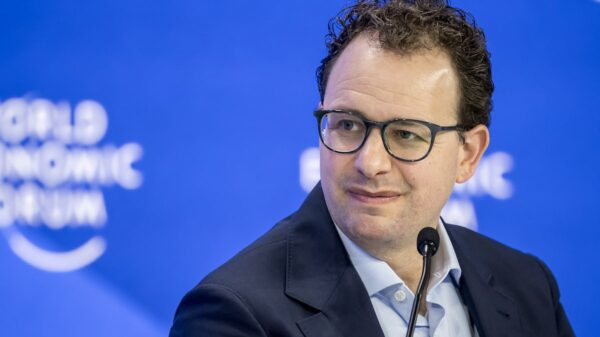
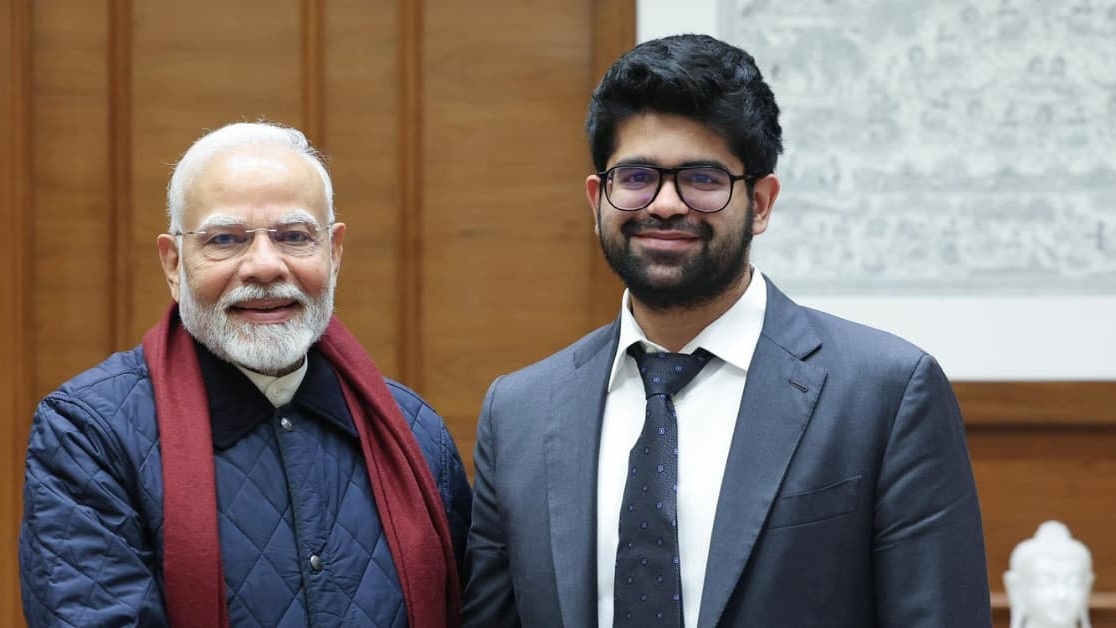
Aravind Srinivas, co-founder and CEO of Perplexity AI, recently addressed this concern during an appearance on the All-In podcast. He posited that the rise of artificial intelligence, despite its disruptive potential, could present new opportunities for those who have long harbored aspirations of self-employment. “Most people don’t enjoy their jobs,” Srinivas observed. “There’s suddenly a new possibility, a new opportunity, to go use these tools, learn them, and start your own mini business.” He acknowledged the potential for job losses in the short term but insisted that “that sort of glorious future is what we should look forward to.”
Srinivas’s remarks do not shy away from the fears associated with such transitions; rather, they reframe anxiety not as a dead end but as a catalyst for new beginnings. This shift in mindset suggests a more fragmented yet potentially more independent work ecosystem. With AI tools enabling individuals to write, design, code, analyze, and manage operations that previously required teams, the barriers to entrepreneurship have diminished significantly.
The concept of a “mini business” embodies this change. It emphasizes the possibility of generating income streams with limited resources, rather than the traditional narrative of building large corporations. However, this transition is not uniform across the board. Access to advanced tools does not guarantee success; critical factors such as skills, time, financial stability, and risk tolerance play crucial roles, and not everyone has equal access to these resources.
Recent data from Challenger, Gray and Christmas reveals that US employers announced approximately 60,620 job cuts in a single month, a 25% increase from February. Of these, around 15,341 job cuts—roughly one-quarter—were specifically attributed to changes related to AI. The situation in India is also evolving rapidly, with major companies recalibrating their workforce strategies. For instance, Amazon has reduced around 16,000 corporate roles this year, and Meta has indicated potential workforce reductions in the tens of thousands while deepening investment in AI.
Oracle Corporation has also implemented wide-scale layoffs, cutting 30,000 jobs globally, including 12,000 in India. This reflects a broader trend in the industry where hiring has slowed as investment in automation accelerates. Despite the unemployment rate for individuals aged 15 and above in India standing at a relatively stable 3.1% in 2025, aggregate numbers can obscure individual experiences of friction when industries adapt more swiftly than skill development can match.
The emergence of AI does not eliminate risks; it redistributes them. While companies may reduce costs associated with their workforce, individuals may find themselves facing increased personal uncertainty in exchange for greater flexibility. Srinivas’s vision of a “glorious future” is not presented as an assured outcome but rather as a directional shift dependent on individuals’ ability to access new tools, learn updated systems, and sustain themselves through transition periods.
In this view, artificial intelligence serves as both a disruptor and an enabler. It can eliminate certain roles while simultaneously diminishing the gap between skill acquisition and practical execution. Today, a single person can accomplish tasks that once required intricate coordination across multiple departments. The pressing question is not whether change is occurring—it is already visible—but rather how evenly its benefits will be distributed and how well individuals are prepared to adapt.
For many, the contemplation of leaving a traditional job will remain just that, a mere thought. For others, the shifting landscape of work may transform that thought into necessity. For a smaller subset, it may open doors to new possibilities. Between the realms of fear and potential lies the space Srinivas refers to: a territory that is not entirely secure, not completely uncertain, but undeniably new.
See also AI Chatbot Engages 10,000 Wisconsin Voters, Boosting Chris Taylor’s Supreme Court Win
 Germany”s National Team Prepares for World Cup Qualifiers with Disco Atmosphere
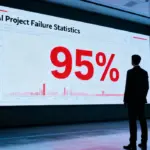 95% of AI Projects Fail in Companies According to MIT
 AI in Food & Beverages Market to Surge from $11.08B to $263.80B by 2032
 Satya Nadella Supports OpenAI’s $100B Revenue Goal, Highlights AI Funding Needs