
















































A significant technological shift is underway in the United States, one that many Americans remain unaware of, according to insights from a seasoned AI researcher and entrepreneur. During a recent briefing in Washington, D.C., the expert described a moment he terms “the convergence,” a pivotal juncture between Artificial Intelligence and another rapidly evolving technological breakthrough.
This convergence is expected to arrive sooner than many anticipate, with the researcher commenting, “Most people are not prepared for this coming convergence.” He highlights a pressing challenge facing the tech sector: modern AI is reaching the limits of what current computing hardware can manage. As AI finds applications across various fields, from medical diagnostics to supply chain management, the demand for data to train these models is skyrocketing. The expert points out that the bottleneck lies not in AI technology itself but in the outdated computing architectures supporting it. “Our conventional computers are not powerful enough to process all that data,” he explained.
The briefing raises alarms about the implications of this bottleneck, which threatens to stifle AI’s potential at a time when global reliance on automation and intelligent machines is escalating.
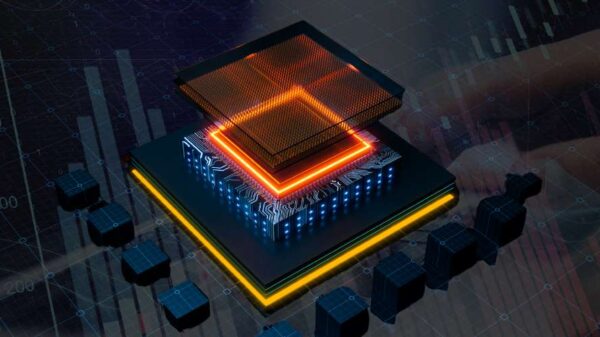
While many still regard quantum computing as a distant concept, the expert asserts that this famed breakthrough is already manifesting. “People think quantum computers are many years away,” he notes, but he insists, “the reality is, quantum computers are already here.” A landmark achievement in the field occurred when Google tested a quantum processor on a problem that would require the world’s most advanced supercomputer “billions of years” to solve, yet the quantum device completed it in just five minutes.
This development marks a crucial evolution in computing, with the expert emphasizing, “This is no longer theoretical stuff.” The intersection of AI and quantum computing is seen as the critical shift to monitor closely. Quantum computers function differently from traditional systems, evaluating vast numbers of possibilities at once and excelling at problem sets that currently burden AI applications. The researcher predicts that the fusion of these technologies will trigger an unprecedented acceleration in technological advancement.
“We’re going to see not just exponential growth… but vertical growth,” he stated, characterizing this “vertical growth” as advancements occurring so swiftly that entire industries could transform within months. Several sectors, including drug discovery, logistics, materials science, and national defense, are already experiencing preliminary activities at the intersection of quantum and AI technologies.
As the public engages in debates about the future of AI, major corporations are moving forward with quantum-AI integration. The briefing outlines the proactive measures taken by leading companies in the tech industry. Nvidia is embedding quantum capabilities into its existing AI frameworks, while Google has established a dedicated quantum division to enhance research initiatives. In a significant stride, Microsoft unveiled a new quantum chip earlier this year. Moreover, DARPA, renowned for its pivotal role in developing the internet, is now collaborating on quantum-AI projects.
Industry executives maintain that a turning point is on the horizon, with one prominent figure stating, “Quantum computing is reaching an inflection point.”
The expert warns that this convergence will not impact all industries or organizations equally. Some will adapt and flourish, while others may falter dramatically. “This will be the biggest tech disruption ever,” he asserted, cautioning that firms that fail to embrace these changes risk obsolescence and potential bankruptcy in a rapidly evolving landscape.
As businesses brace for this seismic shift, the implications for the American workforce and economy are profound. The convergence of AI and quantum computing not only promises to enhance efficiency and innovation across various sectors but also raises critical questions about preparedness and adaptation in an era where technological evolution is accelerating at breakneck speed.
James Altucher, the voice behind these warnings, is a former hedge-fund manager and bestselling author with substantial expertise in technology and innovation. His credentials include a computer science degree from Cornell University and contributions to groundbreaking AI initiatives, including “Deep Thought,” one of the first AI supercomputers, and IBM’s “Deep Blue,” which famously defeated chess champion Garry Kasparov.
As the race towards quantum-AI integration heats up, stakeholders from various sectors will need to navigate these impending changes with urgency and foresight, lest they risk being left behind in what could be the most significant technological upheaval in modern history.
See also Mistral Launches AI Family with 675B Parameters, Competes Head-to-Head with DeepSeek
 Unlock B2B Growth: Leverage Operational AI to Boost PR Efficiency and Strategy
 Globant Converge 2025: Transform AI Ideas into Action with Global Leaders, Dec 10-11
 Anthropic Warns: Humanity Faces AI Evolution Decision by 2027 Amidst Existential Risks
 NVIDIA Expands AI Robotics Hub in London, Boosting Market Confidence and Stock Growth