






































Skeleton Technologies has inaugurated its €220 million SuperFactory in Markranstädt, near Leipzig, marking a significant advancement in the European energy storage sector. The facility is already operational, providing supercapacitors to major clients such as Siemens, General Electric, and Hitachi Energy for European electrical grids, in addition to serving leading US hyperscalers involved in AI infrastructure.
In an exclusive interview, CEO Taavi Madiberk elaborated on the company’s vision and strategic decisions. As a European leader in high-power, fast-charging energy storage solutions, Skeleton Technologies partners with top-tier companies across various sectors, including mobility and defense. Its clientele ranges from automotive giants like Honda and Skoda Electric to defense contractors and industrial OEMs, benefiting from the firm’s patented Curved Graphene technology.
This innovative material helps protect critical systems from power fluctuations, stabilizes essential infrastructure, and enhances performance, all while avoiding the use of lithium, cobalt, and other critical raw materials. Madiberk emphasized the importance of a fully European value chain, which sets Skeleton apart in a crowded market.
The company’s journey serves as a counterpoint to recent challenges faced by other players in Europe’s battery sector. Notably, the collapse of Britishvolt, which went bankrupt in 2023 after failing to build its gigafactory, highlights the risks associated with ambitious factory projects. Other ventures, such as Italvolt and Northvolt, have also stumbled, with the latter halting production in June following bankruptcy.
Madiberk attributes Skeleton’s success to lessons learned during the financial constraints of the past decade. “We started the company during the nuclear winter of energy and climate financing — back in 2009,” he stated. This environment necessitated organic growth and a distinct market offering. He contended that the challenges of building factories cannot be solved by capital alone; rather, efficiency becomes vital when resources are scarce. “If you hire hundreds of people for a factory scale-up, you get too many chefs in the kitchen,” he cautioned.
To mitigate risks in its factory buildout, Skeleton partnered with Siemens, leveraging their expertise in logistics and automation. The collaboration began with the creation of a digital twin of the factory, testing systems virtually before actual construction commenced. Madiberk underscored the value of in-house expertise, asserting that top management must be actively involved in all aspects of the business, from equipment supply to process design.
Talent acquisition has played a crucial role in Skeleton’s ascent. Madiberk highlighted the strategic hire of an experienced founder from Danfoss, who has bolstered the company’s AI team in Finland. Flexibility has been equally important; when the electrification landscape shifted, Skeleton pivoted to focus on supercapacitors for AI data centers, recognizing that heavy-duty electrification would take longer to materialize.
“We keep the lights on in Europe,” Madiberk remarked, referencing the impact of the recent Iberian blackout, which exposed the vulnerabilities of interconnected grids. As the European Commission projects a need for €584 billion investment by 2030 to modernize electricity networks, Madiberk stresses that the solution lies not in reverting to fossil fuels but in enhancing the resilience of renewable energy systems. Skeleton’s supercapacitors are now used by German transmission operators to provide essential stability to the grid.
The company has also capitalized on a burgeoning market in AI data centers. With projections indicating US hyperscalers will invest $330 billion in AI infrastructure by 2026, Madiberk recognizes that European investment must significantly increase to keep pace. He points out two structural challenges: rising electricity costs driven by energy-intensive AI systems and the limited local production of AI infrastructure.
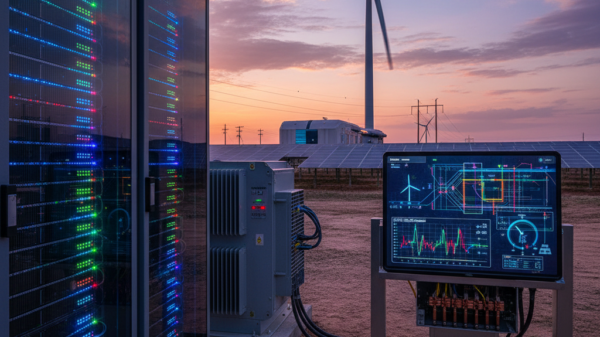
Skeleton has strategically built its own power electronics and software, allowing the company to penetrate the AI market effectively. Madiberk noted, “We did something differently: Skeleton built its own power electronics and software. That allowed us to get into the AI market.” Currently, AI data centers experience considerable energy waste due to rapid power fluctuations, which Skeleton aims to alleviate.
The Leipzig plant specifically manufactures graphene-based supercapacitors, used in the company’s GrapheneGPU™ technology, which can reduce total electricity usage by up to 44% while enhancing computing power by up to 40%. By smoothing power peaks and reducing grid stress, Skeleton’s innovations address both energy efficiency and operational performance in AI environments.
Skeleton Technologies not only positions itself as a leader in high-power energy storage but also reinforces the significance of maintaining a comprehensive value chain within Europe. The recent opening of its Leipzig facility, which is set to create 420 jobs and achieve an annual output of up to 12 million cells, emphasizes the company’s commitment to bolstering Europe’s industrial capacity in energy storage.
See also Buy These 3 AI Stocks Now: Meta, Adobe, and Microsoft Post-Pullback Opportunities
 Investors Steer Cautiously Post Freshworks Downgrade Amid AI Growth Concerns
 Adani Group Invests $5 Billion in Google’s AI Center to Boost India’s Tech Infrastructure
 Genesis Mission Launches U.S. AI-Driven Scientific Platform to Accelerate Research Breakthroughs
 Meta Platforms Achieves $51.24B Revenue, AI Investments Drive 26.3% YoY Growth