



















































The rapid expansion of artificial intelligence and cloud services is creating a significant demand for computing power, straining data infrastructure that requires a substantial amount of electricity. A single medium-sized data center can consume enough power to operate approximately 16,500 homes, with larger facilities operating at a scale comparable to a small city. In response to these challenges, tech leaders are increasingly advocating for space-based AI infrastructure to address the growing power requirements.
On November 4, 2025, Google unveiled Project Suncatcher, an ambitious initiative to launch an 81-satellite constellation into low Earth orbit. The project aims to harness solar energy to power the next generation of AI data centers in space, enabling a more efficient processing of information. Instead of transmitting power back to Earth, the satellites would beam data down, offering a novel approach to data processing while mitigating the heat generated by terrestrial data centers.
For instance, if a user queries a chatbot about baking sourdough bread, the question would be sent to the satellite constellation, processed using chips powered solely by solar energy, and the recipe would then be relayed back to the user’s device. This method potentially leaves the substantial heat generated by data processing in the cold vacuum of space.
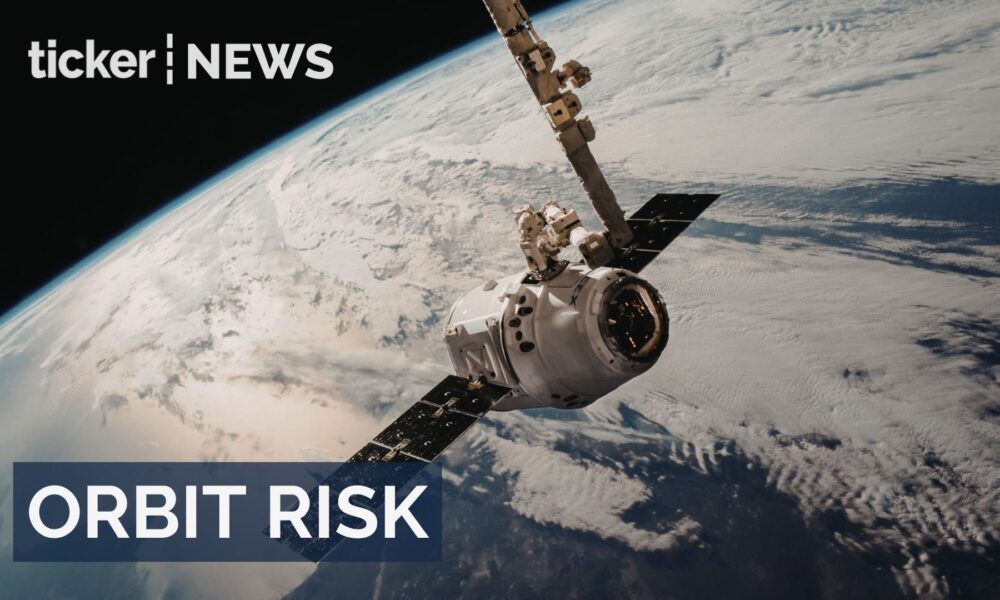
While the project is a significant step forward, there are growing concerns about the implications of space debris. Space debris consists of defunct human-made objects in Earth’s orbit, which pose risks to operational satellites and astronauts. This debris includes large items like spent rocket stages as well as tiny fragments from defunct satellites, all traveling at hypersonic speeds of around 17,500 miles per hour (28,000 km/h). Even a collision with a small piece of debris can have catastrophic consequences.
The proliferation of space debris has already impacted space agencies and companies. Notably, incidents of satellite breakups and anti-satellite tests have contributed to this growing crisis. The rapid expansion of commercial constellations, such as SpaceX’s Starlink, which includes over 7,500 satellites providing global internet coverage, exacerbates the issue. The U.S. Space Force tracks more than 40,000 objects larger than a softball using ground-based radar and optical telescopes, but this represents less than 1% of the total debris in space, with most objects too small to be tracked reliably.
In November 2025, a near-miss incident involving Chinese astronauts aboard the Tiangong space station highlighted these dangers when their return capsule was struck by space debris. Such incidents underscore the urgent need for solutions as more satellites launch into increasingly congested orbits.
Project Suncatcher targets a Sun-synchronous orbit approximately 400 miles (650 kilometers) above Earth, an ideal location for uninterrupted solar energy. However, this orbit is also one of the most congested highways in low Earth orbit, heightening the risk of collisions with other satellites and debris.
The constellation is designed to operate with an ultradense formation, with each satellite spaced less than 200 meters apart. This configuration allows for the distribution of complex AI workloads across the satellites, enabling them to function collectively as a powerful, distributed system. Google plans to launch two prototype satellites by early 2027 to validate the technology.
However, the challenges of maintaining formation in space are compounded by orbital drag and unpredictable space weather, which can alter the density of air particles in low Earth orbit. This drag can cause satellites to slow down and lose altitude, especially those with large surface areas. The close proximity of satellites means that a single collision could trigger a catastrophic chain reaction, creating millions of new debris pieces in an already hazardous environment.
To mitigate these risks, satellite companies need to adopt a “leave no trace” standard, ensuring that their spacecraft do not fragment or pose threats to other satellites. This could involve designing satellites with capabilities to autonomously navigate through debris fields, although Suncatcher’s current design lacks such features. In the first half of 2025 alone, SpaceX’s Starlink performed over 144,000 collision-avoidance maneuvers, highlighting the challenges of operating in this environment. Similar to Starlink, Suncatcher would likely encounter debris larger than a grain of sand every five seconds.
Current tracking infrastructure primarily monitors larger debris, leaving millions of smaller fragments unaccounted for. Future satellite constellations must incorporate onboard detection systems capable of identifying these threats and maneuvering autonomously in real-time. Achieving this level of coordination among the tightly spaced satellites in Suncatcher would require advanced engineering solutions.
In addition to technical challenges, regulatory frameworks are evolving. In September 2022, the Federal Communications Commission established rules requiring satellite operators to decommission their spacecraft within five years of mission completion. However, these regulations do little to address existing debris or potential future risks from accidents.
Some policymakers are advocating for a use-tax on satellite operators based on the stress their constellations impose on orbital space. This revenue could fund active debris removal initiatives aimed at mitigating the risks associated with space junk. As the industry looks to space for innovative solutions, active debris management and comprehensive policies will be crucial for maintaining the sustainability of low Earth orbit.
The challenges posed by space debris will require collaboration across industries and governmental bodies as satellite technology continues to advance. With initiatives like Project Suncatcher pushing the boundaries of what’s possible in space, the necessity for effective debris management becomes increasingly vital to ensure that the future of satellite communications and space-based data processing remains viable.
Google | SpaceX | Federal Communications Commission
See also Orq.ai Raises €5 Million Seed Funding to Enhance Enterprise AI Agent Platform
 Nvidia Avoids US Export Curbs on AI Chips Amidst Legislative Changes and Lobbying Efforts
 CEOs Warn of AI Bubble Risks as $100M+ Startups Surge Amid Industry Shakeout
 AI Bubble Predicted to Burst by 2026: Key Risks for Nvidia and Broadcom’s Valuations
 Google Launches AI Mode with Gemini 3 in India, Expanding Multimodal Search Capabilities