





























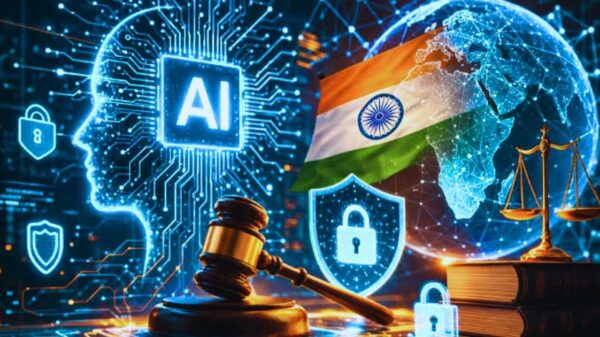





New Delhi: Supreme Court Justice Rajesh Bindal has cautioned lawyers about the potential misuse of artificial intelligence (AI) in generating fake case citations, urging them to take steps to curb frivolous litigation and enhance public trust in the justice system. His remarks came during the opening ceremony of the III CTIL–Bennett International Moot Court Competition (BIMCC) 2026 held from February 6 to 8 at Bennett University in Greater Noida.
Justice Bindal, who served as the chief guest at the event, emphasized the importance of ethical standards in the legal profession. His comments reflect growing concerns about the impact of AI on legal practices, especially as technology becomes more integrated into various aspects of law. “We must ensure that the use of technology maintains the integrity of our legal system,” he stated.
At the moot court competition, which was organized by Bennett University’s School of Law in collaboration with the Centre for Trade and Investment Law and the Indian Institute of Foreign Trade, students had the opportunity to engage in simulated court proceedings, thereby gaining practical insights into international trade law. The total prize pool for the competition was set at Rs 250,000, highlighting its significance.
During the valedictory address, Justice Pankaj Mithal stressed the evolving role of international trade law in fostering economic stability and resolving disputes in a globalized world. He reiterated that trade law, based on the principles of exchange, plays a crucial role in providing employment opportunities for the youth. “Law is not the art of speaking loudly, but the art of persuading effectively,” Justice Mithal remarked, underscoring the vital skills that students must develop to succeed in the legal field.
Justice Mithal’s comments were particularly resonant given the competitive nature of the moot court, where the Jindal Global Law School emerged victorious, with Symbiosis Law School, Pune taking the runner-up position. This competition not only showcased the legal acumen of participating students but also served to bridge theoretical knowledge with practical application, akin to how cinema has reached homes through television.
The event drew notable attendees, including Rajya Sabha MP Dr. Sasmit Patra, and esteemed faculty members such as Prof. Henry Gao, Dr. Ranbir Singh, and Dr. V. K. Ahuja. Their presence underscored the academic importance of the competition, which aims to cultivate the next generation of legal professionals in India.
This event highlights a growing trend in legal education that seeks to incorporate modern challenges, including the ethical implications of AI in legal practice. As the integration of AI into various sectors continues to expand, the legal community faces the dual responsibility of embracing technological advances while safeguarding the foundational values of justice and integrity.
As AI’s role in generating legal documents and citations becomes more prevalent, the cautionary advice from Justices Bindal and Mithal serves as a timely reminder for current and future legal practitioners. Upholding ethical values and public trust will be paramount in navigating the complexities introduced by emerging technologies in the legal landscape.
With the legal profession poised at the intersection of tradition and innovation, the discussions emerging from events like BIMCC 2026 will likely play a critical role in shaping the future of law in India. The emphasis on ethics, coupled with practical experience, equips students to address the challenges that lie ahead in a rapidly evolving global environment.
See also Nvidia Sees 62% Revenue Surge as AI Hardware Demand Soars, CEO Reports Record Sales
 Kaneda Consulting Boosts AI Services for Small Businesses Amid Soaring Demand for Expertise
 Andreessen Horowitz Invests in Shizuku AI’s Virtual Character for Japan Market Expansion
 Trump Unveils Controversial AI-Generated Map Redefining U.S. Borders with Global Leaders
 US-China AI Dominance Threatens Middle Powers with Strategic Isolation and Economic Risks