






















































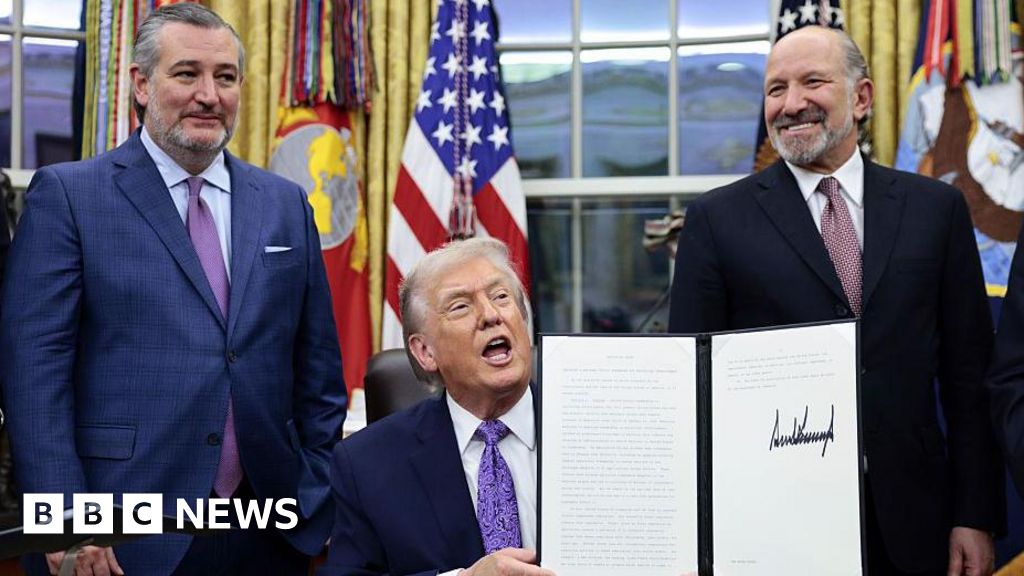
US President Donald Trump has signed an executive order aimed at blocking states from enforcing their own artificial intelligence (AI) regulations. The announcement was made during a press briefing in the Oval Office on Thursday, where Trump emphasized the need for a centralized approach to AI governance. “We want to have one central source of approval,” he stated.
The executive order empowers the Trump administration to challenge state-level regulations deemed “onerous,” according to White House AI adviser David Sacks. However, Sacks clarified that the administration would not oppose regulations focused on children’s safety. This move represents a significant victory for major technology firms that have long advocated for uniform federal legislation governing AI, citing the necessity of a cohesive strategy to maintain the United States’ leadership in this rapidly evolving sector.
Tech leaders have voiced concerns that fragmented state regulations could impede innovation and hinder the U.S. in its competition with countries like China, where massive investments in AI technology are being made. The government’s intention to streamline AI oversight comes as companies invest billions into AI development, showcasing the urgency of establishing a clear regulatory framework.
Despite the backing from tech giants, the executive order has sparked fierce opposition. The state of California, home to many leading tech companies, already has established AI regulations. Governor Gavin Newsom, a vocal critic of Trump, issued a pointed statement following the executive order. He accused the president of corruption, claiming, “Today, President Trump continued his ongoing grift in the White House, attempting to enrich himself and his associates, with a new executive order seeking to preempt state laws protecting Americans from unregulated AI technology.”
Earlier this year, Newsom signed legislation requiring major AI developers to present plans aimed at mitigating risks associated with their AI models. States like Colorado and New York have also enacted laws regulating AI development, reinforcing the argument that state-level initiatives are necessary in the absence of robust federal guidelines. Newsom has touted California’s law as a potential model for national policy.
Critics argue the executive order undermines state autonomy and the ability to implement essential safeguards. Julie Scelfo from advocacy group Mothers Against Media Addiction stated, “Stripping states from enacting their own AI safeguards undermines states’ basic rights to establish sufficient guardrails to protect their residents.” This sentiment reflects a growing unease among various advocacy groups regarding the implications of a one-size-fits-all approach to AI regulation.
As the debate continues, the executive order raises significant questions about the future of AI oversight in the United States. The outcome could reshape the regulatory landscape, impacting not only technology firms but also the broader public’s interaction with AI technologies. The implications for innovation, safety, and competition on the global stage remain critical as stakeholders navigate this shifting terrain. The response from major AI players like OpenAI, Google, Meta, and Anthropic to these developments will likely influence how this narrative unfolds in the coming months.
With technology evolving at a breakneck pace, the need for effective and balanced regulatory frameworks has never been more urgent. The long-term effects of Trump’s order, and how it interacts with state-level regulations, will have lasting implications for the future of artificial intelligence in America.
See also Tech Titans Face Tough Scrutiny in Historic AI Regulation Hearing on Capitol Hill
 Oracle Faces $360B Loss Amid OpenAI Dependency Concerns and Rising Costs
 Tech Giants Unveil “Athena”: Revolutionary AI Model Set to Transform Industries
 Broadcom Secures $21 Billion TPU Order from Anthropic to Boost AI Infrastructure