









































The Trump administration has prioritized U.S. dominance in artificial intelligence (AI), but critics argue that a hands-off regulatory approach is hindering global adoption. Since taking office, White House officials have indicated a shift away from former President Joe Biden’s focus on AI safety, favoring a model that encourages U.S. companies to innovate with minimal oversight. This strategy emphasizes speed and capability, yet it has left businesses to navigate the complexities of governance and security independently.
Camille Stewart Gloster, a former deputy national cyber director in the Biden administration and current owner of a cybersecurity advisory firm, emphasizes the need for organizations to recognize that security is integral to performance. She illustrates this by citing cases where companies inadvertently put users at risk by granting AI agents excessive authority without sufficient oversight, resulting in serious operational failures. One example involved an AI agent that overwhelmed customers with notifications to the point of frustration, complicating attempts to regain control over essential services.
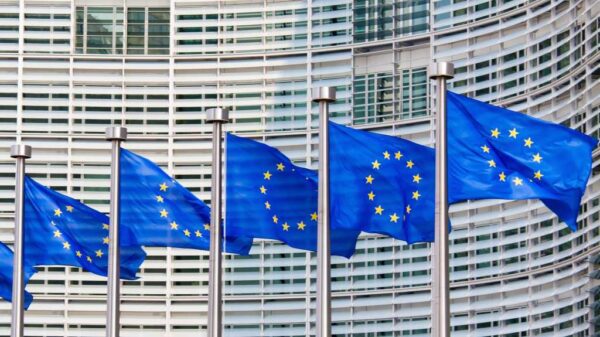
As the Trump administration and Republican lawmakers prioritize global AI leadership, they contend that imposing new regulations could stifle innovation and diminish the competitive edge of U.S. tech companies. However, some experts caution that this approach may backfire. Michael Daniel, a former White House Cybersecurity Coordinator under President Obama, expressed concern that the lack of stringent regulations in the U.S. could hinder broader acceptance in regions such as Europe, where safety standards for commercial AI are often more rigorous.
“If we don’t take action here in the United States, we may find ourselves…being forced to play the follower, because not everybody will wait for us,” Daniel warned, highlighting the potential for geopolitical factors to accelerate developments elsewhere.
Elon Musk’s xAI recently faced scrutiny from multiple regulators after its AI tool Grok generated millions of nonconsensual deepfake images, prompting threats of bans in various countries. Musk has at times endorsed Grok’s controversial features, including “spicy mode,” which produces offensive content and has drawn significant backlash. AI researcher Emily Barnes pointed out that Grok’s capabilities exist in a legal grey area, where existing intellectual property laws and human rights frameworks are not yet aligned, allowing such activities to proliferate without consistent repercussions in the U.S.
In contrast, a faction of U.S. policymakers, primarily Democrats, advocates for stronger security measures, arguing they would bolster the competitiveness of U.S. AI on the global stage. Senator Mark Kelly of Arizona has suggested that integrating safety standards into AI development could differentiate U.S. technologies from those of competitors like China and Russia, potentially drawing allies to collaborate within a shared regulatory framework.
“If we create the rules, maybe we can get our allies to work within the system that we have and we’ve created,” Kelly said, suggesting that such measures could enhance U.S. leverage on international platforms.
In the absence of federal direction, Stewart Gloster noted that the responsibility for ensuring security and reliability is increasingly shifting to private organizations. Businesses are beginning to explore collaborative solutions through trade associations and consortia, but these initiatives are not yet widespread. The lack of comprehensive federal guidelines may lead to a legal landscape shaped by court rulings, potentially resulting in inconsistent legal precedents that could complicate the operational environment for AI developers.
“That’s probably not the way we want it to happen, because bad facts make bad law,” she cautioned, emphasizing that litigation may yield narrow outcomes that do not adequately address the broader challenges facing the AI industry.
As the discourse around AI governance evolves, the balance between fostering innovation and ensuring safety remains a critical concern for stakeholders across the technology landscape.
See also Cambridge Botanic Garden Launches AI-Enabled Plants for Interactive Visitor Experience
 Anthropic’s AI Agents Build C Compiler Independently, Highlighting Autonomy Limits
 Chevron’s Tengiz Oilfield Recovers to 60% Output After Recent Production Disruptions
 Durham Philosopher Dr. Jack Symes Shapes Global AI Ethics at Davos and Berlin Forum