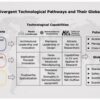















































The landscape of artificial intelligence (AI) development has fundamentally shifted, driven not by technological advancements alone but by the intricate dynamics of global geopolitics. As outlined in recent analyses, particularly from Business Engineer, the competitive race between the United States and China is reframed around geopolitical alliances rather than product cycles or model releases. This trend signifies a departure from traditional market operations, where AI companies are now seen as operating within a “geopolitical grid” that influences every aspect of their business, from silicon access to supply chain logistics.
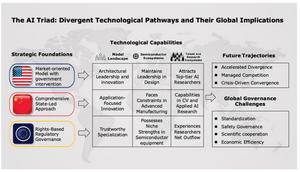
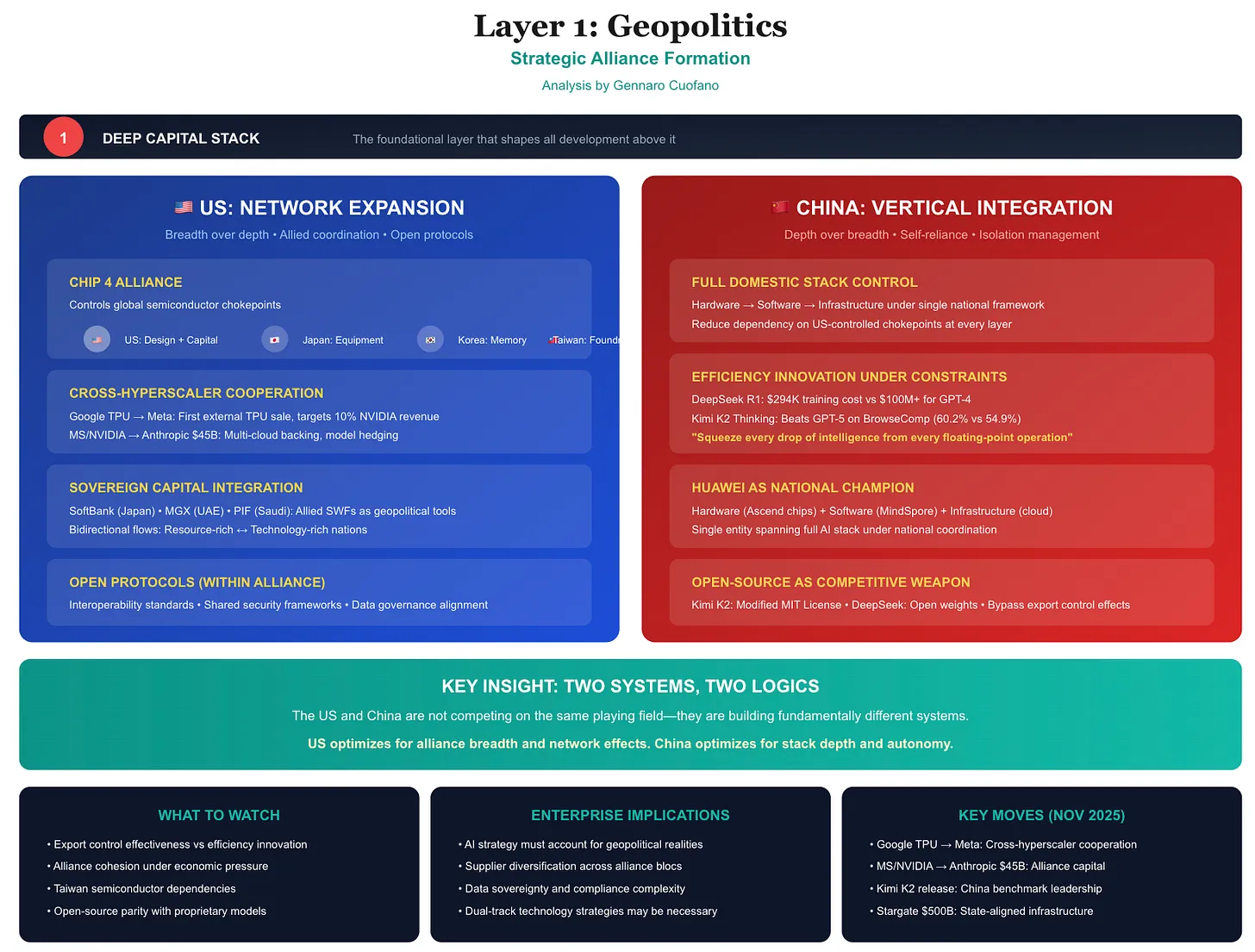
The United States is pursuing a “breadth over depth” strategy characterized by multi-country collaboration, exemplified by the Chip 4 Alliance comprising the US, Japan, Korea, and Taiwan. This coalition effectively controls critical chokepoints within the semiconductor supply chain, with the US providing design and capital, Japan offering equipment, Korea responsible for memory, and Taiwan handling foundry services. Each of these nations plays a pivotal role in shaping the global silicon supply map, underscoring the significant influence of geopolitical ties on AI infrastructure.
Meanwhile, a novel trend is emerging where hyperscalers—large cloud service providers—are collaborating across competitive boundaries. Instances of this cooperation include Google selling Tensor Processing Units (TPUs) to Meta and partnerships among Microsoft, Nvidia, and Anthropic to create multi-cloud solutions. Such collaborations highlight a shift in the AI sector where the need for scale fosters cooperation instead of competition.
In contrast, China is adopting a vertically integrated approach to AI development, focusing on building a complete domestic stack. This strategy minimizes reliance on foreign technologies, especially those from the US, by developing domestic capabilities across the semiconductor, infrastructure, software, and cloud domains. The emphasis on “depth under sovereign control” reflects China’s intent to enhance self-sufficiency and resilience against external pressures.
China’s AI sector has demonstrated remarkable adaptability, as evidenced by recent innovations achieved under constraints. For instance, the DeepSeek R1 model was trained at an estimated cost of $2.9 million, significantly less than the $100 million typically associated with such advanced systems. Additionally, the Kimi K2 model outperformed OpenAI’s GPT-5 in specific benchmarks, showcasing China’s capacity for efficiency-driven innovation.
Central to China’s strategy is the role of Huawei, which has emerged as a national champion in the AI arena. The company operates across hardware, software, cloud services, and infrastructure, enabling it to maintain a cohesive AI ecosystem under unified national guidance. This contrasts sharply with the US approach, which emphasizes open protocols and interoperability standards across allied nations, fostering faster expansion through collaborative networks.
The divergence between the US and Chinese models is stark. The US prioritizes network expansion, allied interoperability, and open protocols, while China focuses on vertical sovereignty and domestic stack control. This structural difference shapes how each nation will develop, scale, and protect its AI capabilities over the coming decade.
As these geopolitical frameworks evolve, several critical factors warrant attention: the effectiveness of US export controls against China’s efficiency-driven innovations, the cohesion of alliances under economic pressures, and the strategic significance of Taiwan as a pivotal player in semiconductor supply chains. Furthermore, the ongoing competition between open-source models and proprietary technologies will influence the market landscape.
In conclusion, an understanding of AI strategy now demands a comprehensive grasp of the geopolitical context shaping it. Geopolitics has become a foundational element of AI development, determining the flow of capital, the landscape of innovation, and the ambitions of national strategies. As the AI race continues, stakeholders—including companies, investors, and nations—must navigate these complex geopolitical landscapes to define their roles within them.
See also Perplexity.in Redirects Users to Google Gemini Amid Domain Oversight in India
 Baidu Unveils AI Chip Strategy to Challenge Nvidia’s GPU Dominance, Targets Market Growth
 AI Unveils New Lion Roar, Enhancing Species Monitoring with 95.4% Accuracy
 Character.ai Launches Stories Feature for Teens, Navigates COPPA Compliance Challenges
 NYC Nurses Slam Hospitals for AI Rollout, Claiming Job Threats and Patient Risks