













































As artificial intelligence (AI) continues to transform various sectors, the University of Wisconsin-Whitewater is set to launch a new major in artificial intelligence. This initiative aims to equip students for careers in this rapidly evolving field, emphasizing the construction of AI systems alongside their application.
The program, which will be part of the Department of Computer Science, focuses on building students’ technical skills through hands-on learning and ethical instruction. According to department chair Dr. Zachary J. Oster, the major was created in response to workforce demands and the rising prominence of AI in daily life. While tools like ChatGPT have popularized AI, Oster pointed out that understanding the complex underpinnings of these systems necessitates specialized training.
Central to the curriculum are mathematics, programming, and data analysis—elements that Oster acknowledged may not appeal to every student. “It’s a challenging major,” he stated, recognizing the rigor involved but also the substantial career potential for those who embrace the intensity of the coursework.
In addition to technical training, the new major integrates psychology and ethics into its curriculum. University leaders argue that this interdisciplinary approach is crucial as AI becomes increasingly embedded in society. Students will delve into ethical considerations around data use, bias, and automation, ensuring they grasp the wider implications of the technologies they develop.
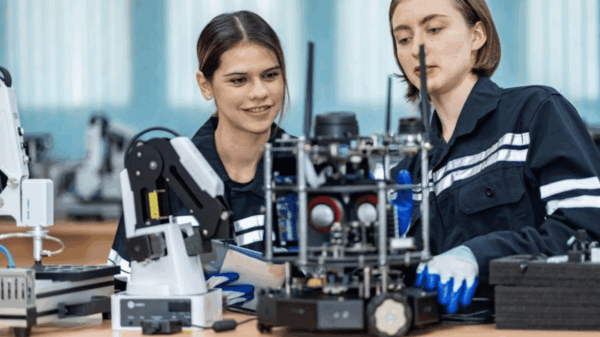
Hands-on experience is a pivotal aspect of the program. Rather than merely studying theoretical concepts, students will engage in projects that require them to design and implement AI systems. Early coursework will focus on individual projects, while advanced classes will promote collaborative, industry-style development. Oster indicated that students would progress from creating smaller AI tools to forming teams to work on large-scale machine learning pipelines similar to those found in professional environments. Some of these projects may ultimately benefit the university, but the primary focus remains on enhancing student learning.
The introduction of the AI major follows the success of UW-Whitewater’s cybersecurity program, which launched in 2022 and quickly gained traction due to high student interest and job market demand. Oster anticipates that the AI major will also see growth, albeit potentially at a more gradual pace due to its mathematical complexity. “There’s demand for graduates of our AI major already,” he noted, referencing job postings in the Madison and Milwaukee areas that seek machine learning engineers and AI developers.
Beyond preparing students for careers, the program reflects the university’s evolving stance on the role of AI in education. Oster remarked that the application of AI tools in classrooms largely depends on the objectives of each assignment. He cautioned against using AI to replace fundamental skill-building but acknowledged its utility in advanced academic and professional settings.
In upper-level computer science courses, students have already incorporated AI tools into capstone and software engineering projects. Oster stated these applications have led to improved efficiency and enhanced work quality, underscoring the technology’s practical benefits.
As the artificial intelligence major prepares to welcome its inaugural cohort, university leaders view it as a strategic move to establish UW-Whitewater at the forefront of technological education in the region. The program aims not only to equip students for lucrative, in-demand careers but also to foster responsible innovation in a field poised to shape the future.
For more information, explore the University of Wisconsin-Whitewater and its new offerings in artificial intelligence, or visit OpenAI for insights into industry trends.
See also OpenAI Forms Ads Integrity Team to Ensure Trust Ahead of ChatGPT Ad Rollout
 AI-Driven Stock Volatility Sparks ‘Bubble’ Concerns; Experts Urge Caution and Diversification Strategies
 Broadcom’s AI Chip Surge and VMware Overhaul Set to Transform Tech Landscape
 AI Disruption Triggers Global Ad Stock Sell-Off: Omnicom Down 9.27%, Havas Slides 11.59%