











































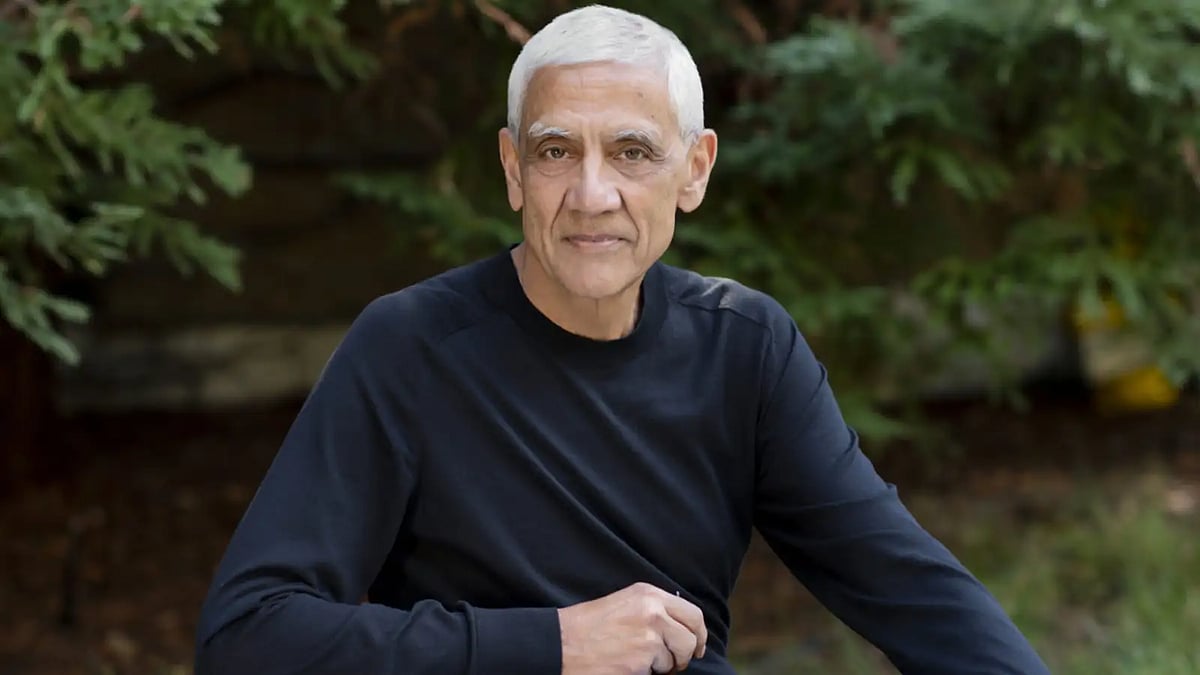
WASHINGTON: Artificial Intelligence has the potential to transform India’s economic and geopolitical landscape, positioning the nation as “the great equalizer,” according to tech investor Vinod Khosla. Speaking at the India AI Impact Summit pre-conference in San Francisco this week, Khosla emphasized the urgency for India to adopt policies and infrastructure to fully leverage AI’s capabilities.
In his keynote address at the event hosted by the Indian Consulate, the Silicon Valley entrepreneur characterized AI as “the largest opportunity I could have ever imagined.” He predicted that within the next 15 years, nearly all forms of expertise—be it medical, legal, scientific, or educational—would be accessible for free. “There is very little AI won’t be able to do that humans can do,” Khosla stated, warning that labor itself could become “almost free,” leading to significant economic disruptions.
Khosla highlighted India’s unique position in this AI-driven transformation. He argued that with simple language access, individuals wouldn’t require traditional skills to utilize AI. “All you need is voice in your language. You don’t need any other skills to access AI,” he remarked, underlining the technology’s potential to benefit those historically marginalized from formal education. He envisioned a future where “every kid in India before 2030 can have very affordable free personal tutors” and where households could have access to “doctors 24/7… at 3 a.m.”
India’s existing digital public infrastructure, which includes initiatives like Aadhaar, UPI, and DigiLocker, has already laid the groundwork for large-scale AI services. However, Khosla cautioned that the transition will present significant challenges, particularly for the country’s Business Process Outsourcing (BPO) and IT services industries. He predicted that these sectors could “almost certainly” face obsolescence unless they evolve into AI-driven transformation services.
On a global scale, Khosla discussed AI’s implications for military and strategic capabilities. He posited that advanced AI systems could empower Ukraine to effectively counter Russia, and enable Taiwan to defend itself against China more efficiently. Looking towards 2050, Khosla speculated that breakthroughs in fusion energy and transportation might create a “globally abundant economy,” though he stressed that successful policy implementation will be critical for countries like India to benefit fully from these advancements.
As the conversation around AI continues to evolve, experts and policymakers face the challenge of navigating its complexities while maximizing its potential. The next few years will likely determine whether nations can effectively harness AI to foster inclusive growth and reshape their futures.
For more information on the impact of AI on various sectors, you can visit OpenAI or learn more about India’s digital initiatives through UIDAI.
See also Grok Fails to Recognize New Economic Order, Highlighting AI’s Blind Spots in Global Discourse
 NDI Hosts DISICON 9: Addressing AI’s Impact on Elections and Gender Disinformation
 AI Travel Apps and Smart Gadgets Revolutionize Journey Safety and Comfort by 2025
 Nvidia Invests $6.3B in CoreWeave: A Must-Buy AI Stock for 2026
 Korean and Japanese Business Lobbies Forge AI, Semiconductor Alliance Amid Population Crisis