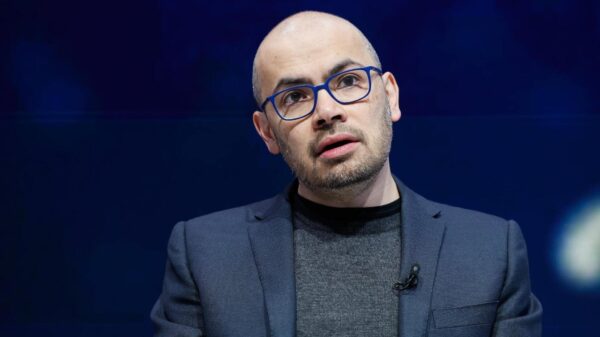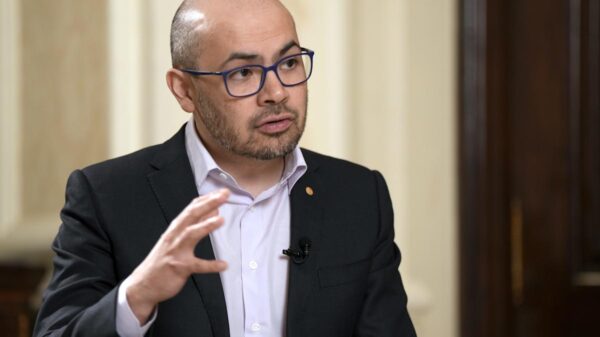
Google DeepMind, a leading artificial intelligence firm based in the UK, has played a pivotal role in shaping modern AI capabilities. Under the leadership of Demis Hassabis, the company gained fame for developing a computer program that mastered the complex board games of chess and Go, setting new benchmarks in machine learning technology.
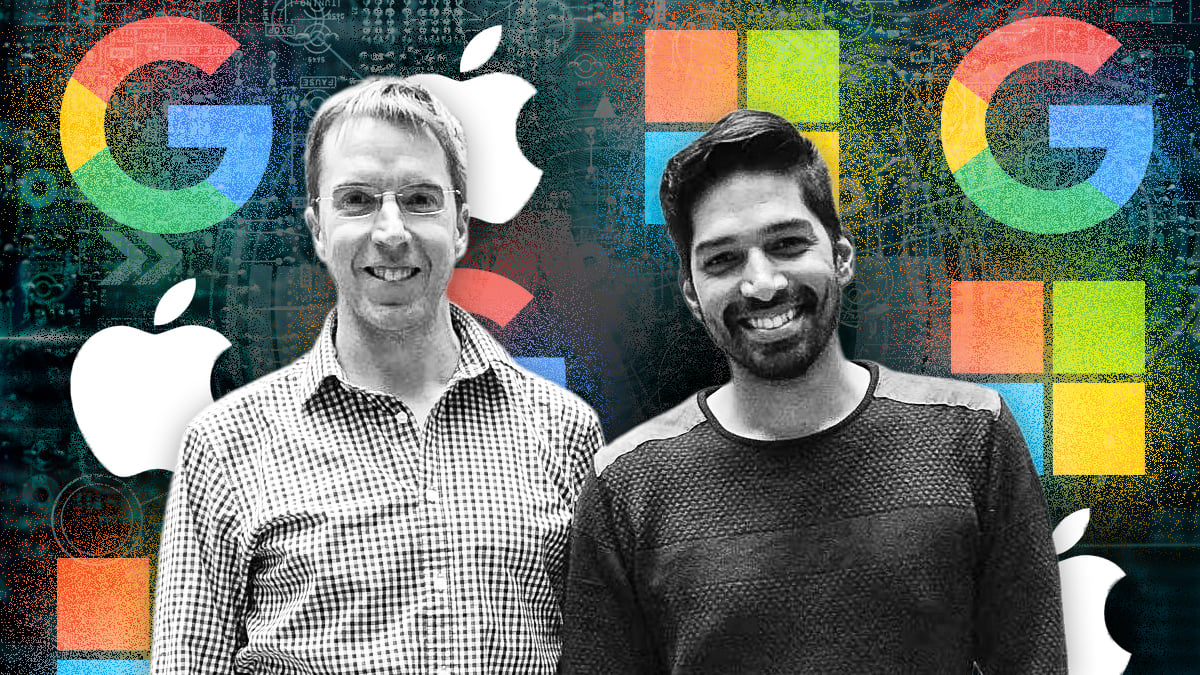
The formative years of DeepMind saw a team composed of some of the brightest minds in AI, including South Africans Shakir Mohamed and Ulrich Paquet. Mohamed began his academic journey in electrical and information engineering at the University of the Witwatersrand, where he received prestigious accolades such as the Chancellor’s Medal and the Bernard Price Prize. Upon completing his degree with distinction in 2005, he transitioned to work for Nedbank in credit and risk analysis. However, his ambitions took him to Cambridge University, where he pursued a PhD in statistical machine learning, bolstered by a Commonwealth Scholarship.
Reflecting on the early days of machine learning, Mohamed noted that few people were familiar with the field, expressing how gratifying it was to encounter someone who had heard of it. His doctoral research laid the groundwork for a successful career. After four years at Cambridge, he moved to Canada to contribute to a research program on neural computation and adaptive perception at the University of British Columbia. In April 2013, Mohamed joined DeepMind Technologies, which was acquired by Google for $600 million the following year. Since then, he has served as a research director, focusing on advancing general-purpose learning algorithms. His work has garnered significant recognition in the academic community, with over 37,000 citations, nearly 30,000 of which have occurred since 2020, achieving an h-index of 47.
Ulrich Paquet also embarked on his academic journey in South Africa, attending the University of Pretoria, where he discovered his passion for AI. Following his Master’s degree in Computer Science, he received a Commonwealth Scholarship to study at Cambridge, where he developed a doctoral thesis on probabilistic principles in supervised and unsupervised machine learning. After completing his studies, Paquet joined a company focusing on facial recognition technology before moving to Microsoft as a senior researcher. He was part of the Xbox One launch team, where he developed systems for customer product recommendations, focusing on machine learning design.
Paquet subsequently worked for Vocal IQ, which was acquired by Apple in 2015, leading to his appointment as a research manager at the tech giant. However, his tenure at Apple was brief, as he returned to the UK to join Google DeepMind. While at DeepMind, he contributed to the development of AlphaZero, an AI initiative aimed at creating a program capable of mastering chess, shogi, and Go through self-training. Chess champion Magnus Carlsen praised AlphaZero’s innovative approach, noting its unusual strategies that often appeared almost creative.
Having forged a close friendship during their studies, Mohamed and Paquet co-founded the Deep Learning Indaba, an initiative aimed at strengthening AI research in Africa. The idea emerged after they attended an AI conference in Barcelona and realized they were the only Africans in attendance. The Deep Learning Indaba has since become an annual event, with its inaugural edition hosted at the University of the Witwatersrand, and the 2025 edition set to take place in Rwanda. This initiative not only showcases the development of AI talent in Africa but also emphasizes the importance of global collaboration in advancing the field.
As the landscape of artificial intelligence continues to evolve, the contributions of innovators like Mohamed and Paquet at Google DeepMind underscore the critical role of diverse perspectives in driving the future of AI research and application. Their journey exemplifies how foundational work in machine learning can catalyze significant advancements across various sectors, highlighting the importance of fostering talent and collaboration in technology.
See also Guidewire’s Heritage Cloud Adoption and Olos AI Suite Poised to Transform Insurance Landscape
 Sam Altman: AI’s Future Breakthrough in 2026 Will Revolutionize Memory, Not Reasoning
 Google’s Nano Banana Pro Dominates AI Image Generators, Scoring 93% in 2025 Tests
 Google Cloud and Al Jazeera Launch ‘The Core’: A Transformative AI-Powered Journalism Model
 Wealthy Elites Use AI to Consolidate Power, Warns Sociologist Tressie McMillan Cottom