






















































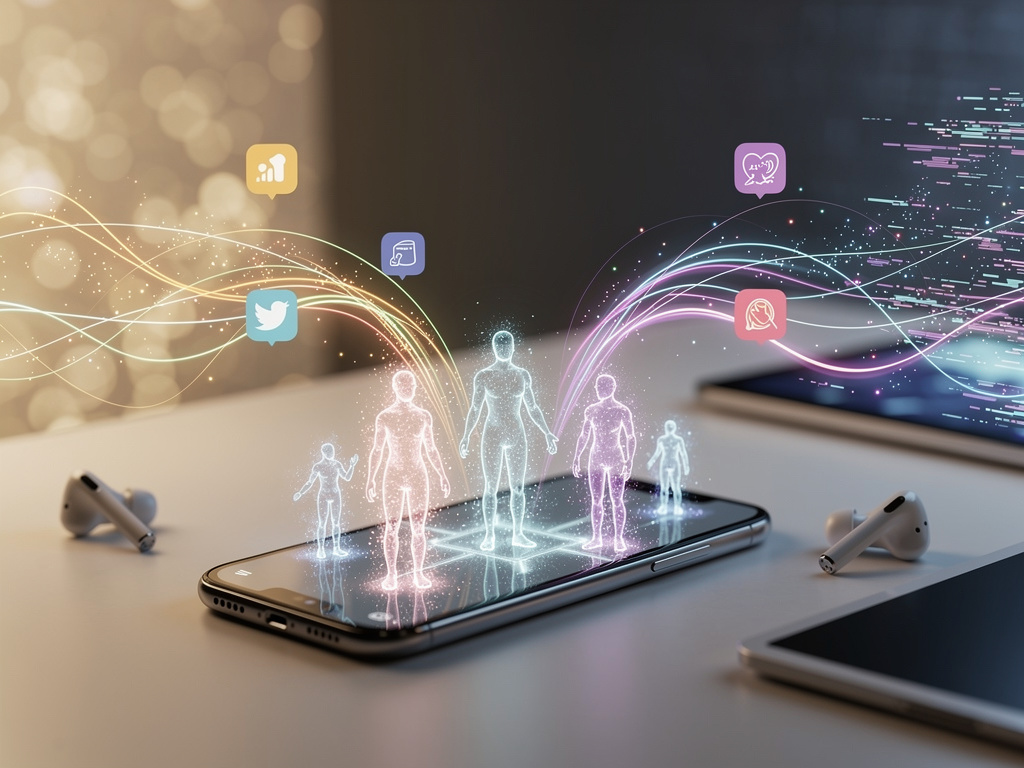
The Dawn of Digital Companions
In 2025, artificial intelligence is not just reshaping industries but also transforming social interactions, introducing the concept of AI celebrity friends. Imagine conversing daily with a digital version of your favorite movie star—all powered by advanced algorithms. This emerging trend raises significant questions about emotional dependency and authenticity as users navigate evolving relationships with AI icons.
The technology behind these digital companions enables the cloning of celebrities’ voices and personas, creating interactive experiences accessible through apps and devices. These systems go beyond traditional chatbots; they aim to foster genuine connections by responding to user emotions and adapting conversations over time. For instance, fans are already engaging with voice-cloned representations of stars like Pedro Pascal, turning casual fandom into simulated relationships. The drive behind this trend is largely attributed to advancements in voice synthesis and natural language processing, allowing for eerily realistic interactions.
AI companions are infiltrating daily lives, serving purposes ranging from emotional support to career advice and even romantic flirtations. Mark Zuckerberg has suggested that AI could soon replace human professionals in fields like therapy or medicine, emphasizing the technology’s potential to fill social voids. This trend aligns with current patterns in technology adoption, where convenience often outweighs traditional human contact.
Industry experts predict that by the end of 2025, AI celebrity friends will become mainstream, thanks to their integration into social platforms. As highlighted in a feature by Microsoft News, AI is evolving into a “true partner” that enhances personal interactions. Envision an AI version of Elon Musk discussing business strategies with entrepreneurs, or a digital Taylor Swift offering songwriting tips to aspiring artists. These AI tools are not merely reactive; they proactively learn from data to anticipate user needs and develop deeper relationships.
The underlying technology comprises multimodal AI models that combine text, voice, and visual elements. A report from Jagran Josh on 2025 innovations points to autonomous agents that manage complex social simulations. Companies are creating platforms where users can “befriend” AI celebrities that are customized to their preferences, drawing from extensive datasets of public appearances and interviews to enhance accuracy.
However, the rise of these AI companions is not without controversy. Critics argue that such relationships could erode authentic human connections, potentially leading to increased isolation. Discussions on X reveal concerns about a “poisonous techno-dystopic hall of mirrors,” where AI fills gaps in interpersonal interactions, possibly exacerbating loneliness. Conversely, proponents believe these digital friends offer crucial companionship for those in remote areas or those with social anxieties.
The financial implications of AI celebrity friends are significant, as celebrities license their likenesses for substantial fees. A Forbes analysis reveals that this model is extending beyond mere chat interfaces to immersive experiences like virtual reality meetups, with brands leveraging AI celebrities for personalized marketing. Investment in this sector is surging, with data from MIT Sloan Management Review highlighting that AI-driven personalization is a top priority for tech firms, with projected revenues in the billions from companion apps. For celebrities, this means extending their reach indefinitely, while users gain access to “friends” who are always available and infinitely patient.
Ethically, the landscape is complex. Issues regarding consent emerge when AI clones are created without full celebrity approval, raising concerns about potential misuse. A study from the Pew Research Center indicates that 64% of teens currently use chatbots daily, often forming attachments to AI personas, prompting worries about psychological effects, especially among younger users who may blur the lines between AI and reality.
As AI celebrity friends proliferate, they are reshaping cultural norms within the entertainment industry. AI-generated content featuring virtual stars is becoming more common in movies and concerts. An enthusiastic post on X celebrated “Shifty Brent,” an AI musician melding genres like Blaxploitation and funk, showcasing how AI can create entirely new cultural artifacts. This democratization of fame allows anyone to “collaborate” with icons through AI intermediaries, altering the traditional dynamics of celebrity and audience engagement.
These shifts in social dynamics may also reduce the necessity for human social networks. Brands and influencers are integrating AI companions into their marketing strategies, turning passive viewers into active participants in simulated friendships. Yet, the rise of AI companionship sparks debates about authenticity. If an AI friend can provide perfect empathy, does this detract from the value of flawed human interactions? Insights from Fortune emphasize that the focus should be on solving real problems rather than technological hype, suggesting that AI should augment rather than replace human bonds.
As advancements in AI emotional intelligence develop, virtual friendships are expected to deepen. Emerging technologies, including neural interfaces, could enable AI celebrities to “read” users’ thoughts, creating hyper-personalized experiences. A recent article in Adweek forecasts AI agents autonomously managing media interactions, extending into social companionship.
Challenges remain, particularly regarding data privacy. As AI learns from intimate conversations, safeguarding user information becomes crucial. Regulatory bodies are beginning to address these issues, as seen in ongoing discussions about AI’s role in misinformation and propaganda. Furthermore, inclusivity remains vital, as not all demographics have equal access to these technologies, potentially widening social divides. Efforts are underway to make celebrity companions more affordable and customizable through open-source AI models.
The allure of AI celebrity friends lies in their accessibility and customization. For busy professionals, they provide quick companionship, while for the elderly, they offer constant company. Discussions on X have highlighted AI’s potential for language learning, where emotional engagement can enhance utility, mirroring the benefits of companionship. However, experts caution against over-reliance on AI as substitutes for therapy, warning that this trend could lead to unforeseen disruptions in social technology.
Ultimately, as society embraces these digital allies, it is essential to reflect on their role in enhancing lives without supplanting the irreplaceable messiness of human connection. As AI continues its evolution from tool to companion, the future promises a landscape where friendships may transcend physical boundaries.
See also Amazon Eyes $10B OpenAI Investment to Boost AI Infrastructure Amid Holiday Demand Surge
 Lenovo’s AI Strategy: 5 Proven Tactics to Boost Business Efficiency and Innovation
 Transform Consumer Products with AI: A Six-Step Strategy for Immediate Value Creation
 Microsoft’s Mustafa Suleyman Declares No Support for Autonomous AI Systems Amid Azure Adoption Struggles






