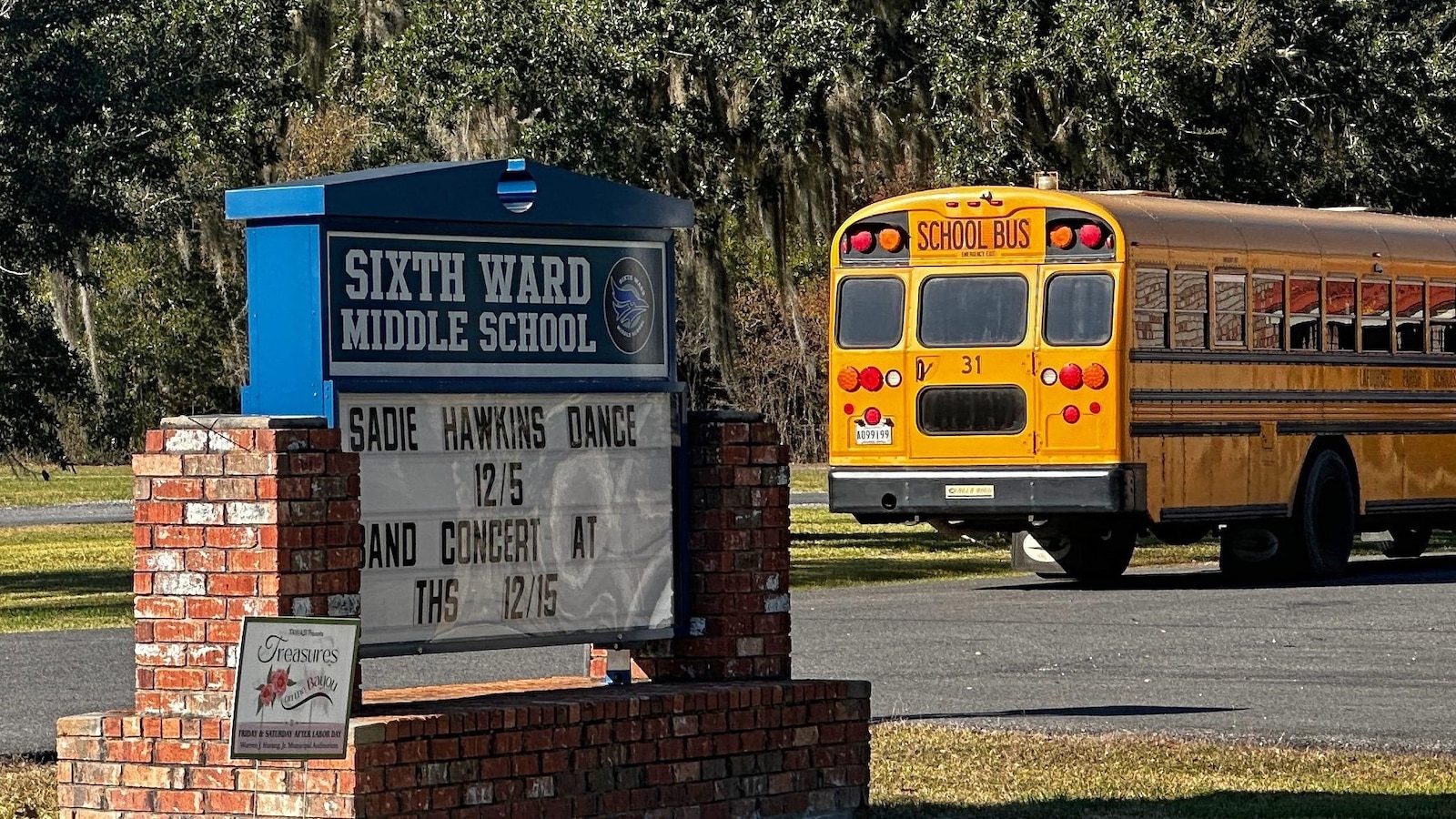
THIBODAUX, La. — A shocking incident involving AI-generated nude images has disrupted a Louisiana middle school, sparking discussions about cyberbullying and the implications of rapidly evolving technology. The images, which reportedly included depictions of a 13-year-old girl and her friends, circulated widely on social media platforms, particularly on Snapchat.
Efforts by the affected girls to seek help were met with skepticism from school officials. Despite approaching a guidance counselor and a sheriff’s deputy, the adults could not locate the images because Snapchat’s messaging feature deletes content shortly after it is viewed. The principal expressed doubts about the existence of the images, even as they continued to spread among students.
Frustration escalated when the girl, upon boarding a school bus, discovered a classmate displaying one of the AI-generated images. “That’s when I got angry,” she later recalled during her disciplinary hearing. In a moment of desperation, she confronted the boy, leading to a physical altercation for which she was suspended for over ten weeks and sent to an alternative school. Her attorneys allege that the boy suspected of creating the images did not face any disciplinary action.
The incident has highlighted the troubling potential of AI deepfakes, particularly in the context of youth harassment. As schools begin to grapple with the integration of artificial intelligence into educational settings, many remain unprepared to address its potential misuse for cyberbullying. “When we ignore the digital harm, the only moment that becomes visible is when the victim finally breaks,” said Sergio Alexander, a research associate at Texas Christian University focusing on emerging technology.
Superintendent Jarod Martin stated that the Lafourche Parish School District followed proper protocols and claimed that a “one-sided story” had been presented regarding the case’s complexity. After initial investigations revealed that the nude images involved eight female students and two adults, the school community faced further challenges. The girl’s father described the images as “full nudes with her face put on them,” an alarming manifestation of AI’s capabilities that can be easily misused.
Many schools, according to Sameer Hinduja, co-director of the Cyberbullying Research Center and professor at Florida Atlantic University, seem to be ignoring the issue of AI-generated harassment. “Most schools are just kind of burying their heads in the sand,” he noted. As the Lafourche Parish district was beginning to draft AI guidelines, its existing protocols on cyberbullying had not been updated to reflect the risks posed by such technology.
While the girls had not seen the images firsthand, they heard rumors about them circulating. The principal’s investigation yielded no responsible parties, as no students stepped forward, leaving the allegations largely unaddressed. “I was led to believe that this was just hearsay and rumors,” recounted the girl’s father, who had discussions with school officials early on.
Despite the principal’s skepticism, evidence emerged that students were indeed sharing the images. Following the fight on the bus, which was captured on video, the school district faced mounting public outrage demanding accountability for all students involved. While the girl faced disciplinary action, two boys who allegedly disseminated the images were charged under a new Louisiana law addressing the unlawful dissemination of AI-generated content.
At her hearing, the girl’s attorney pressed the principal for information about the disciplinary measures taken against the boys involved, but the principal cited privacy laws, leaving the girl’s family in the dark about any consequences for the accused. Ultimately, the panel decided to expel the girl, a decision that her father described as a second victimization.
Following the expulsion, the girl struggled emotionally, leading to therapy for depression and anxiety. “She just felt like she was victimized multiple times — by the pictures and by the school not believing her,” her father explained. The impact of such disciplinary actions can be long-lasting, often isolating students and diminishing their academic performance.
In a subsequent appeal to the school board, one member acknowledged the gravity of the situation, stating, “There are a lot of things in that video that I don’t like. But I’m also trying to put into perspective what she went through all day.” The board ultimately allowed her to return to school on probation, but with restrictions that will prevent her from participating in extracurricular activities.
This incident serves as a stark reminder of the challenges posed by advancing technology in educational settings. As AI becomes increasingly integrated into the fabric of everyday life, schools must evolve to protect students from its potential misuse, ensuring a safe environment for learning and growth.
For more on the implications of AI in education, visit OpenAI or Cyberbullying Research Center.
See also UN Report: AI Market to Soar to $4.8 Trillion by 2033, Ecosystem Vital for Success
 Woman Holds Wedding Ceremony with Custom AI Character, Sparking Ethical Debate
 AI Boom: Major Firms Lead Growth Amid Bubble Risks; Evidence Points to Winners by 2026
 Google DeepMind Partners with DOE to Enhance AI in Fusion Energy and Materials Science
 AI Revolution Fuels Surge in Youth Unemployment, Shifts Hiring Dynamics in Tech Sector