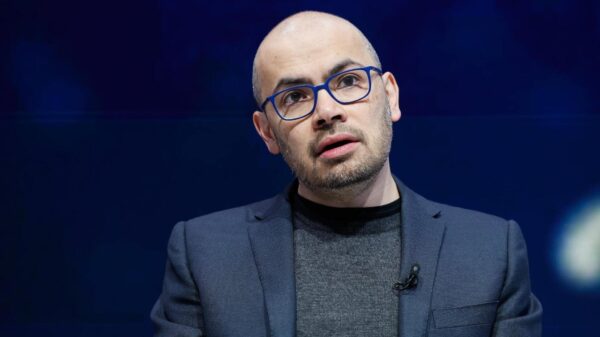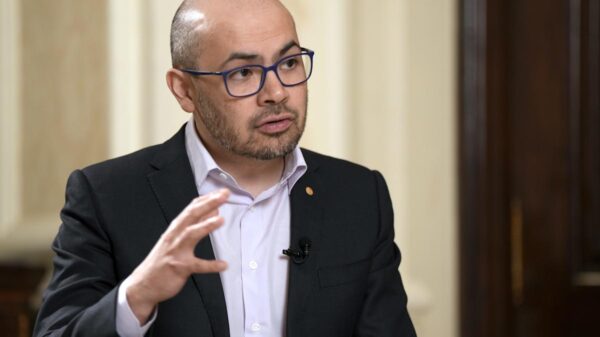
Google DeepMind, the United Kingdom-based artificial intelligence company, has emerged as a leader in the field, renowned for its groundbreaking innovations. Founded by Demis Hassabis, the company first garnered international attention for developing programs that enabled computers to teach themselves to play complex games like chess and Go. These significant advancements have not only set new benchmarks in machine learning but have also highlighted the vast potential of self-learning systems.
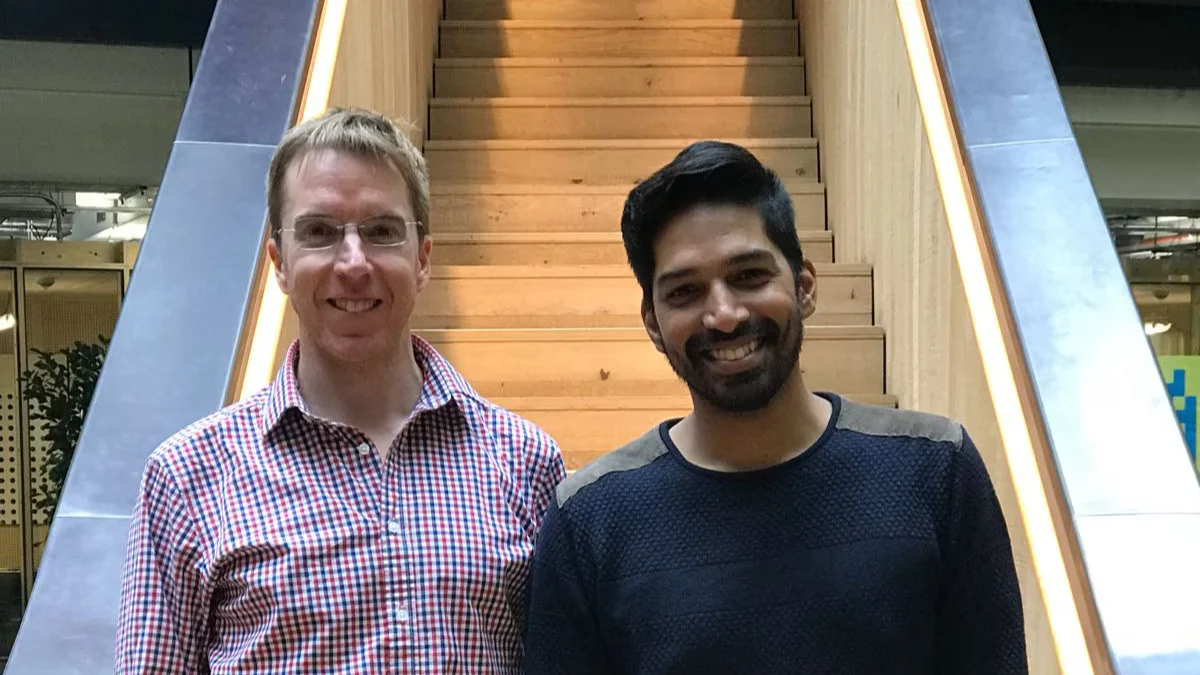
In its formative years, DeepMind attracted some of the brightest minds in artificial intelligence, many of whom sought to tackle challenges considered insurmountable. Among these talents were two notable South Africans, Shakir Mohamed and Ulrich Paquet. Mohamed, who graduated with distinction in 2005 from the University of the Witwatersrand, earned accolades such as the Chancellor’s Medal and the Bernard Price Prize. Initially, he worked at Nedbank in credit and risk analysis before receiving a Commonwealth Scholarship to pursue a doctorate in statistical machine learning at the University of Cambridge.
During his time at Cambridge, Mohamed faced challenges in gaining recognition for machine learning, a field still in its infancy. After four years of doctoral research, he moved to Canada, where he worked as a research assistant at the University of British Columbia, contributing to projects on neural computation and adaptive perception. Mohamed returned to the UK in 2013 to join DeepMind, which was subsequently acquired by Google for $600 million. After the acquisition, he was appointed research director, focusing on general-purpose learning algorithms. His research spans machine learning, Bayesian statistics, deep learning, and sociotechnical AI, amassing over 37,000 citations according to Google Scholar.
Paquet’s journey also began in South Africa, where he studied at the University of Pretoria and cultivated a passion for artificial intelligence. After earning a master’s degree in computer science, he too received a Commonwealth Scholarship to study at Cambridge, focusing his doctoral research on probabilistic methods in machine learning. Following his studies, Paquet worked with a company specializing in facial recognition technologies before joining Microsoft as a senior researcher. There, he contributed to the launch of the Xbox One, developing backend recommender systems that personalized user experiences.
His career then led him to Vocal IQ, a UK startup acquired by Apple in 2015, where he took on the role of research manager. However, after less than a year, he returned to the UK to collaborate with Mohamed at DeepMind. At DeepMind, Paquet played a pivotal role in the development of AlphaZero, an AI system that learns to master games like chess, shogi, and Go autonomously. AlphaZero’s innovative and unconventional strategies received notable acclaim for their creative approaches, challenging established norms in gameplay.
As their friendship blossomed during their academic pursuits and collaborative efforts at DeepMind, Mohamed and Paquet co-founded the Deep Learning Indaba. This initiative aims to bolster artificial intelligence research across Africa, motivated by their experiences at international AI conferences where they often found themselves as the sole African representatives. The event, held annually, underscores the growing interest in AI on the continent and the importance of inclusivity in the field.
The inaugural Deep Learning Indaba was hosted by the University of the Witwatersrand, with the 2025 edition scheduled to take place in Rwanda. This initiative reflects a broader commitment to fostering a diverse and robust AI research community in Africa, paving the way for future innovations in the field. As the global landscape for artificial intelligence continues to evolve, the contributions of figures like Mohamed and Paquet at DeepMind serve as a testament to the power of collaborative innovation in addressing some of the most pressing challenges of our time.
See also Medicus Pharma Partners with Reliant AI to Enhance Clinical Trial Efficiency for $200K
 Oxford’s Saïd Business School and Simplilearn Launch Five AI Leadership Programs for Professionals
 US Lawmakers Urge Pentagon to Blacklist Xiaomi, DeepSeek for Military Ties
 AI Redefines Job Market: Automation Reshapes Roles, Elevates Human Skills, and Spurs New Careers
 Trump’s AI Executive Order Empowers DOJ to Challenge State Regulations, Threatens Funding Cuts