The opening of Mistral AI offices in Lausanne represents a strategic move for the company, which maintains its headquarters in Paris. This expansion is more than symbolic; it underscores Switzerland’s robust environment for applied artificial intelligence (AI) activities, where technological research, private funding, and industrial projects are closely interconnected. This contrasts sharply with Luxembourg, where the deep tech ecosystem is still evolving.
Switzerland’s strength is rooted in its established university base, particularly institutions like EPFL and ETH Zurich, which emphasize engineering and AI. These institutions continuously generate a pool of researchers and engineers engaged in industrial projects, often collaborating directly with international technology firms. The proximity of universities, laboratories, and companies in Lausanne facilitates the rapid translation of research into practical applications, making the region appealing for AI players such as OpenAI and Anthropic.
A key differentiator for Switzerland is its dense network of venture capital and private equity funds specializing in advanced technologies. This ecosystem offers vital support for early-stage deep-tech projects and long-term applied research initiatives. The establishment of Mistral AI in Lausanne provides immediate access to critical skills, industrial partners, and investors experienced in the complex cycles inherent in AI development.
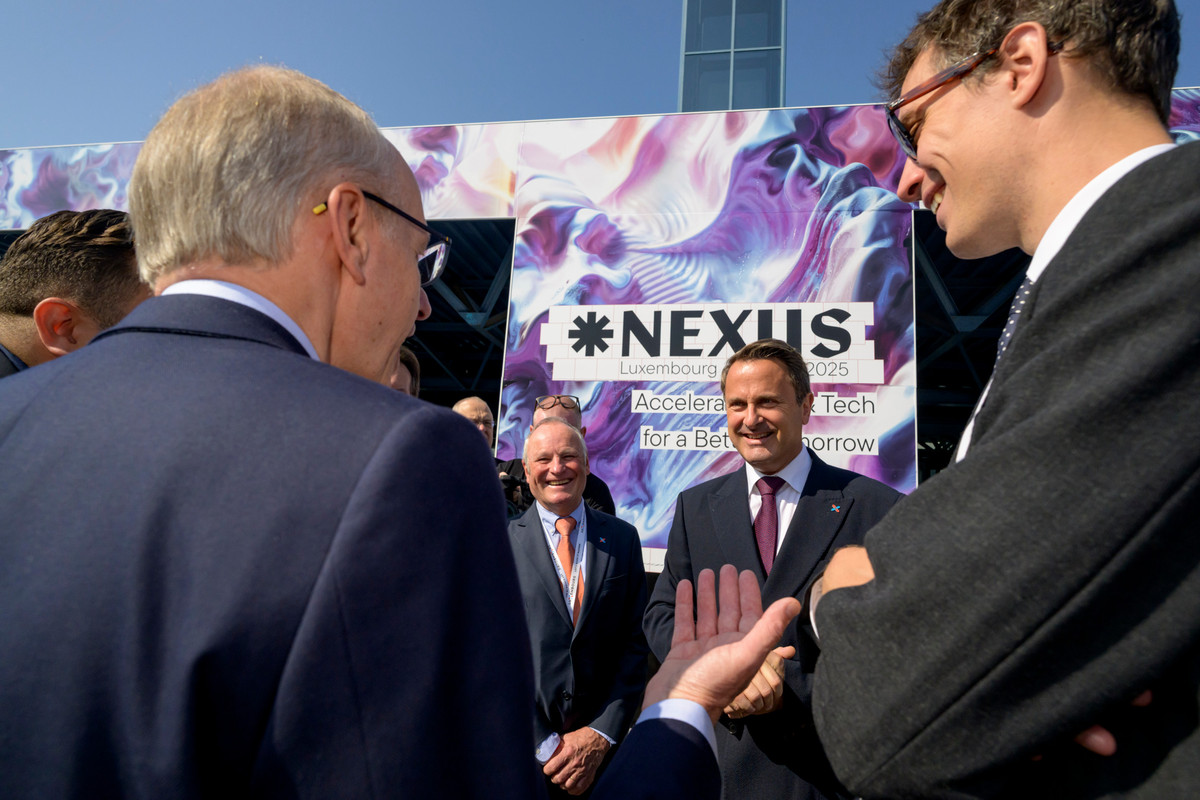
In contrast, Luxembourg faces challenges in competing with larger nations like the United States. As Carlo Thelen, head of the Luxembourg Chamber of Commerce, indicated, significant investments in infrastructure are beyond its reach. However, he believes Luxembourg can carve out a niche within specific value chains if it strengthens ties between research and the economy.
To that end, the Chamber of Commerce is advocating for the creation of a DeepTech Lab affiliated with the University of Luxembourg. The goal is not to replicate existing academic laboratories but to create an applied research and technology transfer platform. This initiative aims to bridge the gap between public and private research and address the operational needs of businesses, ultimately converting research outcomes into tangible technologies and prototypes.
This proposed DeepTech Lab is reminiscent of existing initiatives at the University of Luxembourg, particularly at SnT, which fosters partnerships with companies on applied research projects. The Chamber of Commerce emphasizes that a DeepTech Lab would operate differently, focusing on transforming research findings into technological solutions that can be broadly shared, tested, and utilized by various companies, especially those without in-house research capabilities.
In this collaborative framework, the DeepTech Lab would engage researchers, engineers, and businesses in fields like AI, testing solutions on corporate data within a secure environment. The lab’s aim would include developing proofs of concept and facilitating the transfer of intellectual property to the private sector. According to the Chamber of Commerce, such a structure would address a notable gap in Luxembourg’s ecosystem, where public research is well-funded, but the transition to industrial innovation remains limited.
Funding for the DeepTech Lab would likely combine public research resources, contributions from partner companies, and potential European funding. Thelen stresses that attracting sufficient resources to projects of significant scale is essential for drawing researchers and engineers long-term. In a climate of rising international competition, talented individuals are increasingly seeking opportunities in large-scale tech projects. “Researchers want to work on big projects,” he stated.
Despite performing well in public research, Luxembourg must enhance its private funding for innovation, according to Sidonie Paris, a senior economist at the Luxembourg Chamber of Commerce. The current funding landscape restricts the emergence of deep-tech projects that could rival those in more established ecosystems like Switzerland. Many companies, particularly small and medium-sized enterprises (SMEs), remain hesitant to embrace AI due to uncertainties about costs, partners, and potential returns on investment.
The arrival of Mistral AI in Switzerland thus serves as both a benchmark and a challenge for Luxembourg. It highlights the elements attracting AI stakeholders today: a cohesive link between research, private financing, and industrial projects, alongside the ability to swiftly convert research into operational applications. For Luxembourg, the task is not to emulate the Swiss model verbatim but to address structural weaknesses to remain competitive in the European landscape for AI talent and innovation.
See also AI Transforms Strategic Decision-Making: Enhancing Real-Time Insights and Reducing Bias in Business
 Fujitsu Launches Kozuchi Physical AI 1.0 with NVIDIA to Enhance Secure AI Automation
 Tether CEO Warns AI Market Dynamics Could Disrupt Bitcoin Prices by 2026
 Senate Passes AI Civil Rights Act of 2025: New Regulations Impact GOOGL, MSFT, AMZN, and FB
 Tesla’s FSD Launches in UAE by January 2026, Achieves Low Hallucination Rate