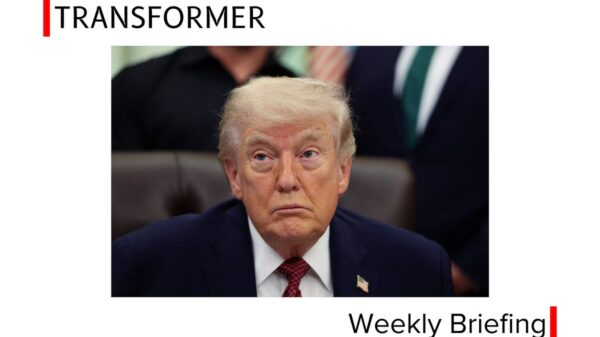
In a transformative shift for the American tech landscape, President Donald Trump signed a sweeping Executive Order on December 11, 2025, aimed at establishing a national framework for artificial intelligence (AI). Titled “Ensuring a National Policy Framework for Artificial Intelligence,” the order seeks to eliminate a fragmented regulatory environment by asserting federal preemption over state-level initiatives. By sidelining efforts in states like California, Colorado, and New York, which sought stricter safety and transparency requirements for AI developers, the administration argues that a unified federal approach will enhance the competitiveness of the U.S. AI sector against global rivals, particularly China.
This order represents a stark pivot from the previous administration’s focus on safety and oversight, marking a move toward aggressive deregulation. The White House contends that to maintain a leadership position in AI, American companies should be freed from “cumbersome and contradictory” state rules. The underlying message is clear: federal authority will now prioritize industry growth over regulation.
New Legal Framework for AI
The Executive Order introduces new mechanisms designed to enforce federal supremacy in AI policy. Central to this initiative is the establishment of an AI Litigation Task Force within the Department of Justice, set to become operational by January 10, 2026. This task force will challenge any state laws deemed “onerous” or an “unconstitutional burden” on interstate commerce, relying on the Dormant Commerce Clause as a legal foundation. The administration argues that AI technologies, which often transcend state lines, should not be subject to individual state regulations.
The order explicitly targets state regulations categorized as “anti-innovation,” including algorithmic audits for bias and discrimination, such as those mandated by Colorado’s SB 24-205 and California’s transparency requirements for large-scale models. The administration has described these mandates as “engineered social agendas” that obligate developers to integrate ideological biases into their technology. By preempting these regulations, the federal government aims to create a “minimally burdensome” standard focusing on economic growth over social considerations.
Responses from the AI research community have been polarized. Advocates of the order, including prominent researchers, argue that a unified federal standard will accelerate innovation and reduce compliance costs for startups. Conversely, safety advocates warn that stripping states of their regulatory powers could create a “vacuum of accountability,” potentially compromising safety protocols in favor of speed.
The reaction from major technology firms has been largely positive. Companies like **Microsoft** (NASDAQ: **MSFT**), **Alphabet** (NASDAQ: **GOOGL**), **Meta Platforms** (NASDAQ: **META**), and **NVIDIA** (NASDAQ: **NVDA**) have long advocated for a cohesive federal approach to AI. They view the order as providing the “clarity and predictability” required to invest significantly in AI development, effectively reducing operational risks associated with regulatory fragmentation. Startups and venture capitalists also stand to gain, with investors like **Marc Andreessen** of **Andreessen Horowitz** praising the move as a crucial lifeline for the American startup ecosystem.
However, the competitive landscape may shift in ways that could disadvantage smaller safety-focused firms. The standardization of a “minimally burdensome” framework could diminish incentives for companies to invest in safety and transparency features that are increasingly demanded by international markets, including the European Union.
This Executive Order marks a significant departure from the policy approach of the previous administration, which prioritized managing risks and safeguarding civil rights. The new directive emphasizes “global AI dominance,” highlighting a growing perception of AI as a critical area of national security and geopolitical competition.
Moreover, the order introduces a complex dynamic regarding state sovereignty. By threatening to withhold federal funding for states that refuse to comply with federal AI policy, the administration is employing substantial financial pressure to enforce its agenda. This strategy has provoked a bipartisan backlash from state Attorneys General, who argue that the federal government is overstepping its authority and undermining traditional consumer protections.
As the industry braces itself for a new era of AI regulation, legal experts expect a flurry of lawsuits challenging the order. California Governor **Gavin Newsom** has already signaled his intent to fight back, labeling the order an “illegal infringement” on state rights. This legal battle could culminate in a landmark Supreme Court case that will define the boundaries of federal authority in the AI landscape.
The coming months will be crucial as stakeholders anticipate the first actions from the AI Litigation Task Force and the implications for state-level regulations. As 2026 unfolds, the focus on defining “onerous” laws will serve as a precursor to the enduring debate over the balance between innovation and accountability. The ramifications of this Executive Order may not only reshape the regulatory environment but also influence how U.S. companies approach international markets dominated by stricter regulatory frameworks.
The “Ensuring a National Policy Framework for Artificial Intelligence” Executive Order signals a decisive shift in U.S. policy towards AI, centralizing authority and dismantling state-level oversight. Whether this approach fosters a new golden age of technological advancement or leads to unforeseen societal challenges remains to be seen. As the legal battles unfold, the stakes for AI regulation have never been higher.
See also New York’s New AI Law Sets $500M Revenue Threshold, Effective January 2027
 California Finalizes CCPA Regulations: Key Insights on AI Decision-Making and Risk Assessments
 Trump’s New AI Order Aims to Federalize Regulation, Empower Industry Growth
 NVIDIA Gains After Groq AI Inference Deal; Stock Steady at $190 Amid Geopolitical Concerns