The New Compliance Frontier in Human Capital Management
Human Capital Management (HCM) platforms are increasingly viewed as the nervous system of contemporary business, facilitating the integration of people, data, and automation to manage talent and strategy effectively. However, as these systems gain sophistication, leaders face the imperative to govern them with transparency and ethical consideration, in accordance with evolving regulations. Responsible data management has emerged as a foundational aspect of trust, culture, and long-term organizational resilience.
The convergence of HR, IT, and data privacy has resulted in a unified governance challenge. Each digital action in HR, from recruitment to performance reviews, generates sensitive data that, without proper governance, can become a significant liability. In light of this, many organizations now prioritize AI transparency in HR, necessitated by regulations such as the EU AI Act, GDPR, and various U.S. state privacy laws, which require clarity on not only the functionalities of algorithms but also the rationale behind their operations.
Modern HR risk and compliance software is evolving to address these challenges by breaking down silos. It fosters collaboration between legal, HR, and IT within a cohesive governance framework. This alignment is crucial; when departments operate with disparate objectives, compliance gaps can emerge, consequently eroding employee trust. Consequently, responsible governance in HCM transforms into a more integrated ecosystem rather than merely a software solution.
Forward-thinking companies recognize that ethical workforce analytics are not solely about evading penalties but about building credibility. According to research by PwC, training leaders and employees in responsible AI usage is essential for identifying and mitigating bias and misinformation before it permeates the organization. “Education and training on responsible AI use is critical for both employees and leaders if they are to spot bias and misinformation and counteract their effects,” the report states.
As organizations seek to implement responsible automation, clarity becomes paramount. The trend of “black box” AI is giving way to explainable systems that elucidate decision-making processes. For instance, if an AI system recommends an employee for promotion, it should disclose the metrics—such as performance scores or completed training—that informed that decision. This approach not only ensures accountability among managers but also reassures employees that decisions are equitable.
Both Workday and Oracle Cloud HCM exemplify these principles in action. Workday’s Explainable AI allows users to see how algorithms evaluate data, while Oracle’s Dynamic Skills leverages AI to align employees with internal roles, all while adhering to strict privacy standards and bias controls. Their successes illustrate that transparency and inclusion can coexist harmoniously.
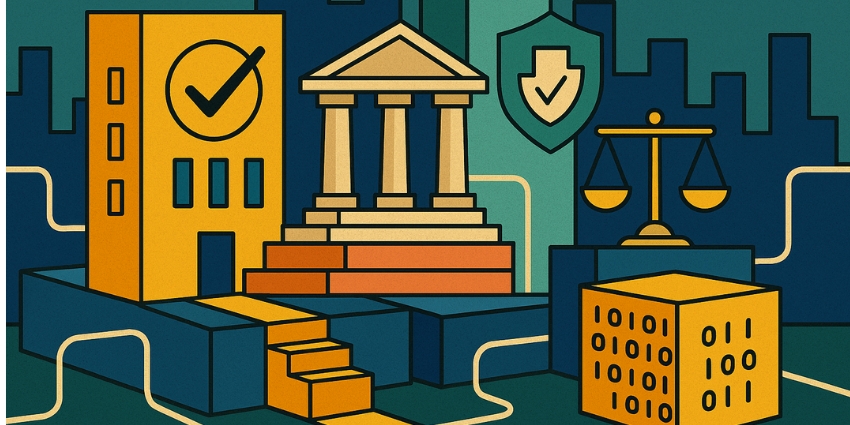
Responsible governance hinges on collaboration among various stakeholders. HR must define ethical standards and data ownership, IT secures infrastructure and model integrity, while legal and privacy teams ensure compliance with applicable regulations. Leaders must foster a culture that embeds accountability at all levels.
This collaborative approach has led many companies to formalize governance structures, such as AI ethics boards or data councils, to oversee workforce analytics. For example, Microsoft’s Responsible AI Standard mandates human oversight at every stage, from model design to actual deployment, a model that other HCM vendors are beginning to emulate.
Ultimately, effective governance in HCM transcends mere regulatory compliance; it contributes to operational excellence. Well-managed HR data fosters predictive analytics, enhances risk detection, and informs smarter leadership decisions. When transparency, ethics, and accountability are integral to every workflow, trust permeates the organization.
Responsible innovation calls for the use of data to empower rather than exploit individuals. It requires designing systems where employees feel confident that their data is secure, their capabilities are evaluated fairly, and that their leaders are answerable for automated decisions. The future landscape of HCM will favor companies that embed ethical considerations into their operational architecture, recognizing that responsibility is not a hindrance to innovation but a crucial component that makes it sustainable and trustworthy.
For those seeking to enhance their workforce through effective human capital management, understanding the intricate relationship between governance, data ethics, and technological advancement is essential.
See also OpenAI Announces Head of Preparedness Role to Address AI Safety Risks and Challenges
 Nvidia Licenses Groq Tech as HBM4 Race Heats Up; AI Infrastructure Spending Surges Ahead
 Shane Legg Introduces ‘Laptop Rule’ to Identify Jobs at Risk from AI Replacement
 Salesforce Cuts 4,000 Jobs, Shifts to Predictable AI Systems Amid Profitability Focus