






















































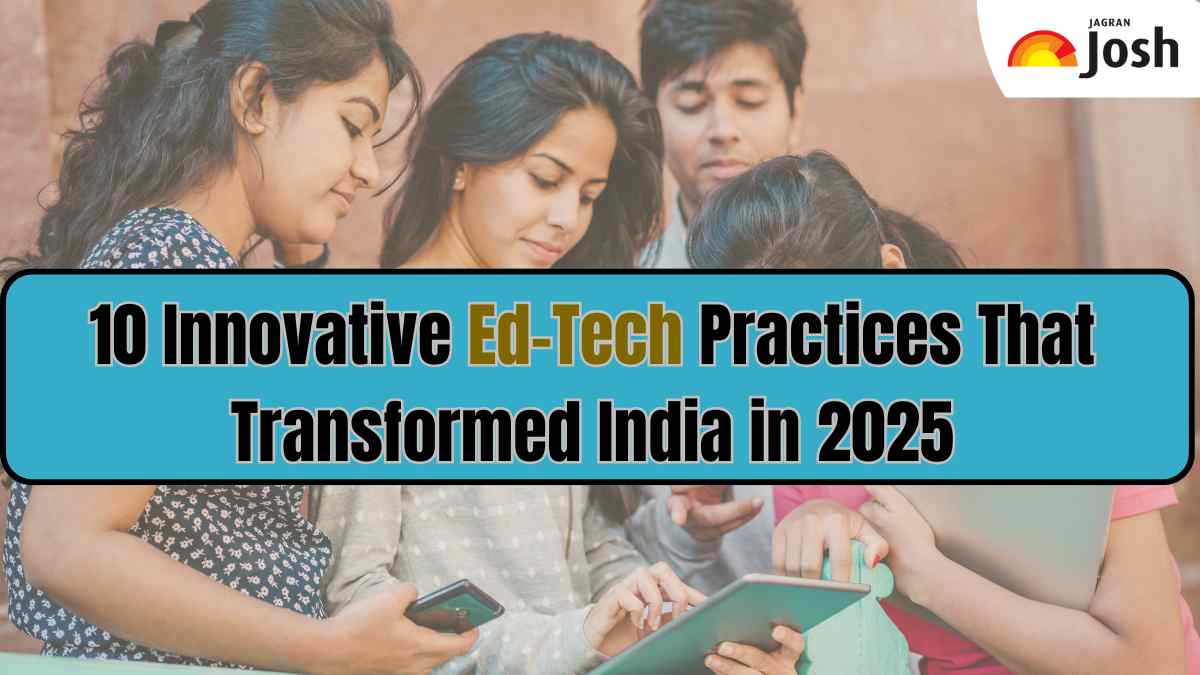
In 2025, India has witnessed a significant transformation in its education technology (Ed-Tech) landscape, driven by innovations aimed at making education more accessible and personalized for students across both urban and rural areas. The incorporation of advanced technologies like Artificial Intelligence (AI), blockchain, and a blend of physical and digital learning environments has played a pivotal role in this revolution. While AI tools have been integrated into various platforms since 2024, 2025 has marked the rise of blockchain-verified credentials and fully automated AI tools designed to cater to the diverse learning needs of students nationwide.
The innovative practices emerging from this Ed-Tech boom extend beyond mere student engagement; they also empower educators to explore pedagogical methods outside traditional classroom settings. The advent of these technologies not only democratizes access to quality education but also paves the way for a more inclusive learning atmosphere.
Among the most notable developments is the introduction of GenAI Tutors, which are AI-driven models acting as personal mentors for students. Platforms like Vedantu and Physicswallah now offer 24/7 AI mentorship, providing real-time assistance tailored to individual learning speeds and styles. This innovation marks a paradigm shift in personalized education, allowing students to receive immediate help and guidance without being bound by the limitations of traditional teaching schedules.
Another significant advancement is the use of verifiable digital credentials through platforms like Digilocker. By leveraging blockchain technology, students can now store and verify their academic documents securely, facilitating smoother transitions for those wishing to study abroad or needing quick documentation verification.
The concept of Phygital Learning Centers has emerged as a hybrid solution to the shortcomings of purely online or offline educational environments. These centers blend physical classrooms with digital formats, allowing students to benefit from live instruction delivered by teachers in major cities while having local educators available for immediate support. This approach not only enhances learning experiences but also bridges the educational divide between rural and urban students.
The move towards inclusivity is also reflected in the development of neurodivergent-friendly technology, designed to cater to students with unique learning requirements. Tools and software targeting conditions like dyslexia and autism are being adopted, featuring sensory-safe interfaces and specialized communication aids, thus fostering an environment where every learner can thrive.
In another innovative stride, skill passports have emerged as a digital alternative to traditional resumes. These blockchain-verified documents encapsulate both academic and professional journeys, offering a comprehensive overview of an individual’s skills and experiences, thereby improving employability on national and international scales.
Classroom dynamics have also evolved with the introduction of Cloud Boards, which replace conventional chalkboards with interactive, cloud-based panels. This technology allows teachers to access a plethora of digital resources seamlessly, enhancing the teaching process while reducing the physical burden of carrying materials.
To address the growing need for AI literacy, the Yuva AI for All initiative launched by the Ministry of Electronics and Information Technology (MeitY) aims to educate 10 million Indians about artificial intelligence. This program targets individuals from non-computer science backgrounds, making AI concepts more accessible and understandable.
Complementing this effort is the SOAR (Skilling for AI Readiness) initiative, which introduces AI as a subject in schools for students in grades 6-12. This educational roadmap not only incorporates AI as a core subject but also emphasizes its application as a problem-solving tool, enhancing students’ preparedness for future job markets.
Moreover, the upgraded platform Diksha 2.0 has emerged as a critical resource for digital education, aligning with India’s vision of “One Nation, One Digital Platform.” This version features personalized adaptive learning, inclusive education options, and interactive resources that cater to diverse learning needs.
Finally, Agentic AI is reshaping the role of teachers. Unlike traditional AI tools that require commands, Agentic AI autonomously manages many administrative tasks, allowing educators to focus on direct student engagement and academic growth. This evolution not only alleviates teacher workloads but also enhances the overall educational experience.
The Ed-Tech landscape in India is rapidly evolving, fundamentally transforming how education is delivered and experienced. With a commitment to inclusivity and accessibility, these innovative practices are set to redefine the educational framework, benefiting students and educators alike, regardless of their geographical or socio-economic backgrounds.
See also AI Education Policies Shift as Data Breaches Expose EdTech’s Vulnerabilities in 2025
 Susquehanna Kids Launches 30 Free AI Workshops Across Pennsylvania Schools
 AwanBiru Technology Secures RM16.4M Contracts for Google AI Tools in Higher Education
 AI Integrates into Learning Systems by 2026, Shifting Focus to Workforce Skills and Governance















