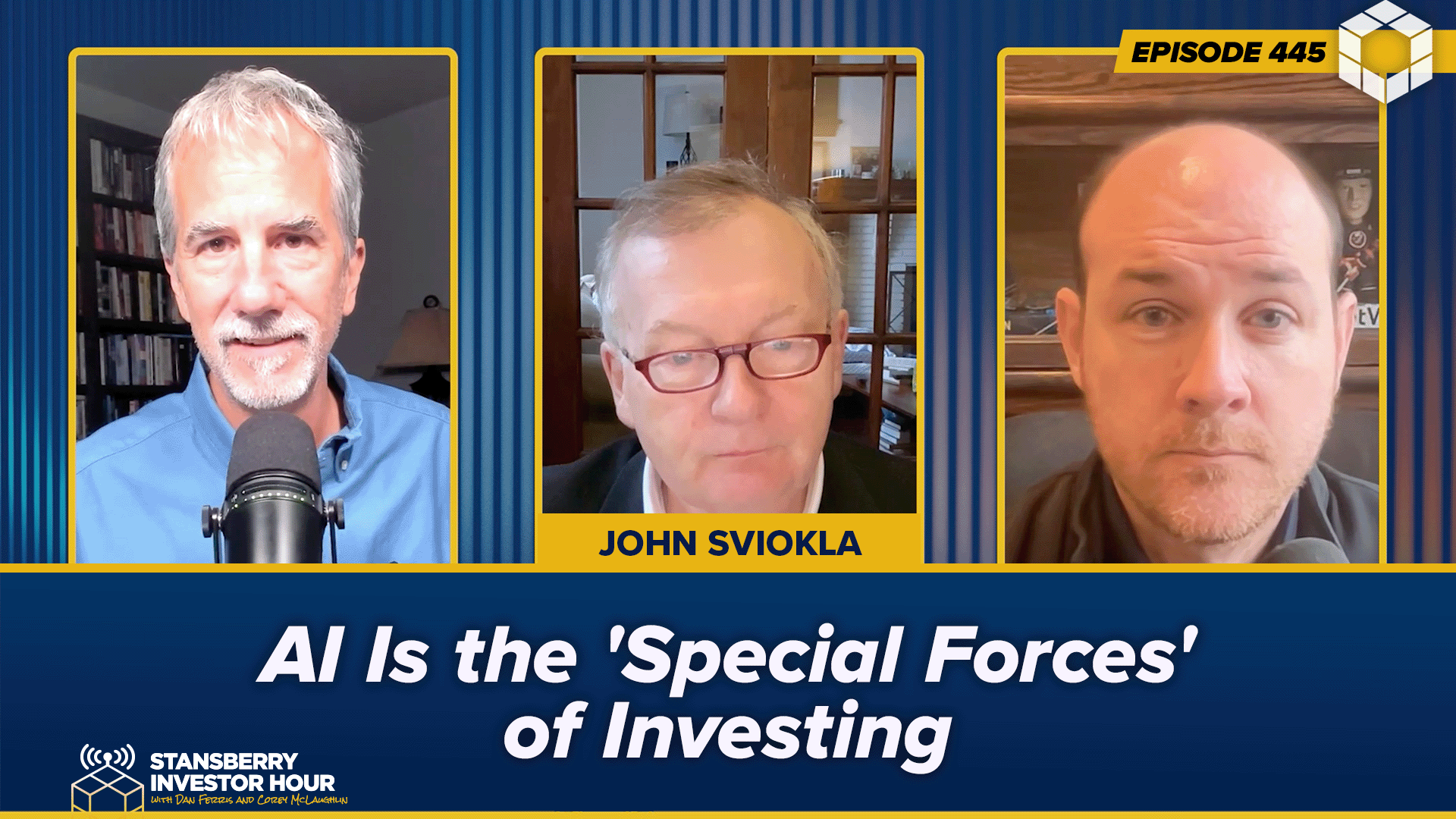
On the latest episode of the Stansberry Investor Hour, hosts Dan and Corey welcomed back John Sviokla, a noted author and executive fellow at Harvard Business School, who is also a co-founder of GAI Insights. Renowned for his expertise in AI integration strategies, Sviokla revisited his previous analysis on artificial intelligence’s influence in the markets, reflecting on the shifts that have occurred since his last appearance.
Sviokla emphasized a growing trend among CEOs regarding the adoption of AI, identifying two distinct groups: those leaders who are rapidly advancing their AI initiatives and the laggards who are progressing at a slower pace. He pointed out that many factors are currently impacting financial well-being, noting, “There’s no question that the majority of labor is getting less of the economic value out of our society.” He attributed this to various risks faced by the average worker today, including longevity risk, health care risk, and education risk, which contribute to a broader sense of financial insecurity.
During the discussion, Sviokla advocated for a public library dedicated to AI, suggesting it would provide users with a database to train their models effectively. He expressed concern over the United States losing intellectual property to China in the AI sector, attributing this to companies prioritizing market access. Sviokla argued that experiencing AI’s capabilities firsthand is crucial for understanding its potential, particularly regarding automation. He stated, “If you don’t have an experience talking with this silicon hive mind that has read literally everything that’s been written, you don’t know what that’s like.” He likened the productivity benefits at the individual level to special forces in military operations, suggesting that a small, skilled team could achieve outcomes that would typically require a much larger group, thus exemplifying AI’s efficiency.
Sviokla also provided insights for parents seeking career guidance for their children, identifying four critical areas in today’s tech-driven landscape. He expressed particular interest in the robotics sector, praising companies like Waymo for their advancements. He believes that the prevailing narrative surrounding AI suggests a bubble; however, he asserted that the market is experiencing overinvestment rather than a bubble in adoption. “OK, first of all, let’s separate two things,” he stated. “Is there overinvestment and overpricing in certain things? Of course, it’s a market. On the other side, is there an air bubble on adoption? Absolutely not. Adoption is accelerating.”
As the conversation wrapped up, Sviokla emphasized the importance of understanding the distinction between pricing and adoption, noting that while many may not profit from investments in AI, the technology itself is poised for continued growth and integration across various sectors. The insights he offered represent a significant commentary on the current and future landscape of AI, underscoring both the potential and challenges associated with its rapid ascendance. As AI continues to evolve, the implications for industries and workforce dynamics will be profound, requiring ongoing adaptation and strategic foresight from leaders and stakeholders alike.
See also AI Models Exhibit Bias Against Dialects, Reveals Study from Germany and the US
 Researchers Expose Fault Injection Vulnerabilities in ML-Based Quantum Error Correction
 AI Reveals Two New Subtypes of Multiple Sclerosis, Transforming Treatment Approaches
 Gujarat Launches IAIRO AI Research Body with Rs 300 Crore PPP Model at GIFT City
 AI-Based Digital Pathology Market to Reach $2.32 Billion by 2035, Growing at 8.7% CAGR