























































AI video generation is undergoing a significant transformation, evolving from basic animations and text-driven clips to sophisticated systems capable of understanding motion, emotion, context, and creative intent. This shift has prompted brands, creators, and designers to not only question the usability of AI-generated videos but also to explore how these technologies can be seamlessly integrated into existing production workflows without compromising quality or control.
The latest developments in AI video generation emphasize the creation of coherent systems rather than isolated outputs. These advanced systems incorporate a blend of image-to-image foundations, image-to-video motion layers, text-guided narrative logic, and configurable style, lighting, and motion parameters. This architectural evolution enables creators to refine and reuse assets effectively, moving away from generating ephemeral visuals.
One of the most notable trends is the emergence of image-to-image workflows as foundational to video creation, rather than merely an option. Modern platforms allow creators to establish a visual baseline, such as a character, product, or environment, and then proceed to lock key stylistic attributes before animating these images into videos. Platforms that facilitate robust image-to-image pipelines—like Genmi AI—are proving essential for maintaining consistency across various campaigns and brand assets, particularly in areas such as advertising, game asset creation, and social media storytelling, where visual continuity is critical.
Further enhancing this landscape is the integration of multi-model creative pipelines within a single environment. This approach enables creators to select specialized engines tailored for specific tasks—be it realism, motion fidelity, or stylistic abstraction—rather than relying on a single model for all functions. Such ecosystems combine cinematic video models with experimental motion engines and utilities designed for practical tasks, such as watermark-free generation. Genmi’s Sora watermark removal serves as a practical example of this trend, highlighting the industry’s shift towards producing outputs that are ready for professional use rather than just for demonstration purposes.
AI video generation is increasingly finding utility in scenarios where speed and iteration are prioritized over traditional perfectionist approaches. Applications include ad concept testing, where multiple visual directions can be explored before committing to full-scale production; creative prototyping for pitches or internal alignment; social media content creation focusing on high-impact visuals; and design exploration that allows testing of lighting and composition without the need for reshoots. This hybrid workflow—starting with generating a base image, followed by subtle animation and pacing refinements—reduces creative risk while preserving flexibility.
As the technology matures, the competitive advantage in AI video generation will hinge less on raw generation speed and more on platforms’ ability to support decision-making, creative control, and integration with existing processes. The next wave of tools will likely focus on delivering predictable outputs rather than randomness, advocating for modular workflows instead of one-click generation, and emphasizing creator agency over complete automation. Educational resources and expert analyses, such as those related to evolving video models, are vital for helping creators learn to collaborate with AI more effectively.
Before integrating AI video tools into their workflows, organizations should carefully consider several best practices. Establishing clear usage boundaries is crucial to identify where AI can add value and where human oversight is still essential. Consistency should be prioritized by locking visual references early to mitigate brand drift, and outputs must be evaluated for their readiness in meeting platform and resolution requirements. Additionally, selecting tools that support an iterative process rather than mere generation will be key to maximizing the utility of AI in creative projects.
AI video generation is no longer merely about novelty or automation; it has advanced into a structured capability that bolsters real creative work across various domains including advertising, design, storytelling, and digital production. By understanding emerging trends such as image-first workflows, multi-model pipelines, and production-ready outputs, creators can confidently adopt AI tools. The true opportunity lies not in generating more content but in creating better, faster, and more intentional visuals, striking an effective balance between intelligence and creative control.
See also Legal Teams Embrace GenAI Upskilling to Drive Innovation and Boost Productivity
 Researchers Benchmark 19 Multimodal Models for Open-Vocabulary Emotion Recognition
 AI Models Accelerate Drug Discovery by Generating Novel Hit-Like Compounds
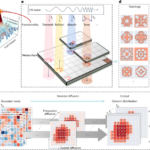 New Current-Diffusion Model Enhances Metasurface Discovery with Spatial-Frequency Dynamics
 LLMs Achieve Over 99% Accuracy as World Models for AI Agent Training, Study Reveals






