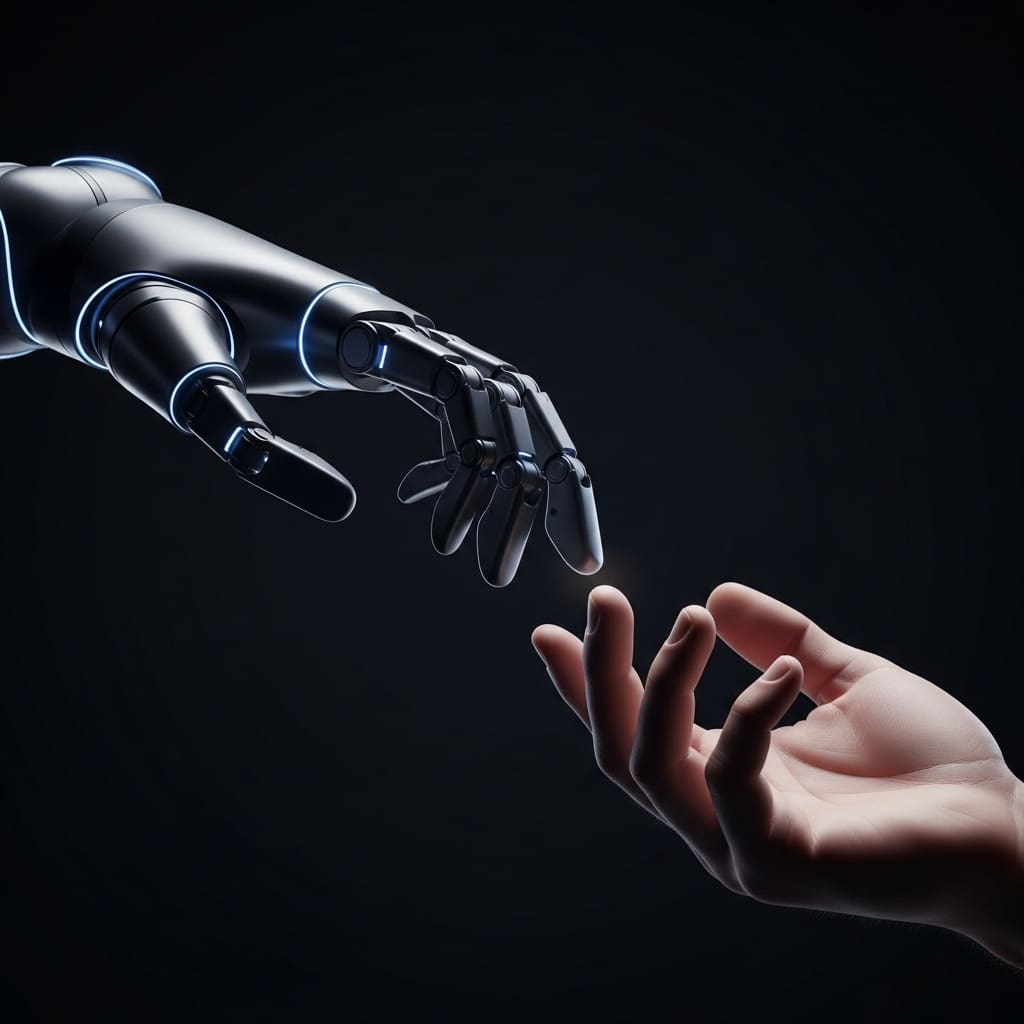
Artificial intelligence (AI) is increasingly influencing the education sector, offering opportunities for personalized learning experiences while also raising critical questions regarding fairness, data security, and student autonomy. Researchers including Hua Shen from NYU Shanghai and New York University are exploring how to cultivate trustworthy learning environments through a concept known as bidirectional human-AI alignment. This innovative approach emphasizes a reciprocal relationship where both educators and AI technologies learn from one another, moving beyond the conventional notion of simply embedding human values within AI systems.
The team argues that the future of education should empower teachers, students, and institutions to actively understand and shape the technologies they utilize. By proposing actionable strategies for developers and educators, their work aims to ensure that AI enhances equity, transparency, and overall human development in educational settings. This vision underscores a significant shift toward viewing AI as a supportive partner rather than a replacement for traditional educational roles.
Central to this research is the notion of aligning AI technologies with ethical values and educational objectives. Achieving this alignment necessitates collaboration among developers, educators, policymakers, and society at large. The researchers emphasize the potential risks of AI, including algorithmic bias and data privacy concerns, calling for robust governance structures to mitigate these dangers. They advocate for a framework where AI acts as a tool that complements teaching and learning efforts, emphasizing the need for clear ethical guidelines governing the responsible development and deployment of these systems.
This work advances a conceptual framework for bidirectional human-AI alignment, moving beyond the simplistic implementation of AI tools. By synthesizing emerging research and practical case studies, the authors have explored literature surrounding AI ethics, educational technology, and governance to identify both challenges and opportunities posed by sophisticated AI systems. Their findings highlight the need for ongoing dialogue about the impacts of AI on teacher roles, student agency, and institutional governance, framing AI adoption as a dynamic process of mutual adaptation.
To create trustworthy educational environments, the researchers identified three foundational elements: core values and ethical principles, educational goals and desired outcomes, and norms and boundaries governing human-AI interaction. They stress that successful alignment requires clarity on what exactly should be aligned before technical solutions or policies are put in place. Principles like equity, inclusivity, privacy, transparency, and accountability must be embedded in the design and deployment of AI systems to ensure that these technologies support educational objectives without distorting them.
Moreover, the research emphasizes that AI should contribute to broader educational aims, such as fostering critical thinking, creativity, and lifelong learning. By reinforcing intended learning outcomes, AI can support higher-order skills while enhancing student agency through adaptive learning pathways and meaningful feedback. Establishing clear norms for human-AI interaction is essential for maintaining trust and accountability, providing a roadmap for educators, policymakers, and developers to ensure that AI promotes equity and human flourishing in education.
The findings underscore the need for continuous adaptation as AI technologies evolve. Successful integration of AI into educational systems will depend on an ongoing process where both humans and intelligent systems learn collaboratively. As educational environments reimagine their roles, the emphasis shifts toward fostering creativity and critical thinking, enhancing the capabilities of educators rather than supplanting them. The authors stress that realizing this vision requires collective action among all stakeholders, including students, to foster responsible innovation and create trustworthy learning environments.
In summary, the research by Hua Shen and colleagues lays the groundwork for a future where AI and humans engage in a symbiotic relationship that prioritizes ethical considerations and enhances educational experiences. This approach not only seeks to mitigate the risks associated with AI but also aims to empower educators and students alike, ensuring that the technologies serve to enrich the educational landscape.
See also President Murmu Launches #SkillTheNation Challenge to Enhance AI Skills in India
 AI-Driven EdTech Predictions for 2026: Schools Embrace Personalized Learning and Safety Innovations
 WVU Parkersburg Professor Highlights AI’s Classroom Impact and Calls for Policy Reform
 EDCAPIT Achieves Global Reach with 120K Page Views and $5M Seed Fundraising Announcement
 U.S. Education Department Launches Reforms for Immigrant Rights and AI Integration in Schools