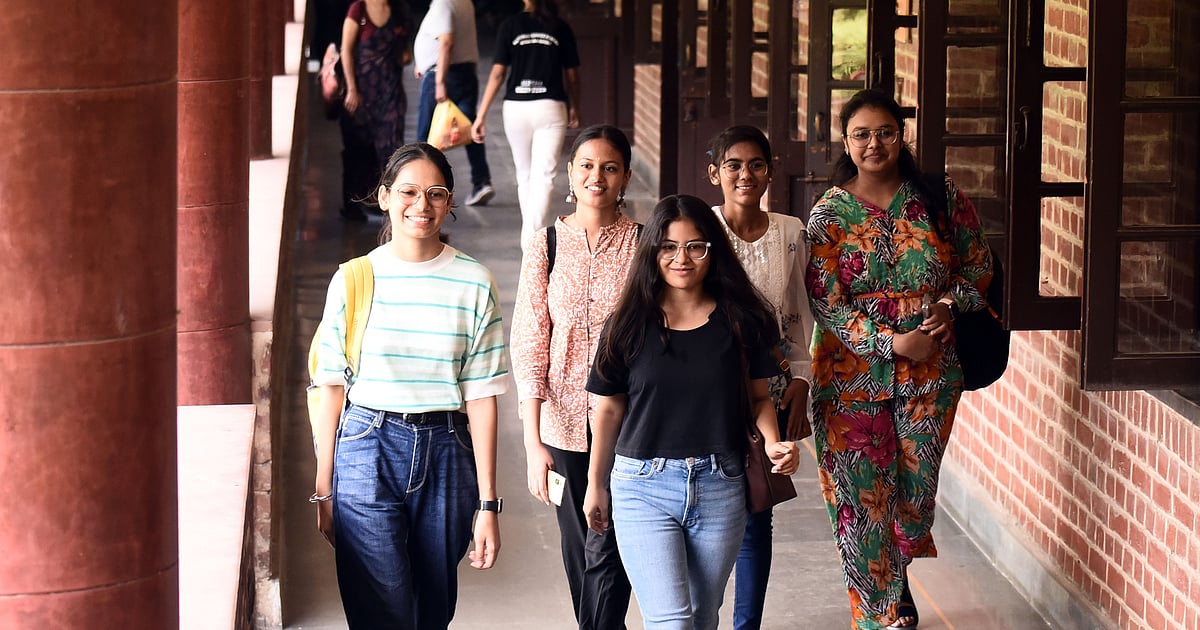
NEW DELHI: As Delhi looks toward 2026, its education landscape stands at a pivotal juncture, influenced by both unfinished reforms and escalating aspirations. The capital’s education system faces mounting pressure to evolve more swiftly, become more equitable, and deliver meaningful outcomes amidst challenges ranging from overcrowded classrooms in government schools to evolving standards in Central universities.
In the upcoming academic year, schools under the Delhi government are expected to focus on consolidating the advancements made over the past decade while simultaneously addressing persistent gaps. The anticipated rollout of CM Shree schools is set to represent a renewed commitment to enhancing quality education across the region. This initiative reflects the government’s intention to provide a more robust educational framework that thrives on inclusivity and quality.
The gradual implementation of the National Education Policy further underscores a significant shift in educational philosophy. Classrooms are moving away from rote learning towards a skill-based approach that emphasizes creativity, critical thinking, and problem-solving. However, the education system must confront enduring hurdles, including uneven learning levels, severe teacher shortages, and inadequate infrastructure in several areas. Additionally, frequent pollution-related disruptions pose a substantial threat to students’ learning experiences. By 2026, the goal is to establish schools that are not only well-constructed but also inclusive and capable of catering to diverse educational needs.
Higher education in Delhi is also poised to enter a transformative phase in the coming year. The University of Delhi (DU) is expected to further stabilize its four-year undergraduate program and continue with admissions based on the Common University Entrance Test (CUET). However, ongoing debates surrounding academic rigor, accessibility, and student preparedness persist. To effectively address these concerns, curriculum refinement and the establishment of stronger student support systems will be imperative.
As the education sector grapples with these changes, the importance of timely interventions cannot be overstated. Ensuring that students receive a quality education is not merely an institutional responsibility; it is a societal imperative that influences the future of the region. With a focus on equitable access and quality, the education system in Delhi has the potential to serve as a model for other regions facing similar challenges.
Looking ahead, the urgency to implement comprehensive reforms is clear. The interplay of aspirations and realities in Delhi’s education sector will shape the upcoming years. The commitment to fostering an environment conducive to learning could redefine educational outcomes, setting a precedent for future generations. As stakeholders navigate this complex landscape, the emphasis will need to be on resilience, adaptability, and inclusivity to ensure that no student is left behind.
See also 2025 Sees Record-Breaking Scientific Discoveries: Longest Lightning and AI-Generated Genomes
 NIT-C and JMR Infotech Launch ₹1.25 Crore AI Innovation Lab NEOHIVE for Real-World Applications
 AI Agents’ Memory Systems Evolve: OpenAI and Google DeepMind Push for Enhanced Recall by 2025
 DeepSeek AI Reveals Efficiency-Focused Research Framework to Enhance Model Scaling
 Shanghai AI Laboratory Launches Science Context Protocol to Enhance Global AI Collaboration