






















































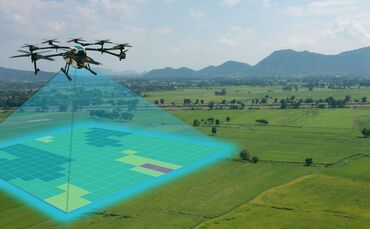
AGCO’s Innovation Hub is pioneering a fresh approach to artificial intelligence (AI) development by actively involving farmers in the co-creation of solutions prior to full-scale commercial deployment. This initiative was highlighted by Morten Bilde, the managing director at AGCO, during a panel discussion at the Institution of Agricultural Engineers (IAgrE) Conference.
The platform, integrated within CLAAS’ Geobird wayline optimisation system, allows farmers to offer feedback on early prototypes, concepts, and ideas. This ongoing feedback loop is designed to ensure that the AI solutions being developed address real-world farming challenges rather than theoretical scenarios. This method stands in stark contrast to traditional agricultural equipment development, where products often hit the market with minimal real-world testing.
By considering AI products as continuously evolving systems, AGCO and its partners can quickly adapt to the needs and changing requirements of farmers. Bilde suggested that the Innovation Hub concept could extend beyond software development to include physical machinery, allowing for ongoing refinement based on actual field performance. The tools within the platform encourage users to provide context regarding their data and experiences, thus speeding up development cycles and helping developers resolve issues before they escalate into widespread problems.
This co-creation model directly addresses one of the key themes discussed at the conference: the significance of user experience in the adoption of AI technologies. Allan Kildeby, head of camera sensors at CLAAS, underscored the importance of ease of use for AI-enabled equipment, particularly among farmers who may be initially sceptical of new technologies. He noted that making these tools user-friendly is essential for achieving broader adoption.
Professor Simon Pearson from Lincoln University further elaborated on the role of large companies, like John Deere, in supporting AI technologies through acquisition and the establishment of professional service networks. These networks provide the stability and support necessary for farmers to place their trust in these advanced systems. However, Pearson also indicated that farmers generally prefer owning AI-enabled machines outright rather than relying on service-based models. This preference emphasizes the need for solutions that seamlessly integrate with existing farm ownership structures.
The panel concluded that successful AI adoption hinges on genuine partnerships between developers and farmers. Continuous feedback mechanisms, such as those exemplified by the Innovation Hub, have the potential to become the industry standard for AI development in agriculture. This collaborative approach not only fosters innovation but also ensures that the technology developed aligns closely with the practical realities faced by farmers.
As the agricultural sector continues to evolve, the integration of AI technologies stands to transform traditional farming practices. The emphasis on co-creation and ongoing adaptation may pave the way for more effective, user-centered solutions that can enhance productivity and profitability in the industry. As stakeholders navigate the complexities of AI adoption, the lessons learned from AGCO’s Innovation Hub may serve as a model for future initiatives aimed at bridging the gap between technology and agricultural practice.
See also AI Professionals Must Upskill: Top Resources for Career Growth and Learning Opportunities
 Canada’s National Security Agency Reviews AI Use, Identifies Potential Risks
 Super Micro Computer Leads AI Server Market with 70% Share in Liquid Cooling Technology
 Caterpillar Achieves 62% Stock Surge in 2025, Transforms into AI Infrastructure Leader
 Western Digital Stock Drops 2.2% to $172.27 Amid Profit-Taking After 2025 Surge















