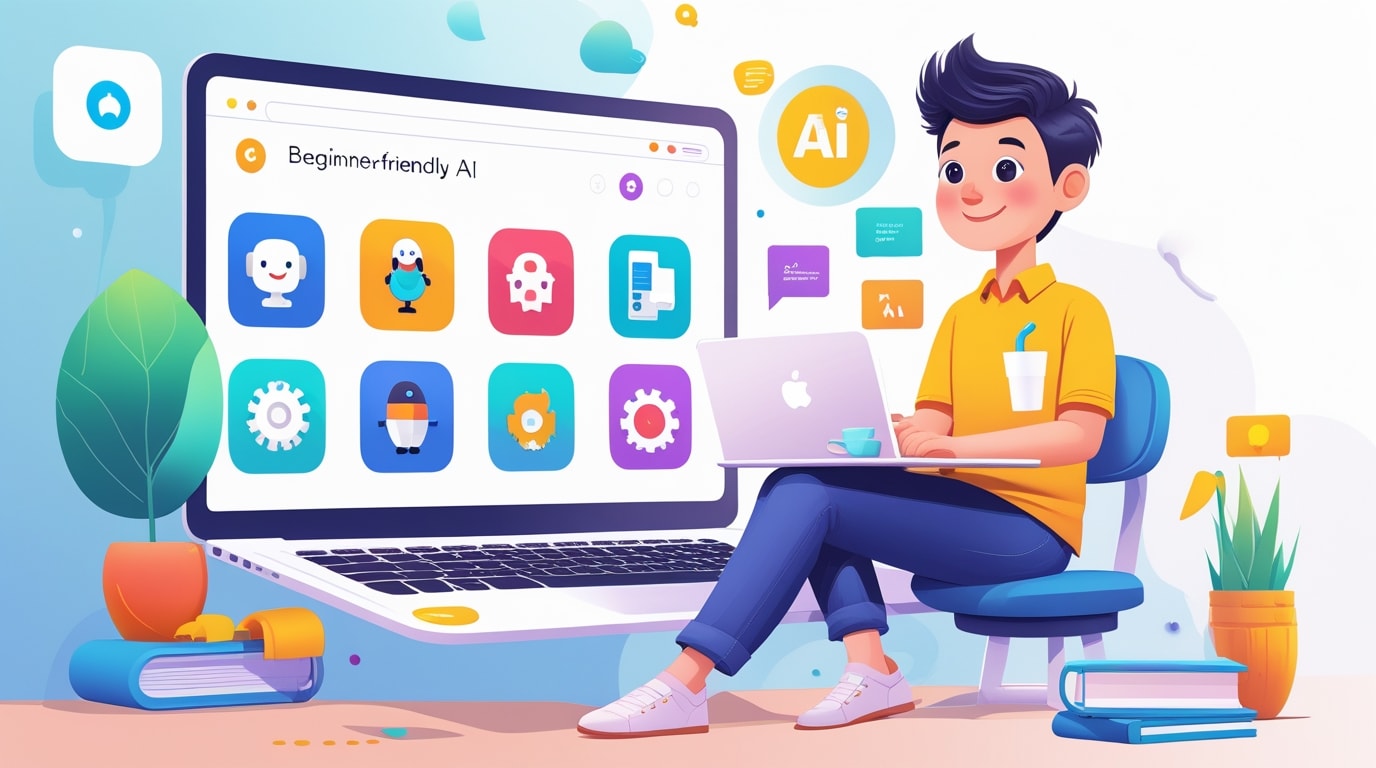
Free AI tools are reshaping the creative landscape, allowing even novices to produce professional-grade work without extensive training or financial investment. In just a few years, the barriers that once confined creative expression—such as high-cost software and steep learning curves—are dissipating, enabling anyone with an internet connection to tap into sophisticated capabilities.
Previously, the realm of video editing, graphic design, and coding was dominated by expensive software and required significant expertise. Many aspiring creators faced a daunting challenge; for instance, in 2019, a user spent three hours navigating YouTube tutorials just to learn basic video editing in Adobe Premiere, which cost more than their monthly grocery budget. The rising tide of free AI tools has altered this landscape dramatically, democratizing creativity.
The current generation of free AI tools is not merely software stripped of features, as was common a decade ago. Instead, these applications leverage machine learning to understand user intent, allowing individuals to describe what they wish to achieve in plain language. Today’s free tools are equipped to handle tasks that once necessitated formal training or specialist hiring.
This shift is significant; it signals a move from skill-based software to intent-based tools. Traditional applications like Photoshop required users to learn intricate functionalities before they could realize their creative visions. In contrast, AI tools allow users to articulate their ideas, enabling the software to manage the technical execution. This change lowers the entry barriers for beginners across various creative domains.
Moreover, the rise of free AI tools has diminished the requirement for deep specialization. Five years ago, creators typically identified strictly as writers, designers, or developers. Now, a writer can produce original images, a designer can draft copy, and a developer can create marketing videos, fostering a more fluid work environment. This new ecosystem encourages multifaceted skill sets, allowing creators to explore diverse fields before honing in on a particular expertise.
Nevertheless, the proliferation of accessible tools has intensified competition. As more individuals gain access to high-quality creative capabilities, the standards for acceptable work have risen. What might have impressed audiences five years ago is now deemed basic. Thus, while the democratization of creativity is a boon, it also imposes new pressures on creators to stand out.
Experienced creators are adapting to this evolving landscape by integrating AI tools into their workflows. Rather than seeing these tools as competition, many professionals view them as collaborators, allowing for greater efficiency in routine tasks. For example, a graphic designer may use AI to generate initial concept variations, significantly increasing output without compromising quality. Similarly, content strategists employ AI tools for drafting, freeing up time for more nuanced tasks that require human insight.
While free AI tools offer immense potential, beginners often make critical mistakes. They may treat AI-generated outputs as final products, missing the opportunity for personal refinement and creativity. Furthermore, excessive tool-hopping can hinder skill development, as familiarity with multiple platforms yields less value than proficiency with a few. Another common pitfall is over-reliance on AI for decisions requiring human discernment, such as strategic direction or audience engagement.
To navigate these challenges successfully, beginners should approach AI tools with clear intentions. Identifying specific problems to solve is crucial; whether creating social media graphics or editing videos, a focused approach allows for more effective tool evaluation. Exploring the capabilities of a chosen tool without the pressure to produce finished work can also enhance understanding and intuition.
Real-world examples illustrate the transformative power of free AI tools. A consultant launched a business using completely free resources, successfully creating professional-looking materials without hiring external agencies. Similarly, online educators have leveraged AI to streamline course development, allowing them to focus on engagement rather than administrative tasks. Nonprofits have utilized these tools to craft compelling communications and marketing campaigns, effectively reaching wider audiences with limited budgets.
As the landscape continues to evolve, the distinction between AI tools and traditional software will likely diminish, making AI features ubiquitous across platforms. The emerging challenge will not be whether to use AI but how best to integrate it into existing workflows. The shift toward AI-augmented skills will reshape education and professional development, emphasizing the need for creators to cultivate both technical and human-centric skills.
In this rapidly changing environment, the key to success lies not solely in the adoption of AI, but in understanding the unique value each creator brings to their work. Those who focus on their perspective, creativity, and strategic thinking, alongside leveraging AI tools, will find themselves well-positioned as the barriers to creative expression continue to fall.
See also MIT Study Reveals AI Writing Tools Reduce Brain Connectivity and Memory Retention
 Google’s Demis Hassabis Plans 2026 Launch of AI-Powered Smart Glasses with Key Innovations
 AI Platforms Surpass 60% Usage in U.S. as Consumers Shift Toward Digital Commerce
 Nvidia Faces Patent Lawsuit Over Machine Learning Tool Infringement by Health Discovery Corp.
 Z.ai Launches GLM-4.7 Open-Source Model with 87.4 τ²-Bench Score for Developers