SEOUL – The integration of artificial intelligence (AI) into the K-pop industry has transformed the landscape of music production and artist development, with major entertainment agencies embracing the technology in response to an increasingly AI-driven global market. Since the launch of ChatGPT in late 2022, the commercialization of generative AI has reshaped various sectors, and K-pop stands at the forefront of this evolution.
In the three years since AI began to take a more prominent role in K-pop, agencies such as SM Entertainment and Hybe have pioneered distinct approaches to harness its potential. SM Entertainment, among the “Big Four” K-pop agencies, was the first to articulate an AI-centric vision when founder Lee Soo-man predicted that the industry would evolve into “a world of robots and avatars.” This vision materialized with the debut of girl group Aespa in 2020, which incorporated AI avatars known as “ae,” embedding artificial intelligence and the metaverse into the group’s narrative.
Conversely, Hybe has adopted a more technical and operational approach. Following its investment in AI audio startup Supertone in 2021, Hybe acquired a majority stake in the company in January 2023. This partnership produced the debut single “Masquerade” from Midnatt, an alter ego of Big Hit Music artist Lee Hyun. The song employed AI to enhance multilingual pronunciation and voice design, allowing for simultaneous global releases in six languages, including Korean and English. Supertone’s founder and CEO Kyogu Lee emphasized the technology’s role in expanding creative possibilities for artists rather than replacing them.
In June 2024, Hybe launched Syndi8, a virtual pop group entirely reliant on AI-generated vocals. The group, composed of four members—Canary, Next, Goyo, and Raven—released its debut single “MVP” in a fictional universe called Nansy Land, where sound is integral to identity. The project aims to connect with global fans, reflecting Hybe’s ambition to position itself as an “Enter-Tech” company, blending entertainment and technology.
In contrast, JYP Entertainment has entered the AI space more cautiously, rebranding its subsidiary JYP360 as Blue Garage in December 2024 and announcing plans to develop AI artists in September 2025. However, tangible results from these initiatives are yet to be realized. Meanwhile, YG Entertainment has opted for a conservative strategy, focusing on partnerships with established tech-driven entities like Plave, a successful virtual idol group. Through its subsidiary YG Plus, YG has gained commercial insights without directly engaging in technological development.
Emerging in March 2023 under virtual IP startup Vlast, Plave exemplifies K-pop’s “Enter-Tech” transformation. Unlike completely AI-generated idols, Plave employs real-time motion capture technology, allowing human performers to wear suits that translate their movements into live 3D characters. This innovative approach has proven commercially viable, leading Plave to become the first virtual idol group to top a local music show and achieve significant sales milestones shortly after their debut.
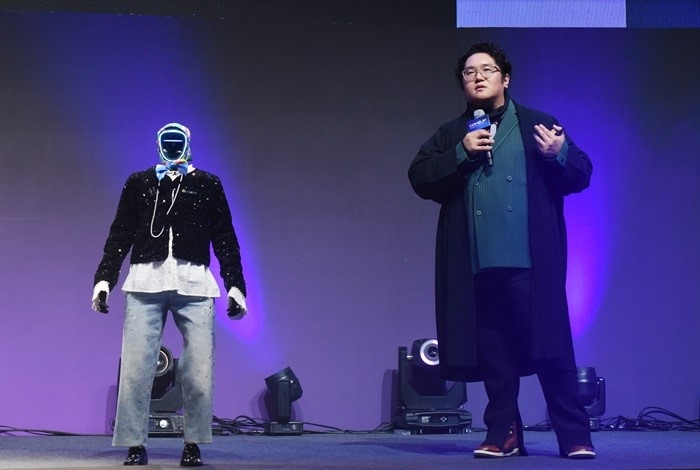
In a further evolution of K-pop idols, Galaxy Corporation is pioneering the creation of humanoid robot idols that can perform on real stages and interact with fans. The company’s CEO Choi Yong-ho recently unveiled plans at the “ComeUp 2025” conference, indicating a future where real, virtual, and robot idols coexist in a hyper-converged entertainment ecosystem. This vision was highlighted by a humanoid robot performing choreography to G-Dragon’s “Power” during the event.
Choi asserted, “We’re only at 1 or 10 percent of what’s possible,” suggesting that the potential for innovation in this space remains vast. As K-pop embraces AI in diverse forms, from virtual idols to humanoid robots, the industry’s trajectory hints at a future where technology and entertainment are inextricably linked, redefining fan engagement and artistic expression on a global scale.
The rapid integration of AI within K-pop not only reshapes the industry but also raises crucial ethical questions surrounding creative authenticity. As companies navigate this evolving landscape, a broader societal dialogue regarding the implications of AI in artistic endeavors is essential for establishing a sustainable future for both artists and their audiences.
See also Global AI Leaders Confirm Attendance at India’s AI Impact Summit, Feb 15-20, 2026
 New Studies Reveal AI’s Impact on Art Appreciation, Emotional Bonds, and Cultural Perceptions
 AI in 2026: Nvidia and OpenAI Lead a $100B Investment Surge Amid Market Challenges
 Five AI Stocks to Buy Now for Long-Term Growth as Market Gains 81% Since 2020