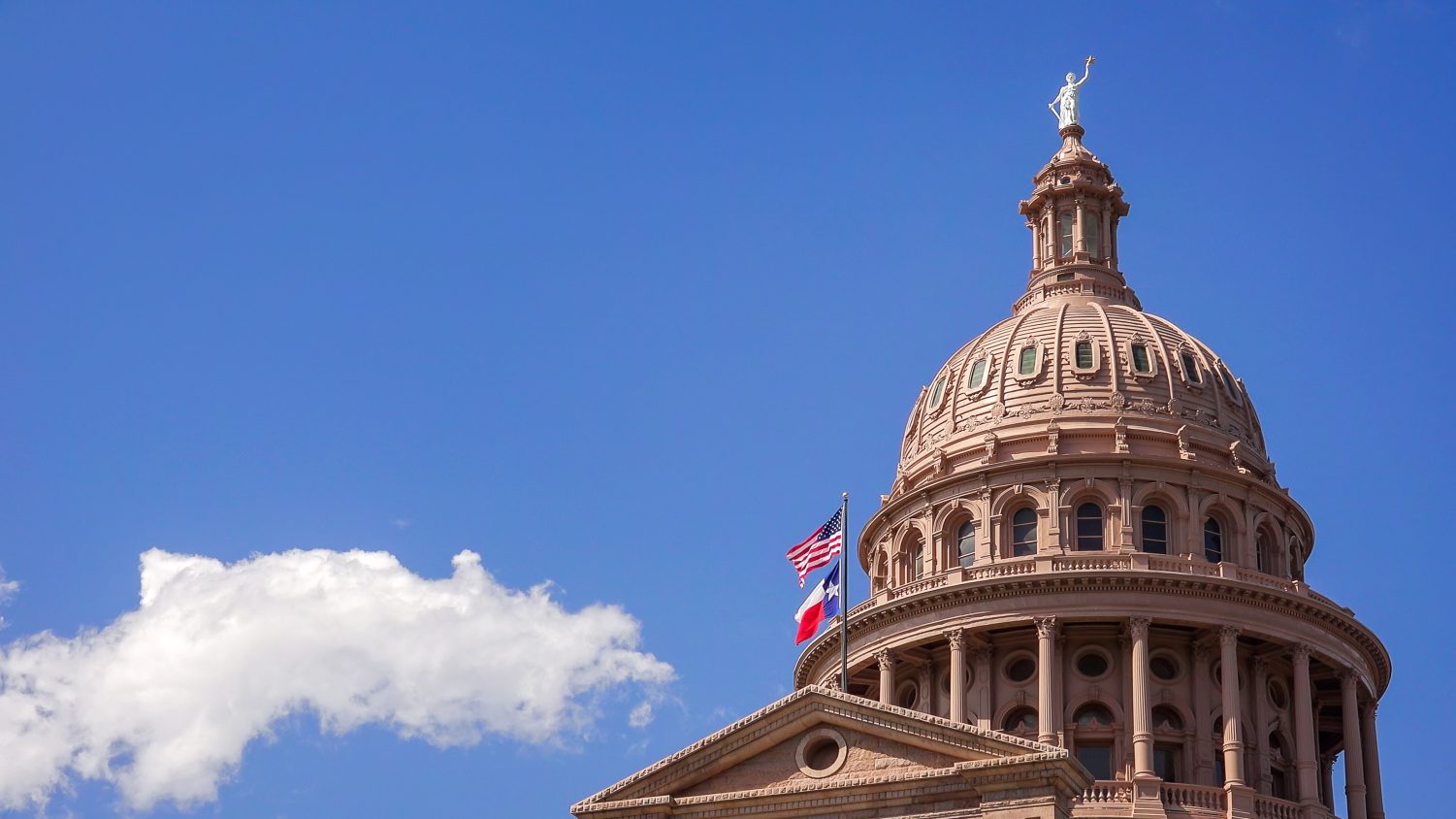
The Texas State Capitol building in downtown Austin.
Adobe Stock
As the new year approaches, Texas lawmakers are preparing for a slate of new legislation set to take effect on January 1, 2026. The most notable among these is the Texas Responsible Artificial Intelligence Governance Act, which imposes regulations on the use of artificial intelligence across government agencies. This law mandates that agencies disclose their interactions with AI and prohibits the creation of certain AI-generated content, including deepfakes and material that encourages self-harm.
In addition to the AI regulations, significant changes are also coming to immigration enforcement in Texas. Senate Bill 8, which requires sheriffs in counties with jails to enter into agreements with U.S. Immigration and Customs Enforcement (ICE) under the federal 287(g) program, aims to enhance local law enforcement’s role in federal immigration matters. This legislation compels local authorities to assist in identifying, detaining, and processing individuals for potential deportation. While some jurisdictions, like Keller, have opted into the program, the Dallas Police Department has chosen not to participate, despite financial incentives of up to $25 million.
Another key piece of legislation, the Texas App Store Accountability Act, seeks to impose stricter safety measures for app stores, including mandatory age verification, parental consent for app downloads, and requirements for developers to display age-based content ratings. However, like Senate Bill 10, which mandates that public school classrooms display a copy of the Ten Commandments, this law is currently facing legal challenges following a federal judge’s issuance of a preliminary injunction to block its enforcement.
On the healthcare front, Senate Bill 1522 introduces amendments to the Texas Health and Safety Code related to assisted living facilities. The law aims to clarify the definition of “continuing care” while enhancing regulatory oversight and consumer protections. Notably, it prohibits facilities from enforcing contract clauses that restrict residents’ rights to assemble or engage with community groups.
Overall, while the list of new laws may not seem as extensive or controversial as in previous sessions, the ongoing legal battles and the implications of these new regulations suggest that Texas will remain a focal point for discussions on education, technology, and immigration policy in the coming year. With many of these laws being contested in court, the state’s approach to governance continues to evolve amid a dynamic political landscape.
See also AI Talent in India Expected to Double by 2027, But Are Workers Prepared for Change?
 Government to Reform Open Schooling, Promote AI Use in Teacher Education
 Elon Musk’s Grok Faces Backlash Over AI-Generated Sexualized Images of Minors
 India Orders X to Fix Grok AI After Complaints of Obscene Content Involving Minors
 Grok AI Faces Backlash for Generating Nonconsensual Sexualized Images of Minors