






















































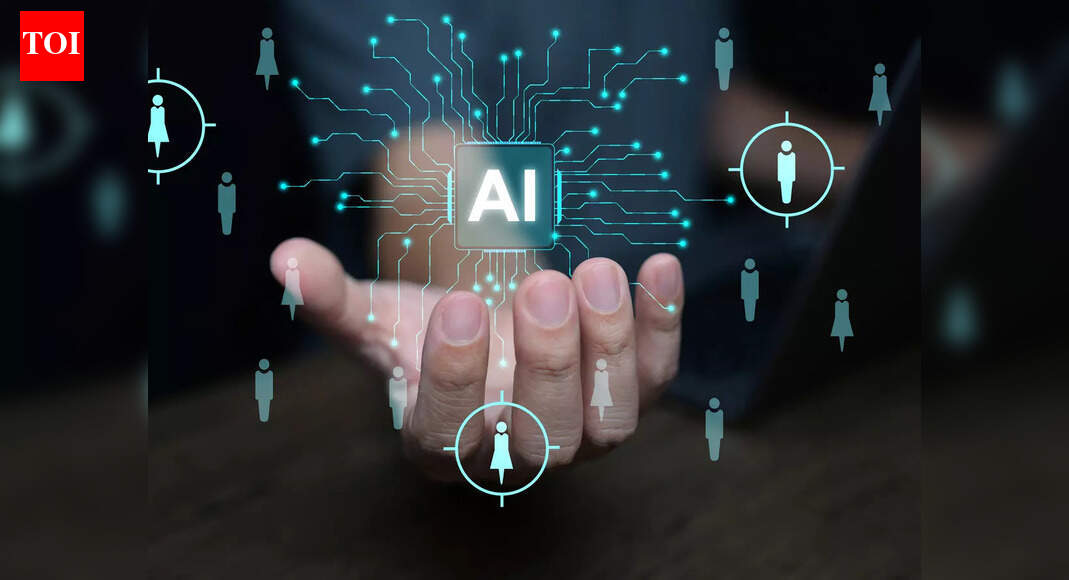
Artificial intelligence (AI) is becoming an integral part of everyday life in India, transitioning from theoretical discussions to practical applications in various sectors. Its impact is evident in corporate data analysis, government processing of information, and the way citizens engage with public services. While this transformation has sparked excitement, it has also raised concerns about job displacement, dominating conversations and overshadowing the evidence of AI’s potential benefits.
The Indian government’s recent year-end report aims to alleviate these fears. Drawing insights from NASSCOM’s Advancing India’s AI talent pool, the report reveals that India’s AI workforce is projected to grow from approximately 650,000 professionals today to more than 1.25 million by 2027. Although these figures provide a sense of reassurance, they prompt critical questions regarding workforce readiness for this transition. Will new roles offer the same job security and dignity as those they replace?
By August 2025, around 865,000 candidates are expected to have enrolled in courses focusing on emerging technologies, with approximately 320,000 in AI and Big Data Analytics, according to the government report. These enrollment figures indicate momentum but also highlight the challenge of effectively preparing a large workforce for a rapidly evolving digital economy. The pace of change in technology may far outstrip the capabilities of traditional educational systems.
To address this issue, government initiatives such as FutureSkills PRIME, launched by the Ministry of Electronics and Information Technology (MeitY), play a crucial role. More than 1.85 million candidates have registered on the platform, with over 337,000 completing their courses. Each completion signifies a mid-career individual striving to remain relevant in a shifting job market, often learning new skills in hopes of finding new opportunities. However, access to this reskilling initiative is uneven, with participation heavily concentrated in urban areas where digital infrastructure is more developed. Rural and semi-urban regions lag behind, raising the question of whether policy can bridge these gaps before they become entrenched.
The influence of AI extends into public administration, where tools utilizing machine learning, optical character recognition, and natural language processing are increasingly used for tasks such as translation, scheduling, and citizen communication. Platforms like e-HCR and e-ILR allow individuals to access court judgments in multiple regional languages, enhancing the transparency and accessibility of the justice system. However, the efficiency gained through these technologies introduces new dilemmas. It raises critical questions about accountability when decisions are driven by algorithms, challenging citizens to understand and trust outcomes that emerge from systems they cannot see or fully comprehend.
India’s AI journey is neither a straightforward success story nor a cautionary tale; it represents a work in progress filled with promise yet fraught with challenges. Government data highlights growth, skill-building, and improvements in service delivery, though the inclusivity of this transformation remains uncertain. The pressing question is whether artificial intelligence will widen existing socio-economic divides or serve as a tool for reducing them. The answer lies not merely in speculation but in the alignment of policy, education, and ethics in the years to come.
See also Government to Reform Open Schooling, Promote AI Use in Teacher Education
 Elon Musk’s Grok Faces Backlash Over AI-Generated Sexualized Images of Minors
 India Orders X to Fix Grok AI After Complaints of Obscene Content Involving Minors
 Grok AI Faces Backlash for Generating Nonconsensual Sexualized Images of Minors
 X Enforces Strict Measures Against Illegal and AI-Generated Content Following Meity Directive















