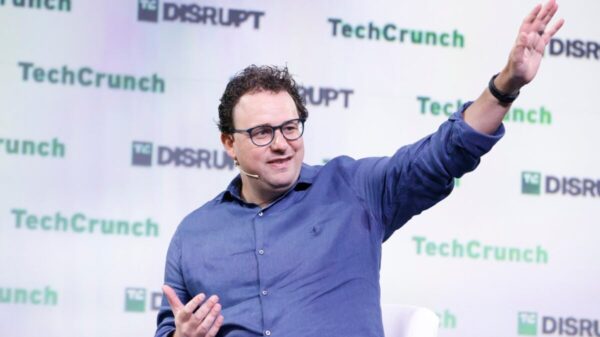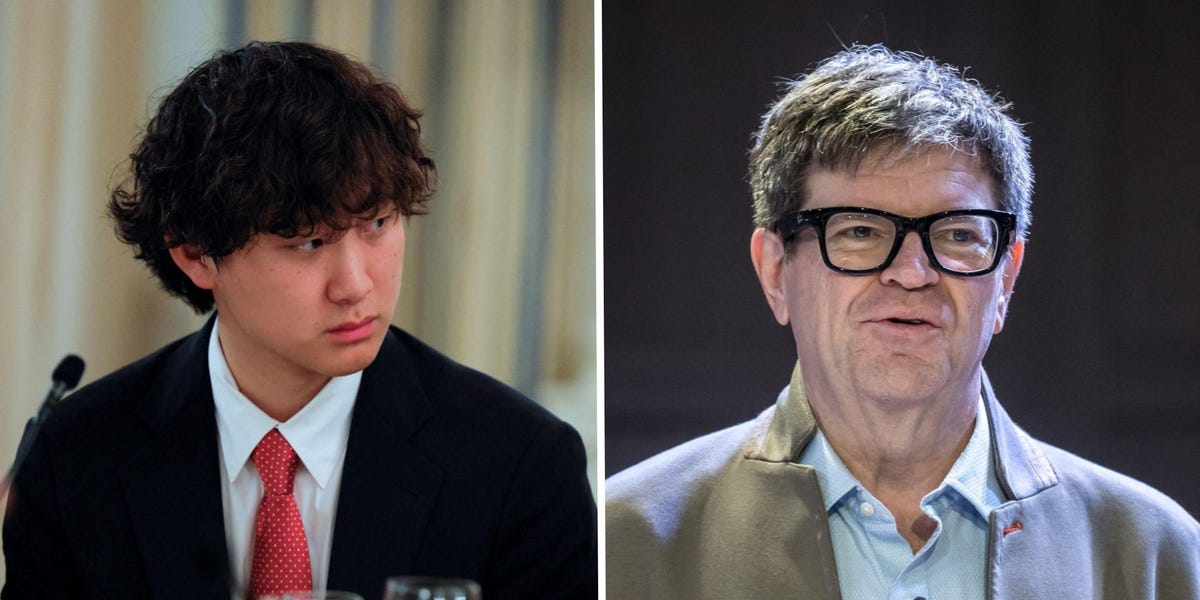
AI pioneer Yann LeCun has expressed skepticism regarding Mark Zuckerberg‘s ambitious $14 billion investment in Alexandr Wang, the co-founder of Scale AI, who was recently appointed to lead Meta’s Superintelligence Labs. In an interview with the Financial Times, LeCun, who previously held the position of chief AI scientist at Meta before announcing his departure to start his own venture, criticized Wang’s lack of experience within the research domain.
LeCun remarked that, while Wang is quick to learn and aware of his knowledge gaps, he lacks practical experience in AI research and does not fully grasp what attracts or deters researchers. “He learns fast, he knows what he doesn’t know… There’s no experience with research or how you practice research, how you do it,” LeCun stated.
Wang represents a key component of Zuckerberg’s strategy to bolster Meta’s AI capabilities, following the company’s controversial decision to acquire Scale AI. The $14 billion investment included recruiting Wang from the rapidly growing startup, highlighting Meta’s aggressive approach in the ongoing AI talent competition. However, LeCun pointed out that Zuckerberg’s frustrations stemmed from what he perceived as unsatisfactory progress on the company’s flagship open-source AI model, Llama.
In the same interview, LeCun claimed that the AI team had “fudged” certain results related to Llama 4, an assertion that triggered criticism over potential manipulation of benchmark tests. This incident reportedly eroded Zuckerberg’s confidence in Meta’s existing AI team. “Mark was really upset and basically lost confidence in everyone who was involved in this,” LeCun told the Financial Times. The fallout from this episode led to the sidelining of Meta’s entire GenAI organization.
Although Wang briefly held a directorial role over LeCun during the organizational restructuring, LeCun emphasized that effective research cannot be dictated. “You don’t tell a researcher what to do,” he said, adding that this principle applies particularly to someone with his level of experience.
LeCun acknowledged that Zuckerberg generally supports his views on the future of AI, but noted that the company’s recent hires seem overly focused on large language model (LLM) development. “I’m sure there’s a lot of people at Meta, including perhaps Alex, who would like me to not tell the world that LLMs basically are a dead end when it comes to superintelligence,” LeCun said. “But I’m not gonna change my mind because some dude thinks I’m wrong. I’m not wrong. My integrity as a scientist cannot allow me to do this.”
LeCun has long argued that LLMs possess inherent limitations and contends that a different approach is necessary to unlock the full potential of AI. His new startup, reportedly named Advanced Machine Intelligence, reflects this philosophy. In his role as executive chair, LeCun clarified that he does not intend to assume the responsibilities of a CEO. “I’m a scientist, a visionary. I can inspire people to work on interesting things. I’m pretty good at guessing what type of technology will work or not. But I can’t be a CEO,” he explained. “I’m both too disorganized for this, and also too old!”
The developments at Meta underscore the complex dynamics within the AI sector, where talent acquisition and research credibility are paramount. As the company navigates its internal challenges, the implications of these leadership decisions and strategic directions could shape the future landscape of artificial intelligence. With AI technology evolving rapidly, the debates surrounding its direction and efficacy are likely to intensify, inviting scrutiny from both industry experts and the broader public.
See also Meta Invests $2B in AI Startup Manus Amid Shareholder Concerns and Insider Sales
 El Salvador Commits $XXX Million to Bitcoin and AI Investments Through 2026
 China’s AI Surge: DeepSeek Models Challenge US Dominance, Targeting 2027 Leadership
 DOE’s Genesis Mission Unites 17 Labs, Major Firms to Drive AI-Powered Scientific Breakthroughs