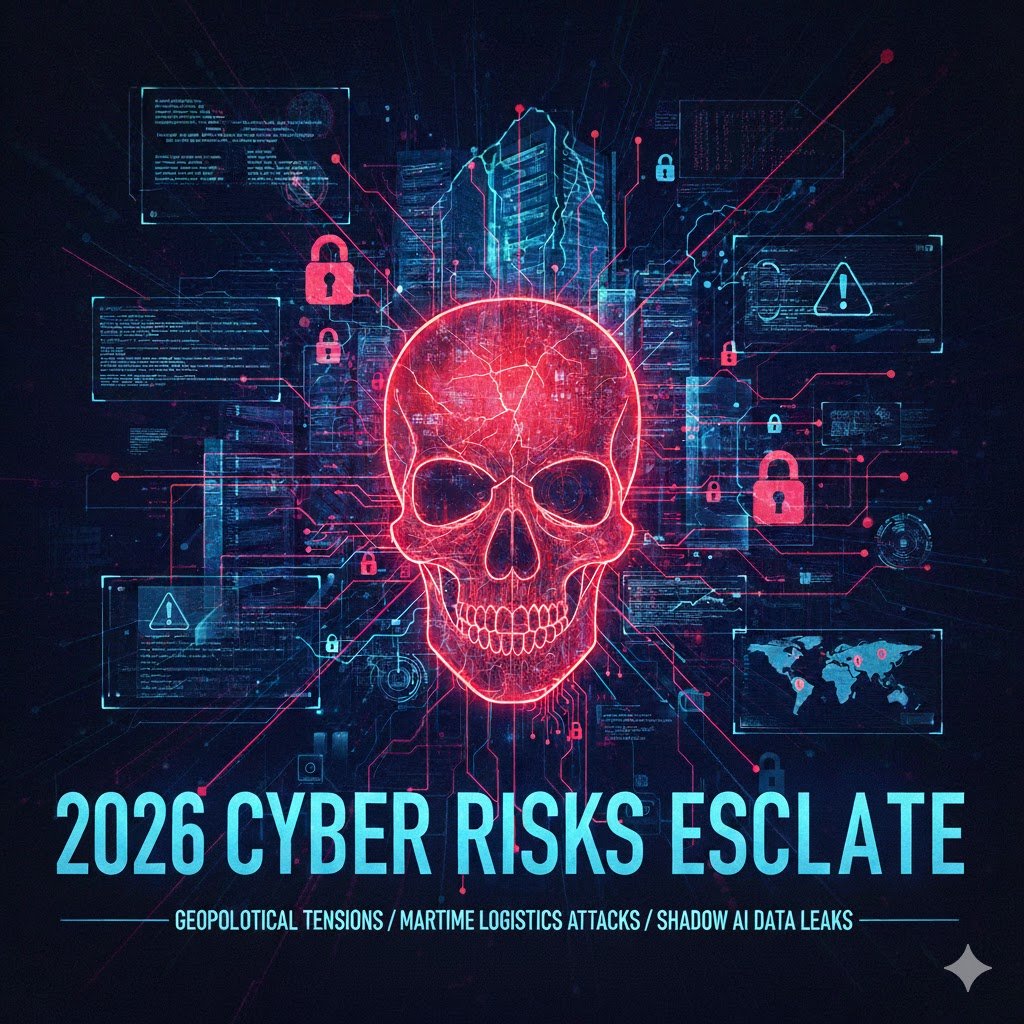
Cyber-Risk and Geopolitical Volatility: A New Era for Organizations in 2026
As 2026 unfolds, businesses and governments face a stark reality: cyber-risk has expanded beyond traditional IT boundaries, intertwining with geopolitics, critical supply chains, and the swift rise of artificial intelligence. Experts emphasize that the resilience required in the coming year hinges on a shift from reactive defenses to intelligence-driven strategies that meld cyber awareness with operational and geopolitical insights.
The backdrop of escalating geopolitical tensions—including the ongoing conflict in Ukraine, heightened friction in the Middle East, and strategic rivalries in East Asia—has led to an uptick in cyber exposure. State-sponsored hacking campaigns, espionage, and disruptive cyberattacks are increasingly employed as tools of geopolitical competition, with significant implications for the global semiconductor ecosystem. Regions such as Taiwan, the South China Sea, and China’s pursuit of chip self-sufficiency have emerged as critical flashpoints. Disruptions in these areas could reverberate throughout the technology stack, impacting chip manufacturing, cloud infrastructure, and artificial intelligence development.
For organizations, the message is unmistakable: geopolitical volatility is no longer a distant concern but an integral aspect of cyber risk. Experts urge companies to incorporate geopolitical intelligence into their exposure management strategies, advocating for mapping supply-chain dependencies, reviewing vendor relationships, and anticipating how sanctions or regional instability could catalyze new cyber threats.
Meanwhile, the maritime logistics sector has become an increasingly attractive target for cyber attackers. As global trade routes shift, the combination of legacy operational technology and intricate global data connections renders the sector particularly vulnerable. Recent incidents spotlight this risk; a ransomware attack on the Port of Seattle not only disrupted operations but also compromised the personal data of tens of thousands. The U.S. Coast Guard has reported a significant rise in cyber-related missions, underscoring the growing importance of cybersecurity in maritime operations.
With trade routes fluctuating through critical chokepoints like the Suez Canal and the South China Sea, cyber attackers see expanding opportunities to disrupt vessel communications and port operations. Such cyber incidents can have far-reaching consequences that go beyond the digital realm, resulting in slowed trade, inflated costs, and destabilized supply chains. To bolster cyber resilience, maritime operators in 2026 will need to implement real-time monitoring, segment operational networks, and integrate physical and cyber risk management more tightly.
In addition to external threats, organizations must also contend with the burgeoning risk posed by “shadow AI.” As employees increasingly adopt unapproved generative AI tools to enhance productivity, the potential for data leakage and misuse of outputs rises. A lack of clear governance—regarding dataset access, prompt security, and validation—can lead to the unintended exposure of sensitive information. Research indicates that many enterprises still lack defined processes for addressing AI vulnerabilities and incident response plans. As AI features evolve within productivity platforms, organizations face heightened visibility challenges, reminiscent of earlier concerns surrounding “shadow IT.”
Proactive organizations are now embedding AI governance directly into their cybersecurity frameworks, treating model access and data integrity as key risk factors. This trend reflects a broader recognition that exposure management must extend across traditional boundaries, encompassing geopolitical awareness, maritime logistics, and AI governance.
Organizations looking to navigate this complex landscape in 2026 must prioritize continuous mapping of geopolitical and supply-chain dependencies, enhance monitoring of hybrid IT environments, and establish robust AI governance frameworks. Shifting from reactive defenses to intelligence-driven resilience strategies will be crucial for long-term success. Those that can successfully integrate operational, digital, and geopolitical insights into a cohesive strategy will be better equipped to withstand uncertainties and effectively manage the evolving cybersecurity landscape.
The convergence of geopolitics, supply chains, and artificial intelligence presents both challenges and opportunities for organizations. As the year progresses, the need for a holistic approach to cyber-risk management will only intensify, shaping how businesses and governments respond to an increasingly complex and interconnected world.
See also Microsoft Shares Dip 0.8% Amid Tech Slowdown; Wedbush Sees FY26 as AI Inflection Year
 Top 3 AI-Focused ETFs to Maximize Returns amid Rapid Tech Growth
 Two AI Stocks Set for Major Gains in 2026: SentinelOne and Datadog Poised for 42% Upside
 FuriosaAI Launches RNGD Chip, Promises Double Efficiency Over Nvidia GPUs
 Microsoft AI CEO Mustafa Suleyman Warns of Existential AI Risks, Demands Global Regulations