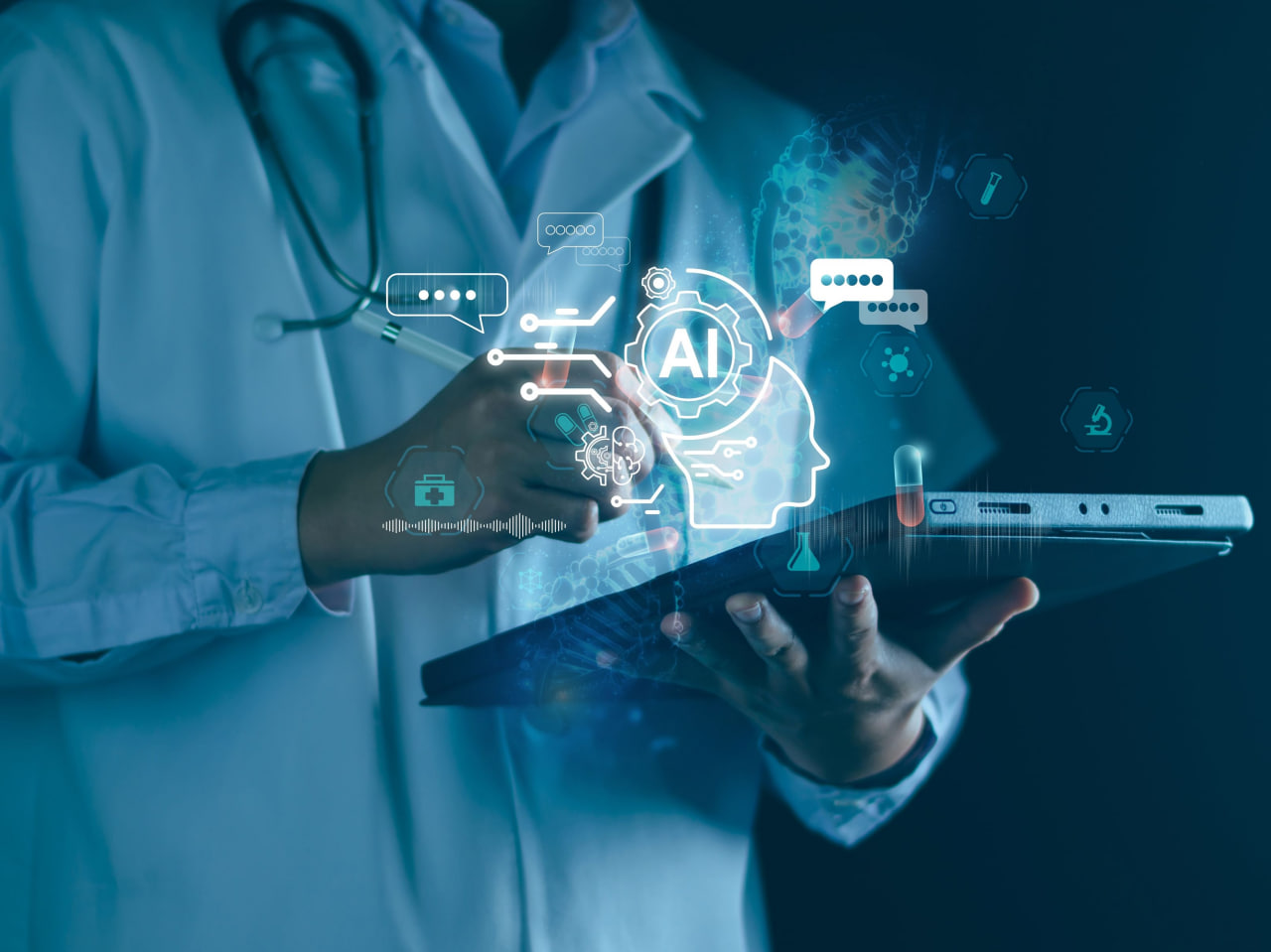
Beijing, Feb. 22 (SANA) — A research team from China has unveiled an innovative artificial intelligence (AI) system, dubbed “DeepRare,” designed to diagnose rare diseases with unprecedented accuracy. Developed collaboratively by Shenhua Hospital, affiliated with Shanghai Jiao Tong University School of Medicine, and the university’s School of Artificial Intelligence, this system marks a significant advancement in the medical field.
Launched last July, DeepRare has already attracted over 1,000 specialized users from more than 600 medical and research institutions around the globe. The system’s efficacy has been underscored by recent tests, which demonstrated a diagnostic accuracy of 57.18 percent based solely on clinical information, without the need for genetic data. This figure represents a remarkable increase of nearly 24 percentage points compared to the most accurate previous global models. When genetic data is incorporated, the diagnostic accuracy surpasses 70 percent.
DeepRare distinguishes itself through its immediate access to an extensive knowledge base that encompasses both medical literature and real-world clinical case data. The system employs a rigorous iterative analytical cycle that includes hypothesis formulation, validation, and self-review, which enhances the reliability of diagnostic evidence while addressing any potential logical gaps. The researchers emphasize that diagnosing rare diseases is particularly challenging in regions where genetic testing services are limited. Traditional AI systems have often suffered from reliability issues due to the complexity of tracing their reasoning mechanisms.
The introduction of DeepRare not only addresses these challenges but also enhances transparency in the diagnostic process. By offering a more reliable system, it holds the potential to significantly improve patient outcomes, especially in cases where traditional methods have previously fallen short. The success of DeepRare is a testament to the growing intersection of AI and healthcare, where data-driven technologies are increasingly relied upon to solve complex medical problems.
This breakthrough comes at a time when the healthcare industry is increasingly leaning on AI to improve diagnostic precision and efficiency. As AI systems continue to evolve, the potential for such technologies to transform the landscape of rare disease diagnosis remains significant. By pushing the boundaries of what is possible in medical diagnostics, DeepRare sets a new benchmark in the field, aiming to bridge the gap between technological capability and clinical application.
Looking forward, the implications of DeepRare extend beyond just improved diagnostic accuracy. As the system gains traction and more institutions adopt it, the integration of AI into everyday medical practice could lead to more personalized treatment plans and better patient care. The development highlights the urgent need for ongoing research and collaboration in the realm of AI and healthcare, ensuring that tools like DeepRare can continue to evolve and address the pressing challenges faced by healthcare providers worldwide.
See also AI in Higher Education Risks Eroding Learning Ecosystems, Study Finds
 AI Revolution Fuels Nuclear Energy Demand: U.S. Needs 47 GW by 2030 for Data Centers
 Apple Hosts 2025 Workshop on AI Reasoning and Planning, Showcasing Key Research Advances