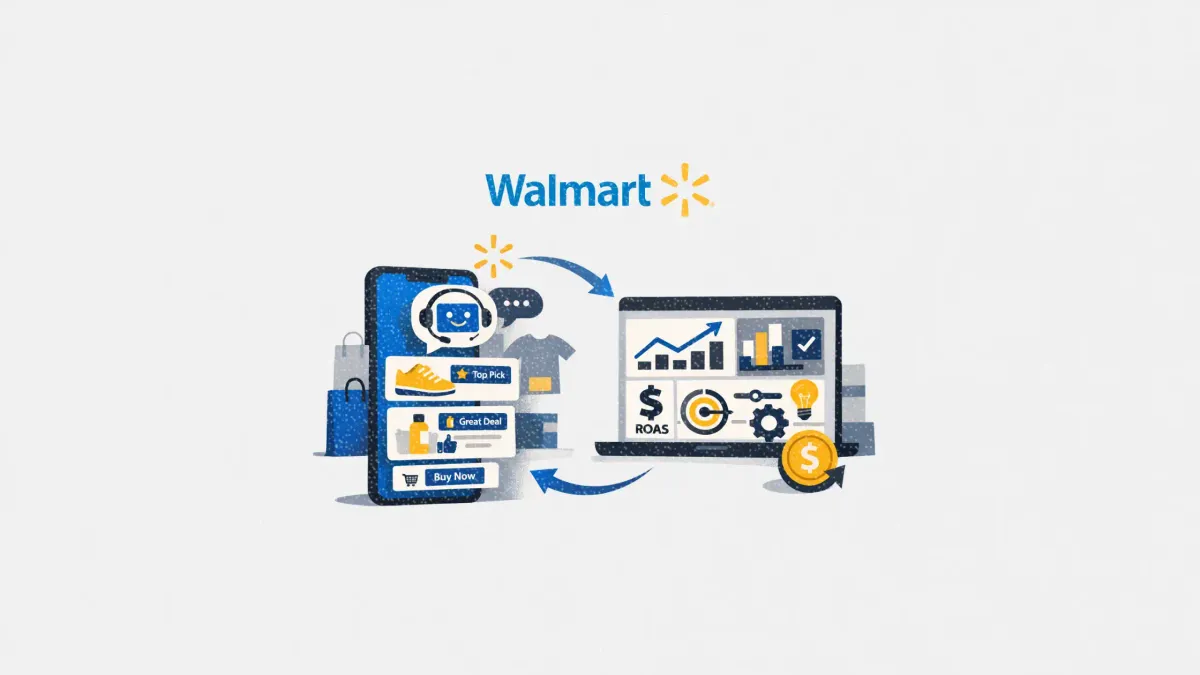
Walmart is expanding its foray into artificial intelligence by testing sponsored ads within its generative AI shopping assistant, Sparky, and rolling out a new tool named Marty to automate campaign strategies. These initiatives are part of Walmart’s efforts to enhance its retail media offerings and compete more effectively with rivals like Amazon.
The retail giant’s advancements come in the wake of a quiet test phase that began in late 2025, during which sponsored advertisements were integrated into Sparky. This in-app assistant, embedded within the Walmart app, utilizes natural language processing to analyze product reviews and make personalized recommendations. The introduction of sponsored prompts—advertisements that appear when shoppers inquire about products—signals a significant shift in how consumers will interact with product discovery on the platform.
Walmart reports that 81% of Sparky users engage with the assistant to check product availability or research details prior to purchasing. With search being the most-utilized feature, the inclusion of ads could reshape the shopping experience significantly. This move follows Amazon’s lead, which began monetizing ads within its own AI assistant, Rufus, in early 2024.
On the advertiser side, Walmart has unveiled Marty, a generative AI “super agent” currently in beta testing. This tool is designed for advertisers utilizing Walmart Connect’s Ad Center to manage sponsored search campaigns. Marty is capable of analyzing ad performance, offering bid optimization recommendations, suggesting keyword alterations, and generating detailed campaign reports. A notable feature is its “share of voice” metric, which allows advertisers to assess their market positioning relative to competitors.
Walmart indicates that 97% of queries directed to Marty are unique, reflecting the tool’s use for specific advertising tasks. This functionality is especially advantageous for small to mid-sized brands seeking customized guidance on their advertising expenditures. As Marty continues to develop, it is expected to expand its capabilities to cover additional ad formats across Walmart Connect later this year, aiming to become a comprehensive AI assistant for campaign planning.
Walmart is also applying generative AI to the creative aspects of advertising through its Automated Creative Generator. This tool assists brands in designing campaign visuals by generating backgrounds and creative assets, claiming to reduce production times by up to 80%. Such efficiency could prove transformative for creative teams that operate under tight deadlines or budget constraints.
The integration of AI tools like Sparky and Marty positions Walmart as a full-funnel media platform, capable of facilitating everything from AI-driven product discovery to upper-funnel video ads, especially following its acquisition of Vizio, which enhances its connected TV ad inventory.
As Walmart deepens its commitment to generative AI for both consumers and advertisers, marketing professionals should take note of the evolving landscape. Three key implications emerge from Walmart’s strategies: First, retail media is transitioning toward “agentic media,” where dynamic, conversational interactions will redefine how marketers conceive campaigns. Second, AI support appears to democratize access to advertising tools, potentially benefiting smaller businesses in a competitive marketplace. Finally, the convergence of performance and brand budgets is becoming evident, necessitating a unified approach to budgeting and measurement across marketing funnels.
As Walmart adapts to the future of retail media, marketers will need to enhance coordination among creative, data, and strategy teams to optimize for various metrics—whether clicks, impressions, or interactions within AI shopping assistants. This shift heralds a new era in retail advertising, where AI plays a pivotal role in shaping engagement and driving sales.
See also C3.ai Stock Rises 1.37% to $14.02 as Investors Eye February Earnings Report
 Israel Translators Association Unveils AI-Driven Conference for Translation Professionals
 Home Depot Expands Google Cloud Partnership to Launch AI Agents for Home Projects
 AI Maturity Gains Momentum: Top Tech Trends for 2026 Highlight Future Growth Foundations
 MuleRun Launches World’s Largest AI Agent Marketplace to Enhance Workflow Automation