
In 2025, Snohomish County schools and colleges experienced significant advancements in education, highlighted by robotics achievements, innovative programs, and advocacy efforts. Key moments included the emergence of the first Mill Creek high school robotics team to win a global championship, the launch of new career pathways, and community-driven initiatives aimed at addressing childcare shortages.
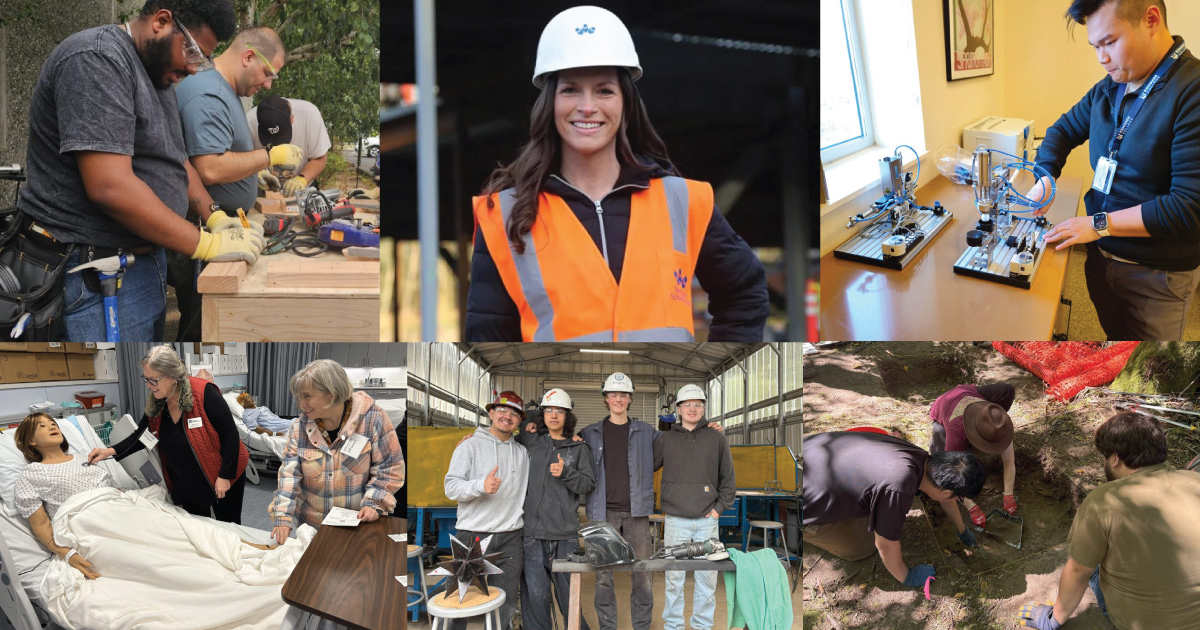
On December 16, the Snohomish County STEM’s ECHO Tour saw participation from approximately 120 high school students at Edmonds College. The event featured a tour of nine hands-on healthcare stations conducted by professionals from organizations such as Optum and Edmonds College Nursing. Activities included demonstrations on CPR and dental techniques, aimed at fostering interest in healthcare careers. The program, initially funded through ARPA in 2024, addresses local workforce shortages, and a previous tour in Everett engaged 273 students, with 97% expressing increased interest in healthcare professions.
The educational landscape faced legal challenges as parents and school board members filed a lawsuit on October 23 against House Bill 1296, which modified the Parents’ Bill of Rights. This legislation, signed by Governor Bob Ferguson, has drawn criticism for allegedly infringing on religious freedoms and parental authority, particularly regarding access to school medical records. The plaintiffs represent multiple districts, including Lynden and Darrington, and are seeking to repeal aspects of the law through a 2026 initiative.
In a remarkable achievement for local education, the Henry M. Jackson High School robotics team, known as Jack-in-the-Bot, secured the FIRST Robotics Competition Global Championship in Houston from April 16 to April 19. Competing against over 3,700 teams, they triumphed with their robot, ‘Spectre,’ in an ocean cleanup challenge. This victory marks a historic first for any high school in Mill Creek and underscores the potential of STEM education in fostering collaboration and innovation among students.
Edmonds College responded to the growing demand for tech professionals by launching two new academic programs: a Bachelor of Applied Science in Robotics and Artificial Intelligence and an eight-week Robotics in Manufacturing certificate. The BAS program, which is part-time and hybrid, is designed for students with AAS-T degrees and covers areas including robotic design and AI. The federally funded certificate program, aimed at beginners, focuses on automation and maintenance and began in October at the Advanced Manufacturing Skills Center.
A significant partnership initiative was initiated in September, with the launch of the first high school maritime program in Snohomish and Island counties. This program, a collaboration between the Port of Everett, Maritime Institute, and Sno-Isle TECH Skills Center, aims to equip students with essential skills in vessel operations and seamanship. With an initial cohort of 10 students, the year-long program incorporates USCG-approved training and hands-on instruction, addressing the workforce needs of Washington’s trade economy, where more than 60% of jobs are trade-related.
In another development aimed at meeting local workforce demands, the Construction Pre-Apprenticeship Program at Edmonds College has been offering free training for trades such as electrical work and plumbing. The program, launched in 2021, has seen impressive outcomes with a 93% graduation rate and significant representation from BIPOC and women participants. Graduates benefit from starter tools and other support to enhance their employability, marking a pivotal step towards addressing labor shortages in essential trades.
The YMCA of Snohomish County also made strides in early childhood education by opening a new Early Learning Center in Marysville on August 5, capable of serving 68 children. This facility, funded by various community contributions, aims to alleviate childcare shortages in the area, where many families face challenges in accessing affordable options. The center includes specialized staff and is designed to provide a nurturing environment for young children.
In addition to these educational initiatives, the Edmonds College Archeology Field School offered students hands-on experience in excavating artifacts from the early 1900s Japanese immigrant community in Mukilteo. This program emphasizes the historical contributions of marginalized communities and showcases the college’s commitment to practical learning experiences that contribute to broader societal awareness.
As Snohomish County continues to evolve, initiatives like the Regional Apprenticeship Pathways program at Marysville-Pilchuck High School reflect a growing commitment to connecting students with labor markets. The program, which offers skills training and guaranteed union interviews, has expanded significantly since its inception, serving as a model for educational systems seeking to bridge the gap between academia and industry.
Looking ahead, these multifaceted efforts illustrate the dynamic changes within Snohomish County’s educational landscape. As advocacy for educational rights and workforce development intensifies, the collaboration between schools, community organizations, and local governments aims to create a more inclusive and skilled future for all students.
See also Irish EdTech Firms Position for Success in US Amid Rising AI Learning Demand
 Manik Gupta Departs Microsoft Teams to Pursue Next Phase of AI Innovation
 Futurense’s Raghav Gupta Reveals AI Education’s Key Role for India’s Engineering Talent
 EduTrack Launches AI-Powered Learning Platform Tailored for African Schools
 Microsoft VP Highlights Penn State Smeal’s Comprehensive AI Initiative for Higher Ed