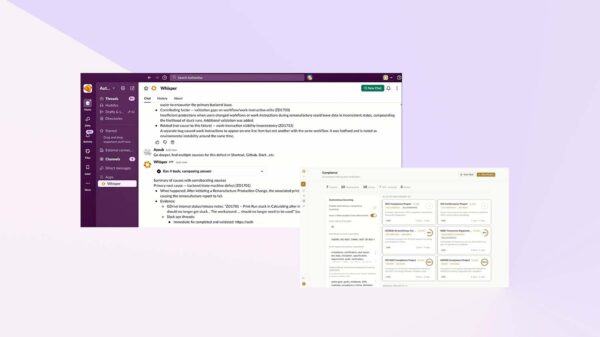
As the landscape of workplace collaboration continues to evolve, the emergence of AI orchestration platforms is drawing parallels with the unified communications wave of the 2010s. These modern tools aim to streamline collaboration processes, promising to integrate various applications like Teams, Zoom, and Slack into a cohesive system. During CES 2026, numerous vendors showcased their offerings, highlighting the potential for improved efficiency in organizational workflows.
AI orchestration encompasses a broad range of capabilities, including multi-agent systems and enterprise workflow management. Specifically, collaboration platforms are designed to operate above existing communication tools, automating workflows that currently require users to juggle multiple applications. By leveraging an API integration layer, these platforms pull data from various sources, process it through a large language model (LLM), and redistribute outputs as needed. This innovative approach allows for a level of context interpretation and judgment that previous integration methods lacked.
The unique value proposition of these orchestration platforms lies in their ability to understand context and make informed decisions based on the data they gather. Utilizing retrieval-augmented generation (RAG), these systems can compile relevant information, such as meeting transcripts and calendar events, to enhance their responses and automations. However, this nuanced processing also presents challenges, particularly when LLMs misinterpret context or make erroneous decisions, potentially complicating production workflows.
Demonstrations of AI orchestration capabilities often create an impression of seamless operation. Vendors typically outline clean scenarios where a meeting concludes, and the platform efficiently identifies action items, summarizes discussions, and coordinates follow-up tasks. While such workflows can indeed save time, real-world scenarios may present more complexity. Issues arise when context becomes convoluted, as shorthand or insider references used by teams may not align with the platform’s understanding. Misinterpretations can lead to incorrect action items being generated, further complicating ongoing projects.
Data governance also remains a critical concern in the adoption of these tools. Research indicates that only 29% of organizations have established formal policies governing AI tool usage. As orchestration platforms necessitate broad access to data in order to function effectively, many companies may unwittingly compromise sensitive information without clear protocols in place for data usage and retention.
Potential adopters of AI orchestration platforms must assess whether these tools will enhance collaboration efficiency within their organization. Such platforms can amplify existing workflows, but they also risk exacerbating issues if collaboration practices are inconsistent. A thorough evaluation of current collaboration habits is essential prior to implementation. For instance, if teams exhibit strong practices around task management and meeting notes, AI orchestration can help streamline these processes. Conversely, if users struggle with communication, the introduction of automation may result in additional confusion.
To begin exploring AI orchestration, organizations might consider starting small, perhaps with a single team or workflow. Automating meeting summaries for a weekly standup could provide valuable insights into the platform’s utility without overwhelming the entire organization. This approach allows for a practical evaluation of integration challenges that may arise on a larger scale.
Evaluating AI Orchestration Platforms
When considering these platforms, early discussions about pricing are crucial. Vendors often charge per-user-per-month fees similar to other enterprise collaboration tools, along with potential setup costs for custom integrations. The pricing landscape varies significantly, making it imperative to obtain specific quotes before committing resources.
Moreover, organizations lacking formal AI governance policies need to scrutinize the data access requirements of the orchestration platform. Extensive permissions may raise concerns within security teams, particularly in industries handling sensitive data. Understanding data access, retention, and security practices is vital before proceeding with pilot programs.
Setup complexity can vary by vendor, with some platforms offering rapid deployment through basic credential connections, while others may necessitate extensive configuration to tailor the system to specific organizational needs. Organizations should budget adequate time for implementation, which can range from a few hours for a pilot to several weeks for a full-scale deployment, especially if custom integrations are involved.
AI orchestration technology stands poised to transform organizational workflows, providing capabilities previously unavailable through traditional integration methods. However, companies must weigh the benefits against the current state of their collaboration practices. The maturity of the technology is evident, but whether an organization is prepared to leverage its potential is a question only leaders can answer.
See also Syracuse Research Corporation Secures $24M US Air Force Contract for Embedded AI Development
 Ralph Wiggum Technique Revolutionizes AI Coding with Iterative Autonomy for Developers
 Kenyan Students Win US-Kenya AI Challenge with App to Reduce Maternal Mortality by 50%
 Google Trends Enhances Explore Page with Gemini for Easier Search Insights
 Grok AI Bypasses Malaysia’s Ban, Remains Accessible Despite Government Restrictions