






















































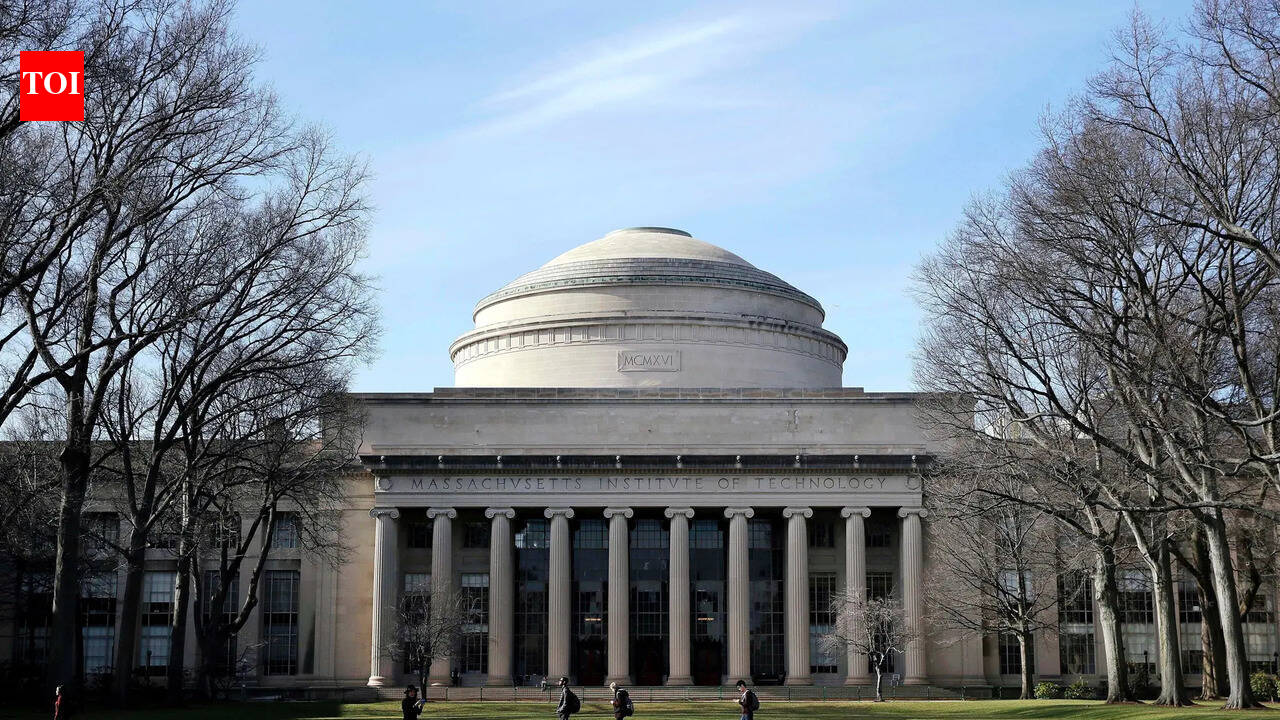
The Massachusetts Institute of Technology (MIT) is expanding its educational offerings by providing a suite of free courses focused on Artificial Intelligence (AI) through its OpenCourseWare platform. Aimed at both beginners and those with advanced knowledge, these courses reflect the growing importance of AI across various sectors, including healthcare, finance, and education. As AI tools continue to permeate critical aspects of daily operations and decision-making, the demand for AI literacy has surged, prompting institutions like MIT to respond with accessible educational resources.
AI has transitioned from a specialized area confined to research labs to a fundamental component of modern infrastructure, affecting everything from search algorithms to medical diagnostics. With the rise of generative models and multimodal systems, it is imperative for students across diverse fields—engineering, business, social sciences, and the arts—to develop at least a foundational understanding of AI. MIT’s decision to offer these courses free of charge reflects its commitment to fostering broad-based AI literacy.
Among the offerings is “AI 101,” tailored for individuals with minimal exposure to AI. Led by MIT researcher Brandon Leshchinskiy, the course covers essential concepts such as machine vision and reinforcement learning in an easily digestible format. Participants engage in hands-on activities, enabling them to train their algorithms and solidify their learning through practical application. This introductory course serves as an excellent starting point for high school students or first-year undergraduates who may not yet have a technical background.
For those seeking a more structured foundation in AI engineering, the course titled “Artificial Intelligence” provides a comprehensive introduction to knowledge representation, problem-solving techniques, and machine learning methods. It emphasizes the importance of representation and reasoning in intelligent systems, creating a vital link between computational problem-solving and broader questions about human cognition and language. This course is particularly suited for students with some programming and mathematical proficiency.
“How to AI (Almost) Anything” explores the creative applications of AI by examining how various types of data—ranging from language to images and audio—can be effectively integrated. This course emphasizes multimodal AI systems, which operate across diverse inputs and outputs. With an emphasis on research and critical thinking, students are encouraged to apply AI to innovative domains, enriching their understanding of how AI can influence fields such as art and music.
Another notable course, “Artificial Intelligence in K–12 Education,” focuses on the implications of generative AI in educational settings. It delves into how transformer architectures have revolutionized machine learning, enabling the generation of text, images, and even music from simple prompts. This course is particularly relevant for future educators and curriculum designers, as it encourages project-based work aimed at creating AI-enabled learning tools for K–12 students.
Moreover, students interested in building technical expertise may find the “Introduction to Algorithms” course beneficial. While not exclusively an AI course, it lays a mathematical and computational groundwork for modeling problems and designing optimal solutions. This knowledge is essential for those advancing into the fields of computer science and AI research, as efficient algorithms and data structures are foundational to AI systems.
For those looking to explore the cutting-edge aspects of AI, the “Foundation Models and Generative AI” course provides insights into the technologies powering tools like ChatGPT and DALL·E. It covers significant topics such as supervised and self-supervised learning while remaining accessible to learners from various backgrounds. The course serves as an informative resource for students in management, policy-making, and interdisciplinary studies who wish to understand the implications of AI technologies.
Considering the increasing relevance of AI in academia and industry, these courses from MIT offer a structured pathway into a transformative domain. With AI competence becoming a critical factor in employability and research opportunities, these free offerings serve to enhance students’ academic profiles significantly. For learners starting from scratch or seeking to specialize in advanced AI topics, MIT’s educational resources represent a valuable asset in navigating the complexities of the AI landscape.
See also AI Market to Surpass $3.6 Trillion by 2033, Driven by Automation and Generative AI
 Alibaba Open-Sources Four Qianwen 3.5 Models, Achieving Record Intelligence Density
 Rwazi Launches AI Datasets for Real-World Applications Across 195+ Countries
 OpenAI Launches GPT-5.3 Update to Enhance ChatGPT’s Conversational Tone and Accuracy
 Inception Launches Mercury 2, a Diffusion LLM 10x Faster than OpenAI’s Models















