Jan 17, 2026Ravie LakshmananArtificial Intelligence / Data Privacy
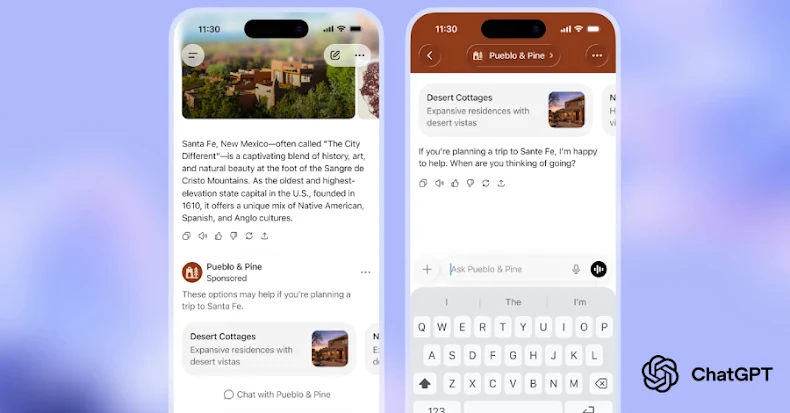
OpenAI announced on Friday that it will begin displaying ads in ChatGPT for logged-in adult users in the United States, including those in the free and ChatGPT Go tiers, within the next few weeks. This move comes as the company expands access to its low-cost subscription globally.
“You need to know that your data and conversations are protected and never sold to advertisers,” OpenAI stated. The company aims to maintain a high standard of user experience while providing control over ad personalization, allowing users to opt-out if desired.
The introduction of advertising has been framed by OpenAI as a means to democratize access to artificial general intelligence—a phase in machine learning where AI systems can match or exceed human intelligence. The company also suggested that advertising could be “transformative” for small businesses and emerging brands seeking to compete in a crowded market.
OpenAI emphasized that the ads will not affect the responses generated by the chatbot and that user data will remain private from advertisers. Ads will be clearly labeled and will appear at the bottom of user conversations. However, the company did not specify the data it would collect to serve relevant ads. Users will have the ability to understand why certain ads are displayed, dismiss them, or provide feedback. Users in the more expensive Plus, Pro, Business, and Enterprise tiers will not see any ads.
“To start, we plan to test ads at the bottom of answers in ChatGPT when there’s a relevant sponsored product or service based on your current conversation,” OpenAI explained. During the testing phase, ads will not be shown to accounts where users are identified or predicted to be under 18. Furthermore, ads will not appear alongside sensitive topics such as health or politics.
In a post on X, OpenAI CEO Sam Altman affirmed that the company will not accept payments to influence ChatGPT’s responses. “It is clear to us that a lot of people want to use a lot of AI and don’t want to pay, so we are hopeful a business model like this can work,” Altman stated.
This shift marks a significant change for OpenAI, which has primarily relied on subscription models until now. At a Harvard University event in May 2024, Altman described advertising as a “last resort” for the company’s revenue model, characterizing the combination of “ads plus AI” as potentially unsettling.
Altman’s modified perspective reflects OpenAI’s need to explore new revenue streams to sustain its costly operations. According to reports, ChatGPT had approximately 800 million weekly active users as of early October 2025.
The inclusion of advertising in ChatGPT raises important questions about the balance between monetization and user experience in the AI landscape. As the company navigates this new venture, it aims to ensure that the deployment of ads does not undermine the integrity of the artificial intelligence that users rely upon.
For more information about OpenAI, visit their official site at openai.com.
See also Opera’s One R3 Launch: A Game-Changer for Investors Amid AI Risks and Growth Potential
 Ex-Google Engineer Accused of Stealing AI Trade Secrets for China in High-Stakes Trial
 Global Call for AI Regulation Urges Accountability to Safeguard Democracy, Says National Council Chair
 Booking Holdings Leverages AI Amid Visa Challenges; Earnings Growth at Risk
 Mistral CEO: European AI Firms Gain Edge by Prioritizing Local Control Over US Tech