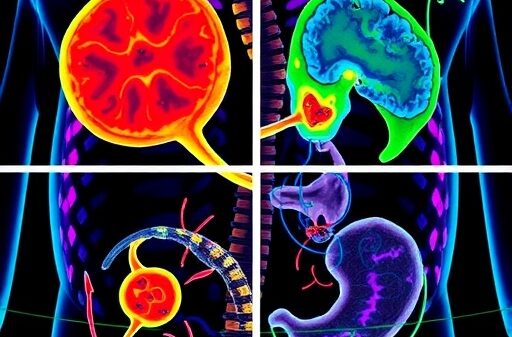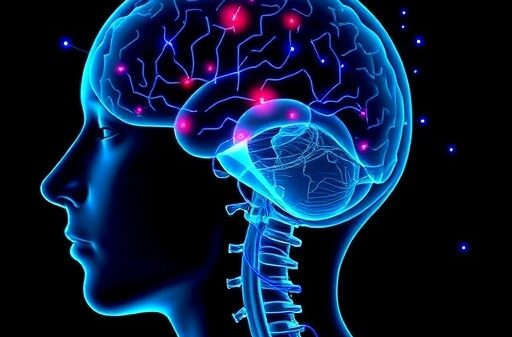
In a significant advancement for precision medicine, a groundbreaking study led by Feng et al. has introduced an innovative framework called multimodal pathogenomics, which utilizes deep learning to enhance cancer prognosis. Released in the Journal of Translational Medicine, this research comes at a time when cancer remains a leading cause of mortality globally, underscoring the urgent need for more accurate prognostic tools that can improve patient outcomes and elevate the standards of oncological science.
The study’s authors employed a sophisticated deep learning architecture to analyze a variety of tumor data modalities, including genomic sequences, proteomic profiles, and clinical characteristics. By integrating these diverse data sources, they created comprehensive models that provide a holistic view of cancer pathology. This methodology starkly contrasts with traditional single-modality studies, which often neglect critical interactions across various biological layers, resulting in a more nuanced understanding of tumor behavior and patient prognosis.
Central to this research is its commitment to accuracy. The study demonstrated remarkable predictive accuracy, surpassing existing methods significantly. Traditional prognostic tools often rely on limited datasets and simplistic statistical models. In contrast, the multimodal framework developed by Feng et al. leverages larger datasets and sophisticated algorithms, enabling nuanced predictions that can profoundly influence treatment decisions. This underscores the transformative potential of artificial intelligence in redefining how oncologists assess cancer prognosis.
Moreover, the study illustrates the effectiveness of combining multiple biological data modalities. By synchronizing genomic, transcriptomic, and proteomic information, the researchers were able to generate an integrated biological profile for each patient. This comprehensive approach enhances understanding of tumor heterogeneity and the individual variability of cancer. The study highlights how deep learning algorithms can uncover specific molecular signatures associated with prognosis, paving the way for tailored therapeutic strategies.
The application of deep learning in genomics presents practical implications for cancer treatment. The algorithms developed through this research can be utilized to screen for potential therapeutic targets by identifying key pathways and mutations linked to poor prognosis. This capability allows clinicians to refine treatment protocols, enabling more personalized and effective care for patients. Such progress could represent a significant leap forward in managing chronic conditions, where traditional one-size-fits-all strategies have often been inadequate.
However, the ethical considerations surrounding the use of deep learning in cancer prognosis warrant attention. Issues related to data privacy, algorithmic biases, and transparency are critical to the responsible implementation of AI-driven methodologies. The authors have taken steps to address these concerns by ensuring their models are interpretable and trained on diverse datasets. Building trust among the medical community and patients is essential for the successful adoption of these technological advances.
The collaborative nature of this research emphasizes the importance of interdisciplinary efforts in cancer research. The integration of multimodal data necessitates cooperation among bioinformaticians, oncologists, and researchers across various fields. Such collaboration not only improves the quality of research outcomes but also fosters a comprehensive understanding of cancer that transcends conventional silos in biomedical research. This interdisciplinary approach is vital for driving innovation and progress in the field.
The potential for clinical application of these findings is vast. As healthcare systems increasingly adopt artificial intelligence technologies, integrating deep learning-driven prognostic models could revolutionize patient care. The implementation of these advanced tools in routine clinical practice could facilitate earlier and more accurate diagnoses, ultimately improving survival rates and quality of life for cancer patients. This transformation necessitates careful planning and training to equip healthcare professionals with the skills required to effectively utilize these new technologies.
In summary, the study by Feng et al. represents a pivotal moment in precision cancer prognosis through its deep learning-based multimodal pathogenomics integration. By combining advanced computational methods with diverse biological data types, this research establishes a robust framework for enhancing prognostic accuracy. As the field evolves, the implications of this work could fundamentally redefine oncology practices and inform treatment plans tailored to individual patient profiles. The promise of more personalized cancer therapy not only aims to change treatment paradigms but also to improve survival prospects for countless patients.
Looking ahead, ongoing research and development will be critical in refining these methods and understanding their clinical impacts. The continuous interplay between technology and healthcare is poised to usher in a new era of personalized medicine, wherein deep learning algorithms play a crucial role in guiding clinical decision-making. The advancements stemming from this study underscore the necessity of embracing technological innovations while maintaining a steadfast focus on patient-centered care.
Subject of Research: Integration of multimodal pathogenomics with deep learning for cancer prognosis.
Article Title: Deep learning-based multimodal pathogenomics integration for precision cancer prognosis.
Article References:
Feng, X., Song, G., Zhang, Y. et al. Deep learning-based multimodal pathogenomics integration for precision cancer prognosis. J Transl Med (2026). https://doi.org/10.1186/s12967-026-07682-5
Keywords: Deep learning, multimodal pathogenomics, cancer prognosis, precision medicine, artificial intelligence, genomic data, multimodality, personalized therapy.
See also AI Engineer Sylvester Tafirenyika Unveils Tool to Cut Hospital Readmissions by 30%
 AI Revolutionizes Scientific Discovery, Enabling Faster Progress in Catalysis and Beyond
 Bangalore Lab Unveils Disobind Tool for Enhanced Protein Interaction Mapping in Disease Research
 AI Use in Research Increases Publishing Speed but Narrows Scientific Exploration, Study Finds
 Israel and U.S. Launch Strategic AI Partnership to Enhance Tech Cooperation and Innovation